
Knauf Vapor Barrier Installation: The Union City Owner’s Guide
Knauf vapor barrier installation in Union City typically runs $1,800-$3,400 for a full crawl space or attic application, depending on square footage and whether the existing barrier needs removal first. We stock Knauf Insulation vapor retarder products - including their 6-mil polyethylene sheeting and reinforced scrim-backed options - on our trucks, and most Union City jobs are completed in a single day. Most homeowners discover their vapor barrier has failed when they notice a sharp musty smell from the crawl space, warping hardwood floors, or condensation beads forming on ductwork during our cool, marine-influenced mornings.
Which Knauf Models This Applies To
Knauf manufactures vapor retarders under their Insulation Accessories line, not as standalone “models” with serial numbers like HVAC equipment. What matters is matching the perm rating and mil thickness to your existing assembly and local code. Union City falls under California Title 24, which requires Class I or Class II vapor retarders in crawl space applications - that’s 0.1 perm or lower for Class I, which Knauf’s foil-faced kraft and certain polyethylene laminates meet.
We see three Knauf-compatible configurations in Union City homes: standard 6-mil clear polyethylene for crawl space ground cover, reinforced 10-mil scrim product for high-traffic access areas, and foil-faced kraft facing paired with their EcoBatt or Jet Stream blown-in products for attic applications. The compatibility gotcha: Knauf’s foil-faced kraft is designed for specific facing-to-living-space orientation. Install it upside-down in a crawl space and you’ve created a moisture trap against the subfloor rather than a drying path toward the conditioned air. We verify facing direction on every job - it’s a five-second check that prevents a five-figure remediation.
For aftermarket equivalents, we also stock Reflectix vapor barrier products when the job calls for a radiant barrier combined with moisture control, particularly in Decoto corridor homes with shallow crawl spaces where dual-function products save headroom.
Signs Your Knauf Vapor Barrier Installation Is Failing
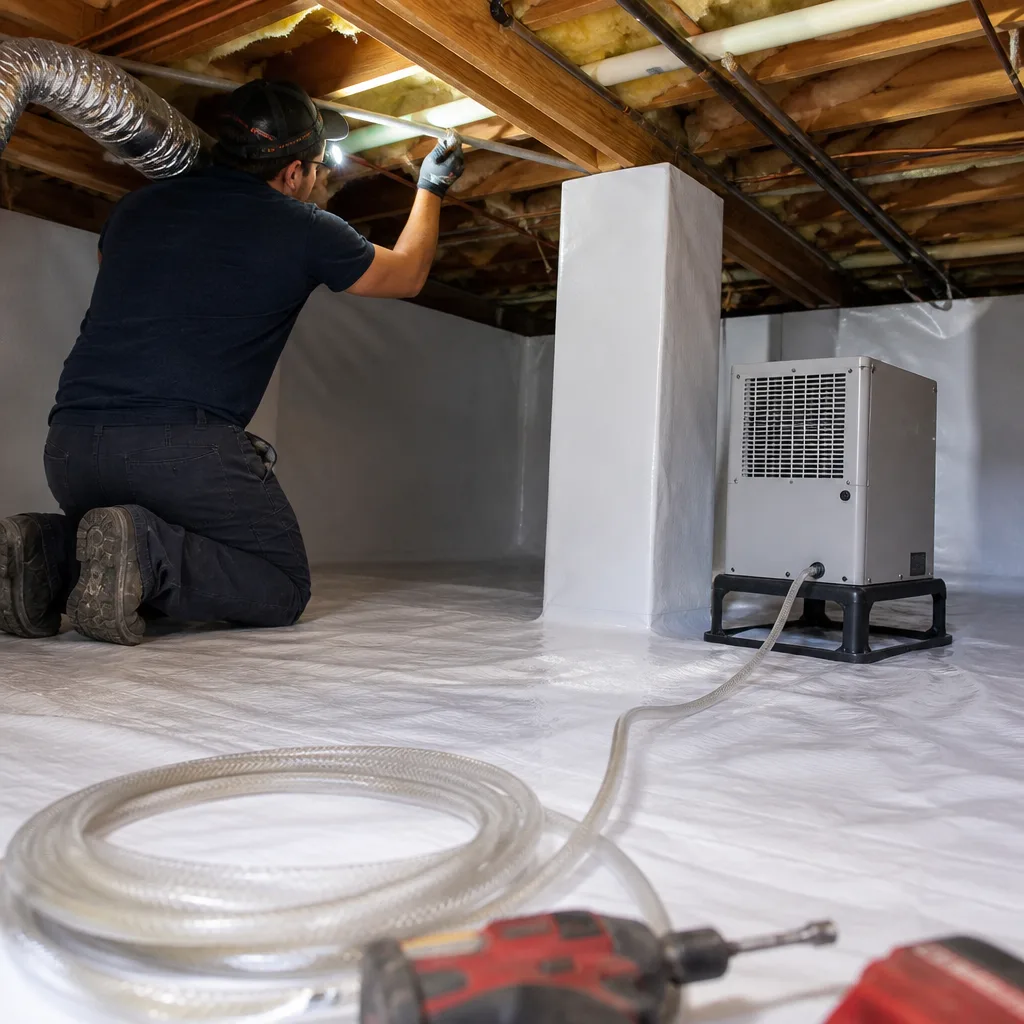
- Condensation on ductwork or joists. When the vapor barrier tears or pulls away from the perimeter, warm moist air from outside meets the cooler crawl space surfaces. In Union City’s climate, this happens most mornings from May through October when marine layer moisture rolls in off the bay.
- Musty odors entering living spaces through floor penetrations. Gaps in the vapor barrier let soil gases and mold spores migrate upward. We trace these paths with a smoke pencil during our initial assessment - the same tool we use for blower-door-directed air sealing.
- Cupping or crowning of hardwood floors above the crawl space. Uneven moisture absorption from below warps boards before visible water damage appears. We’ve measured 18% wood moisture content in Alvarado Adobe Park-area homes where the barrier had degraded to shreds - well above the 12% threshold where finish damage begins.
- Visible mold on barrier surface or foundation walls. Knauf’s polyethylene products are mold-resistant, not mold-proof. Standing water from poor drainage or a failed barrier creates conditions where even antimicrobial surfaces eventually support growth.
- Pest intrusion and rodent nesting. Torn vapor barrier creates access highways. We document this with our photo record - every image goes to the homeowner before we leave - and we coordinate with our rodent proofing crew when exclusion is needed before barrier replacement.
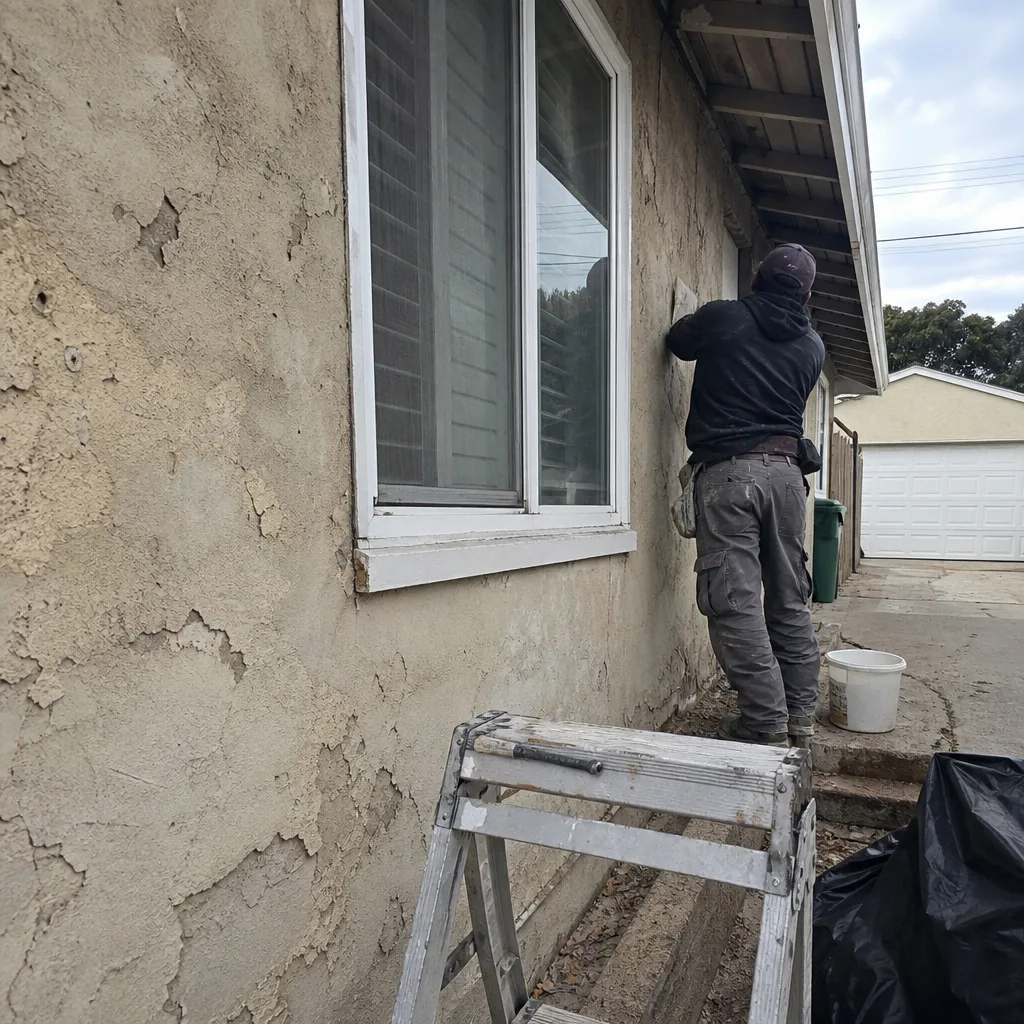 Before
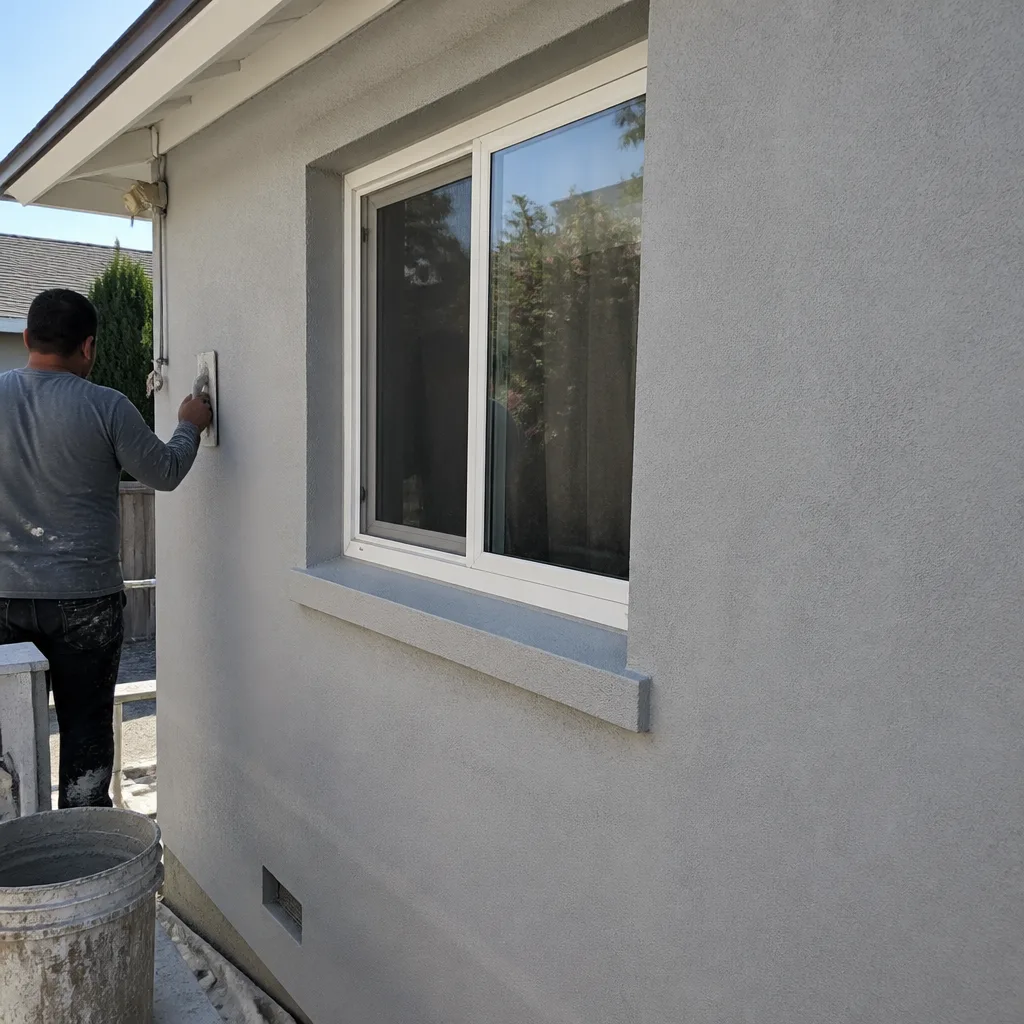 After
AfterReplacement Cost & What’s Included
| Scope | Typical Range in Union City |
|---|---|
| Crawl space vapor barrier replacement, standard 6-mil, up to 1,000 sq ft | $1,800-$2,600 |
| Crawl space vapor barrier replacement, reinforced 10-mil, up to 1,000 sq ft | $2,400-$3,200 |
| Attic vapor retarder with air sealing and blower-door verification | $2,800-$4,200 |
| Existing barrier removal and disposal (when required) | $400-$800 additional |
| Perimeter sealing with acoustic sealant and mechanical fasteners | Included in above |
What drives the range: square footage, accessibility (some Union City crawl spaces built in the 1960s have 18-inch clearance), condition of existing material requiring removal, and whether we find air leaks at the rim joist that need sealing before the new barrier goes in. We don’t blow insulation over an unsealed attic floor, and we don’t lay vapor barrier over unsealed bypasses - the Haven Standard applies in both directions.
Every job closes with a Documented Photo Record, written scope fulfillment checklist, and on applicable jobs, before-and-after blower-door numbers. The 365-Day Done Right Promise covers workmanship and material defects. We source Knauf products through standard distribution channels - we are an independent service provider, not affiliated with Knauf Insulation.
DIY or Call Us?
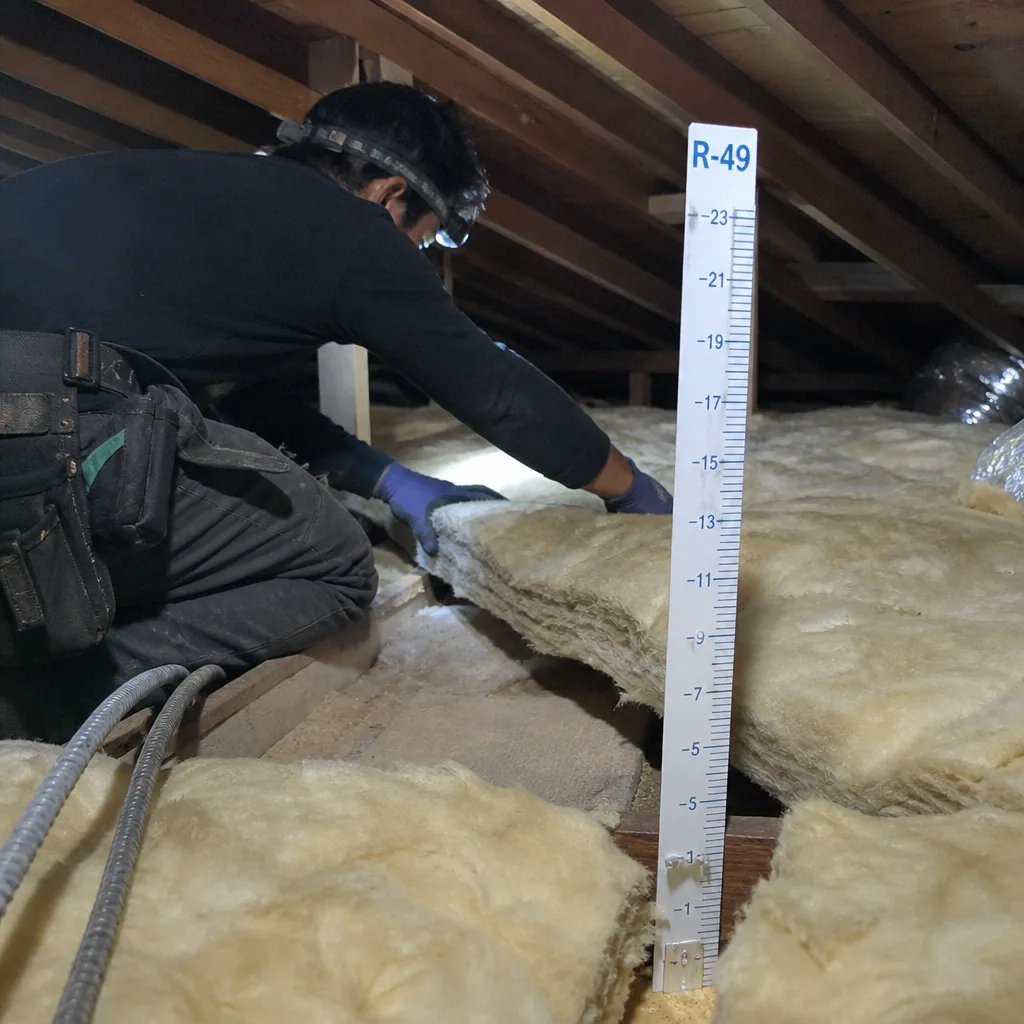
Homeowners can safely assess their own vapor barrier with a flashlight, moisture meter, and knee pads. Look for tears, pooling water, and gaps at the perimeter where the barrier meets the foundation wall. Check the sill plate for dark staining - that’s your tell for long-term moisture contact.
Where DIY goes wrong: proper vapor barrier installation requires sealing all seams with manufacturer-specified tape, terminating at the foundation walls with mechanical fastening and sealant, and integrating with existing drainage or sump systems. In Union City’s older homes near Alvarado Adobe Park, we regularly find well-meaning homeowners who laid new plastic over old, trapping moisture between layers and accelerating subfloor rot. The R-value on the bag is what the material does in a lab. The number on your blower-door report is what your house actually does - and those two figures are not always friends.
If your crawl space has active mold, standing water, or you can’t identify the vapor retarder class required for your assembly, call (650) 381-1512. Estimates are free, and we bring a written price before any work starts.
FAQs
In Union City’s marine climate, a properly installed 6-mil polyethylene vapor barrier typically lasts 15-20 years; reinforced 10-mil product extends that to 20-25 years. Ground moisture, pest activity, and foot traffic during HVAC service are the usual failure accelerators we see. Call (650) 381-1512 for an inspection if yours is approaching that age - estimates are free.
Small punctures under six inches can be patched with compatible polyethylene tape if the surrounding material is still supple and the perimeter seal is intact. We find that by the time most Union City homeowners notice a problem, the barrier has become brittle, seam tape has delaminated, or rodent damage is widespread - replacement is the cost-effective path. We assess patch viability during our free estimate and document what we find with photos.
Most crawl space vapor barrier replacements in Union City are completed in four to six hours for spaces up to 1,200 square feet. Attic vapor retarder work, which we pair with blower-door-directed air sealing, typically runs a full day. We text your named technician’s arrival window the morning of, and you’ll receive your photo record and documentation before the crew leaves.
Yes - we carry Knauf 6-mil and 10-mil polyethylene sheeting, seam tape, and mechanical fastening systems on every Union City truck, plus Reflectix radiant barrier products for combined applications. If your job requires a specific perm rating or Class I vapor retarder we don’t have loaded, we source it for next-day installation with no deposit required. Call (650) 381-1512 to confirm availability for your specific assembly.
Ready to stop moisture at the source? Call (650) 381-1512 for a free estimate with written pricing before any work starts. We serve Union City and surrounding East Bay communities with background-checked, uniformed technicians and live-answered calls, 24/7.
Written by Wes Okafor, Owner & Lead Insulation Technician, Topside Attic Insulation Union City at Topside Attic Insulation Union City, serving Union City and nearby areas.