
Demilec Crawl Space Encapsulation & Vapor Barrier in Union City: What to Know First
We provide independent Demilec crawl space encapsulation and vapor barrier service in Union City, typically completing standard jobs in one to two days with a written price delivered before any work starts. Most Demilec encapsulation and vapor barrier projects in Union City run between $2,800 and $6,500 depending on crawl space square footage, existing moisture damage, and whether the Demilec foam has begun pulling away from rim joists. This page is for Union City homeowners who have Demilec open-cell or closed-cell spray foam in their crawl space and are seeing musty odors, sagging vapor barriers, or rising humidity readings on their hygrometer. Call (650) 381-1512 for a free written estimate with no work obligation.
How Demilec Products Fail - and How We Fix Them
- Demilec Heatlok XT closed-cell separation at rim joists. In Union City, the marine layer keeps crawl space wood moisture content elevated nine months of the year. Heatlok XT, a 2.0-lb density closed-cell foam, bonds aggressively to clean, dry framing but can delaminate when applied over wood reading above 19% moisture - common in Decoto corridor homes built on clay-heavy fill. We remove the failed sections with a specialized scraping tool, dry the substrate with targeted airflow, then reapply only after confirming 15% or below on a pinless moisture meter. The R-value on the bag is what the material does in a lab. The number on your blower-door report is what your house actually does - and those two figures are not always friends.
- Demilec Sealection 500 open-cell water absorption in floor joist bays. Sealection 500 is a 0.5-lb density open-cell foam, meaning it is vapor-permeable by design. In crawl spaces with incomplete vapor barriers, this foam acts like a sponge, wicking ground moisture upward until the joist bays show gray discoloration and the foam begins slumping. We do not encapsulate over wet foam. Our crew removes the saturated Sealection, treats the joists with a borate solution for mold prevention, installs a 6-mil minimum ground vapor barrier (up to 20-mil reinforced polyethylene for chronically damp sites), then reapplies closed-cell foam or switches to a rigid foam board assembly depending on the homeowner’s budget and the crawl space access constraints.
- Demilec Heatlok Soy 200 insufficient coverage at sill plate gaps. Heatlok Soy 200, a bio-based closed-cell foam, is often applied too thin at the critical sill plate-to-foundation junction - the horizontal gap where the wood sill meets the concrete stem wall. Union City’s older ranch stock near Alvarado Adobe Park frequently has irregular 1/4-inch to 3/4-inch gaps here that a standard 1-inch pass misses entirely. We spot-check these junctions with a thermal imager on every Demilec job, then build out the seal with backer rod and acoustic sealant or add a targeted 2-inch closed-cell fillet, depending on what the blower-door test shows us.
- Demilec Agribalance shrinkage in wide joist bays. Agribalance, another open-cell line, can shrink 2-4% during cure in bays wider than 16 inches on center - common in pre-1980 Union City construction with 24-inch joist spacing. The resulting gaps at the foam-to-wood interface create convection loops that move humid crawl space air into the floor assembly. We diagnose this with a smoke pencil during our initial inspection, then either remove and reapply with a slower-rise formulation or install cross-strapping with rigid foam inserts to bridge the wide bays.
- Demilec foam applied over unsealed crawl space vents. We see this on retrofits where a previous contractor sprayed foam without first addressing the original foundation vents. In Union City’s climate, vented crawl spaces in winter pull in 50-degree, 85%-relative-humidity air that condenses on any cold surface. Foam on the underside of the subfloor becomes the coldest surface. We seal or mechanically close vents per the 2022 California Energy Code, install a continuous ground vapor barrier sealed to the walls, then assess whether the existing Demilec foam can remain or must be removed due to interstitial moisture damage.
Our Demilec Crawl Space Encapsulation & Vapor Barrier Process
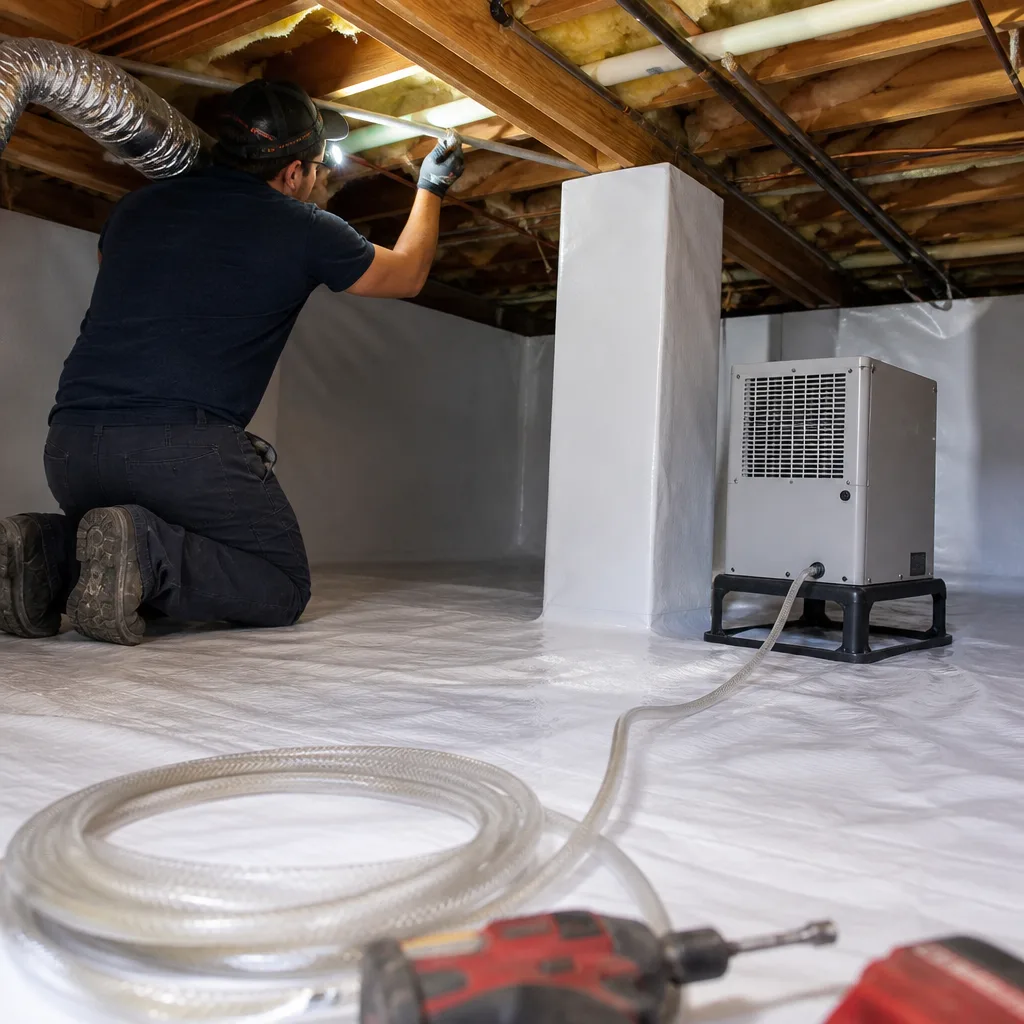
- 1
Written price and scope before arrival. We deliver a flat price, written scope, and written warranty per Haven Standard Clause 1. No work starts without all three documents signed.
- 2
Moisture mapping and blower-door baseline. We record wood moisture content at six points, relative humidity, and a blower-door reading - a pressurization measurement that shows, in one number, how much conditioned air the building envelope is losing. This establishes whether the crawl space is a net air source or sink.
- 3
Demilec-specific damage assessment. We identify which Demilec line is installed, check for delamination, water absorption, or shrinkage gaps, and photograph everything. The photo log goes to the homeowner before we leave.
- 4
Repair or replace decision with parts transparency. For Demilec foam removal, we use mechanical scraping and controlled solvent application - never torch removal, which voids any remaining manufacturer warranty and creates toxic byproducts. Where new foam is needed, we specify whether we are matching with Demilec-compatible material or switching to another manufacturer such as Icynene or Johns Manville, and we explain why.
- 5
Air sealing first, then insulation. We seal all rim joist gaps, sill plate penetrations, and utility penetrations with acoustic sealant or closed-cell foam before installing vapor barrier or additional insulation. This is non-negotiable.
- 6
Final blower-door test and documentation. We run a post-work blower-door test, publish the before-and-after numbers, and deliver a Documented Photo Record showing the sealed crawl space, the vapor barrier termination details, and any replaced Demilec foam. The 365-Day Done Right Promise begins at final walkthrough.
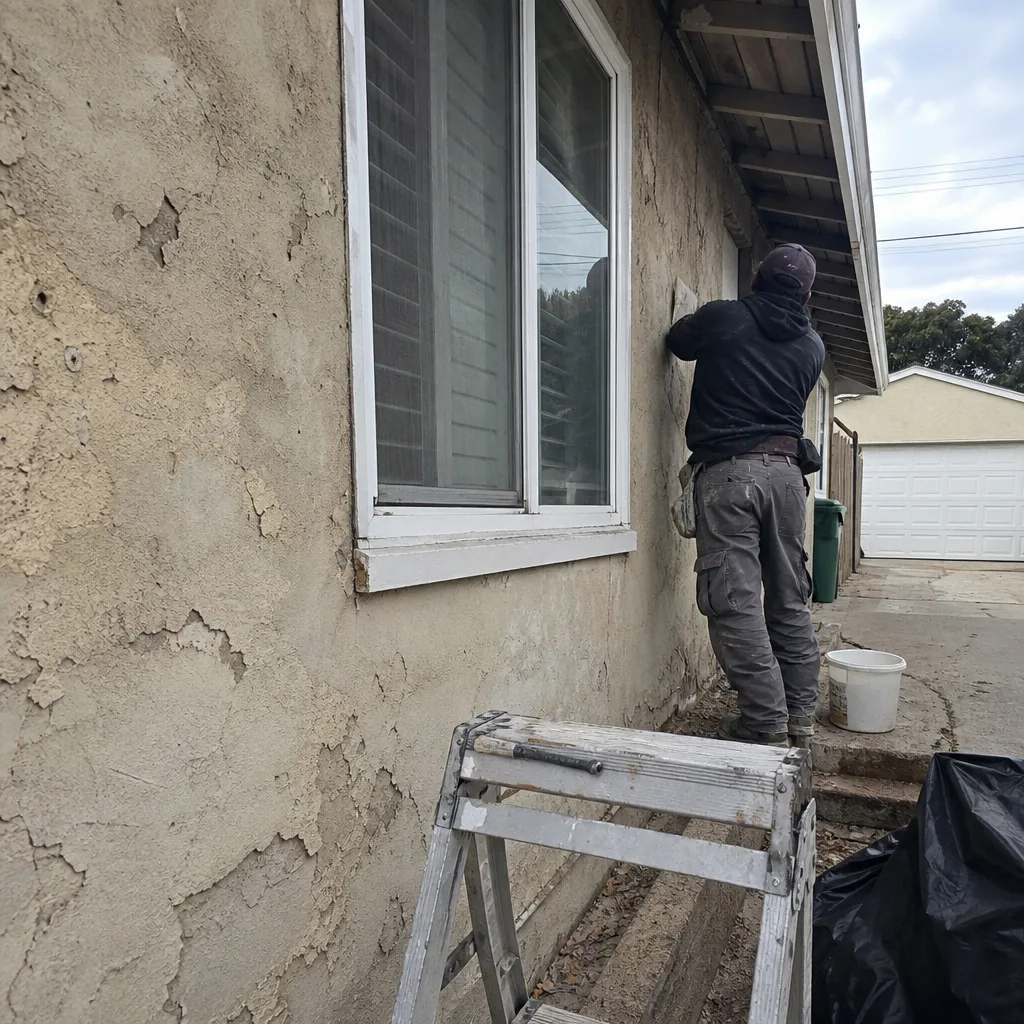 Before
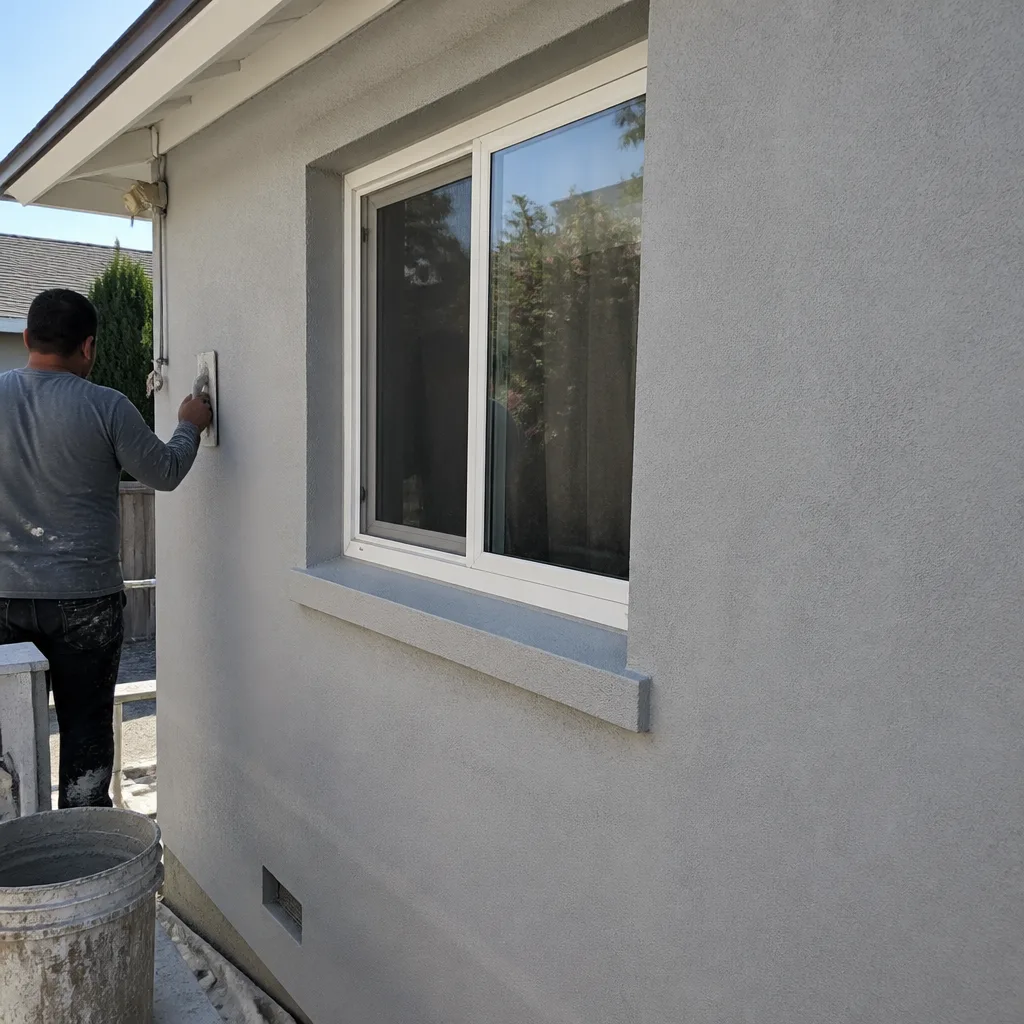 After
AfterWhat Demilec Crawl Space Encapsulation & Vapor Barrier Costs in Union City
| Scenario | Typical Range | What Moves the Price |
|---|---|---|
| Demilec vapor barrier replacement only (existing foam intact) | $2,800 - $4,200 | Crawl space square footage; 6-mil vs. 20-mil barrier; number of piers to wrap |
| Demilec open-cell removal + encapsulation with new closed-cell | $4,500 - $6,500 | Extent of water-damaged foam; joist treatment required; access limitations |
| Demilec closed-cell spot repair + full vapor barrier upgrade | $3,800 - $5,400 | Linear feet of delaminated foam; moisture drying time; sill plate rebuild |
| Complete Demilec removal + re-encapsulation with alternative foam | $5,200 - $8,000 | Disposal volume; new material specification; code-required ignition barrier |
Union City’s clay soils and marine layer exposure mean we budget 10-15% more drying time than inland East Bay jobs. We do not quote over the phone without seeing the crawl space - but we do provide a written price at the end of the first site visit, and estimates are free. Call (650) 381-1512 to schedule.
Why Union City Homeowners Call Topside Attic Insulation Union City for Demilec Work
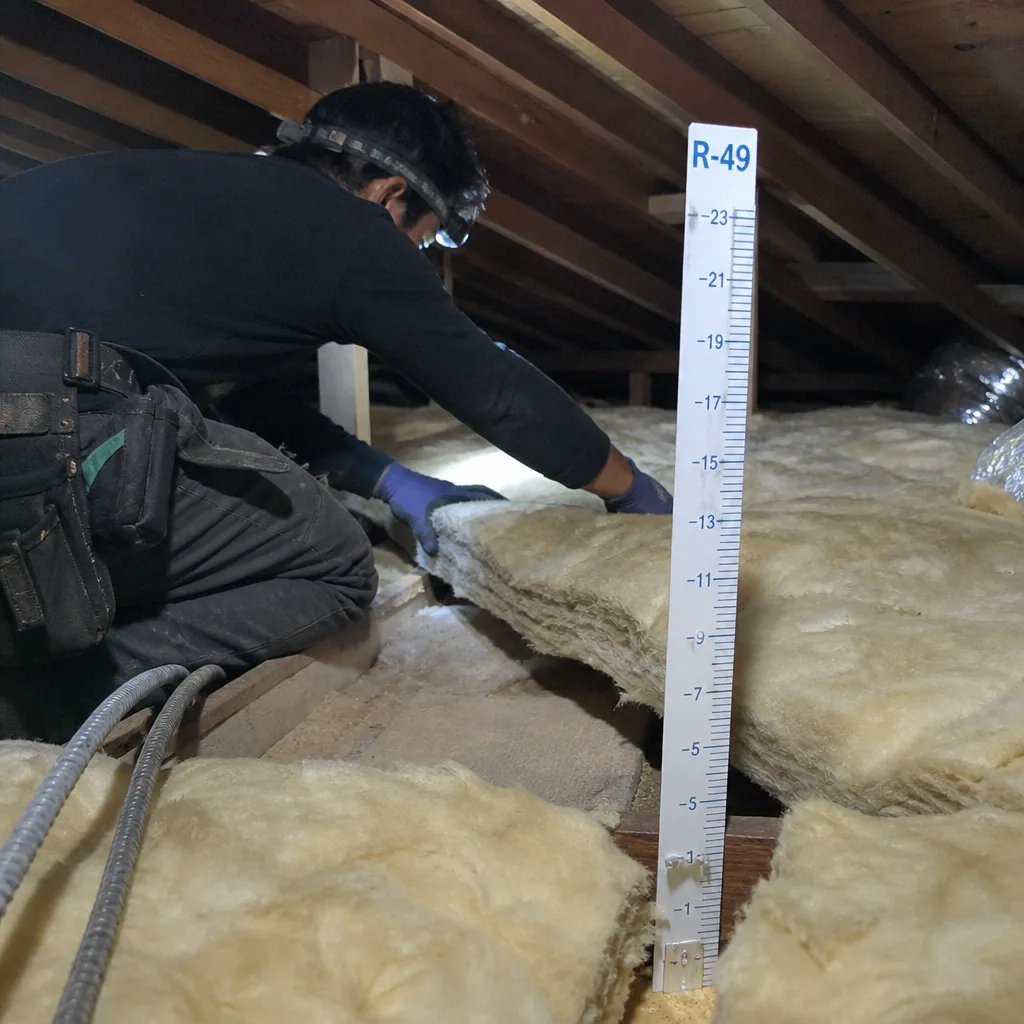
We are an independent Demilec service provider - not affiliated with or authorized by Demilec - which means we evaluate each job on its actual condition rather than following a manufacturer script. Wes Okafor has run insulation crews across the East Bay for well over a decade, including post-war ranches near Alvarado Adobe Park and newer construction along the Decoto corridor, and our technicians are background-checked, uniformed, and trained to recognize the difference between Heatlok XT and Sealection 500 failure patterns. Every Demilec crawl space job gets before-and-after blower-door numbers, a Documented Photo Record, and the 365-Day Done Right Promise backed by a written scope and warranty delivered before anyone lifts a tool. We also service Reflectix radiant barrier systems and other brands, so if your crawl space has mixed materials or a previous contractor used multiple product lines, we do not need to call in a second company.
A live person answers calls 24/7. No voicemail loops. No callback windows measured in business days.
FAQs
Demilec’s limited warranty covers original installation defects, not subsequent modifications or water damage from failed vapor barriers. As an independent Demilec service provider, we document our repair methods so you have a clear record if warranty questions arise later. We do not perform warranty claims on Demilec’s behalf - we fix the building. Call (650) 381-1512 and we will review your original installation paperwork with you.
We source Demilec-compatible foam when matching existing closed-cell density is critical for thermal continuity, but we are not locked to any single manufacturer. Our material list includes Owens Corning, Johns Manville, Knauf, Rockwool, CertainTeed, Icynene, Demilec, and GreenFiber. We specify which product we are using and why in the written scope.
Spot repair of isolated delamination or shrinkage gaps typically costs 40-60% less than full removal and reapplication. However, if the foam has absorbed water - common with Sealection 500 in unvented crawl spaces - partial repair traps moisture and guarantees future failure. We test with a moisture probe and recommend based on what the probe reads, not what costs less. Call (650) 381-1512 for a free written assessment.
Standard jobs with intact framing and no active water intrusion are completed in one to two days. If we find wood moisture above 19%, we install temporary dehumidification and return once readings hold at 15% or below for 48 hours. We do not encapsulate over wet substrates - the Haven Standard does not allow it.
Gray or black surface discoloration on Demilec open-cell foam usually indicates mold feeding on dust accumulation, not foam failure. Delamination, shrinkage gaps, or a squishy texture when probed with a screwdriver indicate structural failure. We use a pinless moisture meter and thermal imaging to distinguish cosmetic issues from performance problems during our free estimate. Call (650) 381-1512 to schedule - estimates include the full diagnostic.
Written by Wes Okafor, Owner & Lead Insulation Technician, Topside Attic Insulation Union City at Topside Attic Insulation Union City, serving Union City and nearby areas.