
CertainTeed Crawl Space Encapsulation: The Union City Owner’s Guide
Most CertainTeed crawl space encapsulation systems we install in Union City run between $3,800 and $7,200 for a complete vapor barrier, seam sealing, and conditioned-space conversion, depending on square footage and whether the foundation needs mechanical dehumidification. We stock CertainTeed-compatible 10-mil and 16-mil reinforced polyethylene barriers, closed-cell spray foam for rim joist sealing, and the full line of CertainTeed drainage matting on our trucks. Same-day installation is available for most Union City homes under 1,500 square feet of crawl space footprint.
Homeowners usually figure out something’s wrong when the hardwood floors above the crawl space start cupping in spring, or when the musty smell that used to stay downstairs starts riding the stack effect into the living room. Sometimes it’s a rodent tear in the barrier, sometimes it’s seam tape that gave up after five seasons of Union City’s clay-heavy soil moisture cycling. Either way, the encapsulation isn’t doing its one job: keeping ground moisture and outside air on the outside.
Which CertainTeed Models This Applies To
CertainTeed doesn’t sell crawl space encapsulation as a single branded “system” the way some competitors do. Instead, they manufacture the component materials that contractors assemble into a complete envelope: SmartFlash membrane-grade sheeting, CertaSpray closed-cell foam for rim joist and sill plate sealing, and CertainTeed drainage composites for sub-slab moisture management. If your crawl space was encapsulated between 2015 and 2023, there’s a decent chance the original contractor pulled from this stack, especially if the job was spec’d for low-VOC materials or green-building certification.
To identify what you’ve got, look for the CertainTeed logo printed on the vapor barrier itself, usually in the seam margin every 24 inches. The mil rating matters: 6-mil was common in budget jobs and tears on the soil contact face within 3-5 years in Union City’s shrink-swell clay; 10-mil and 16-mil are what we specify for permanent installations. The CertaSpray application should have a job card left by the original contractor noting the board feet and lift thickness. If you don’t have documentation, we can core-sample the foam during inspection.
OEM CertainTeed materials versus aftermarket equivalents: the membrane itself is commodity-grade reinforced polyethylene, so a quality aftermarket 16-mil barrier with woven scrim performs identically at lower cost. Where we stick with CertainTeed spec is the closed-cell foam, because their CertaSpray 170 formulation hits R-6.5 per inch at 1.75 lb density, which is the minimum for dew-point control in Bay Area marine climate zones. Cheaper open-cell foam in a rim joist will absorb moisture and rot the sill plate. That’s not a place to save money.
Signs Your CertainTeed Crawl Space Encapsulation Is Failing
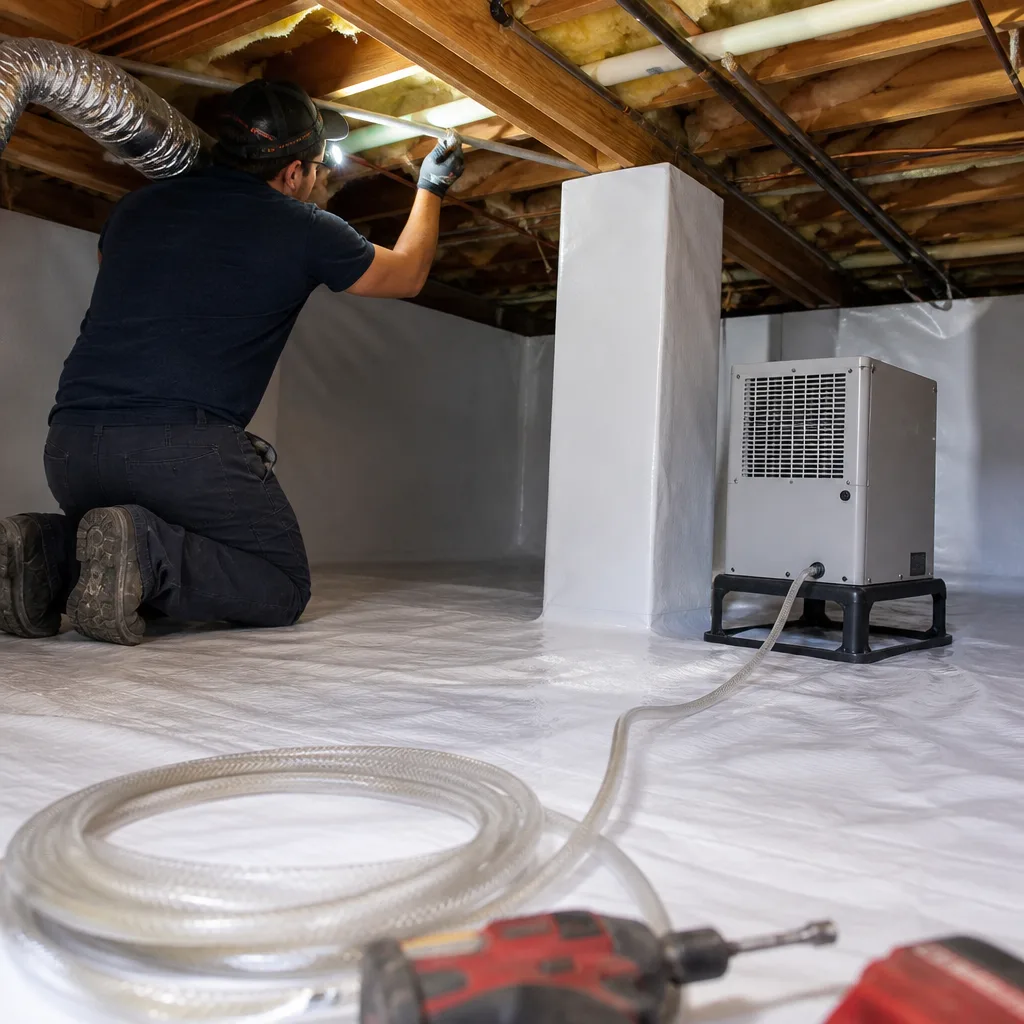
- Condensation on the barrier underside. Water beading on the soil-facing surface means your dehumidifier is undersized, dead, or never installed. In Union City’s climate, a passive encapsulation without mechanical drying will hit 80% relative humidity by July. The barrier stops evaporation into the crawl space, but the moisture has to go somewhere.
- Seam separation at the perimeter walls. The polyethylene was originally sealed to the foundation with butyl tape or polyurethane adhesive. When this lets go, usually at the north and east walls where winter wind drives infiltration, you’ve got a direct air path from outside to under your floor. Your blower-door number just jumped by 300-600 CFM50.
- Soft or cupped hardwood flooring above. Wood equilibrium moisture content in a sealed crawl space should sit at 10-12%. When the encapsulation fails, that number climbs to 16-18% and the boards swell across their width. We’ve measured this in ranch houses near Alvarado Adobe Park where the original 6-mil barrier lasted exactly four years.
- Musty odor that worsens in summer. This is usually mold on the joist bays, not the barrier itself. Once relative humidity stays above 60% for 48 hours, Aspergillus and Penicillium colonize the organic dust layer on wood surfaces. The smell is the volatile organic compounds off-gassing. Cleaning the mold without fixing the moisture source is painting over rust.
- Increased rodent activity. A torn barrier is an invitation. Mice and Norway rats tunnel under polyethylene easily once there’s an entry point, and they nest in the insulation between joists. We find this most often along the Decoto corridor in homes with older foundation vents that were supposed to be sealed during encapsulation but got missed.
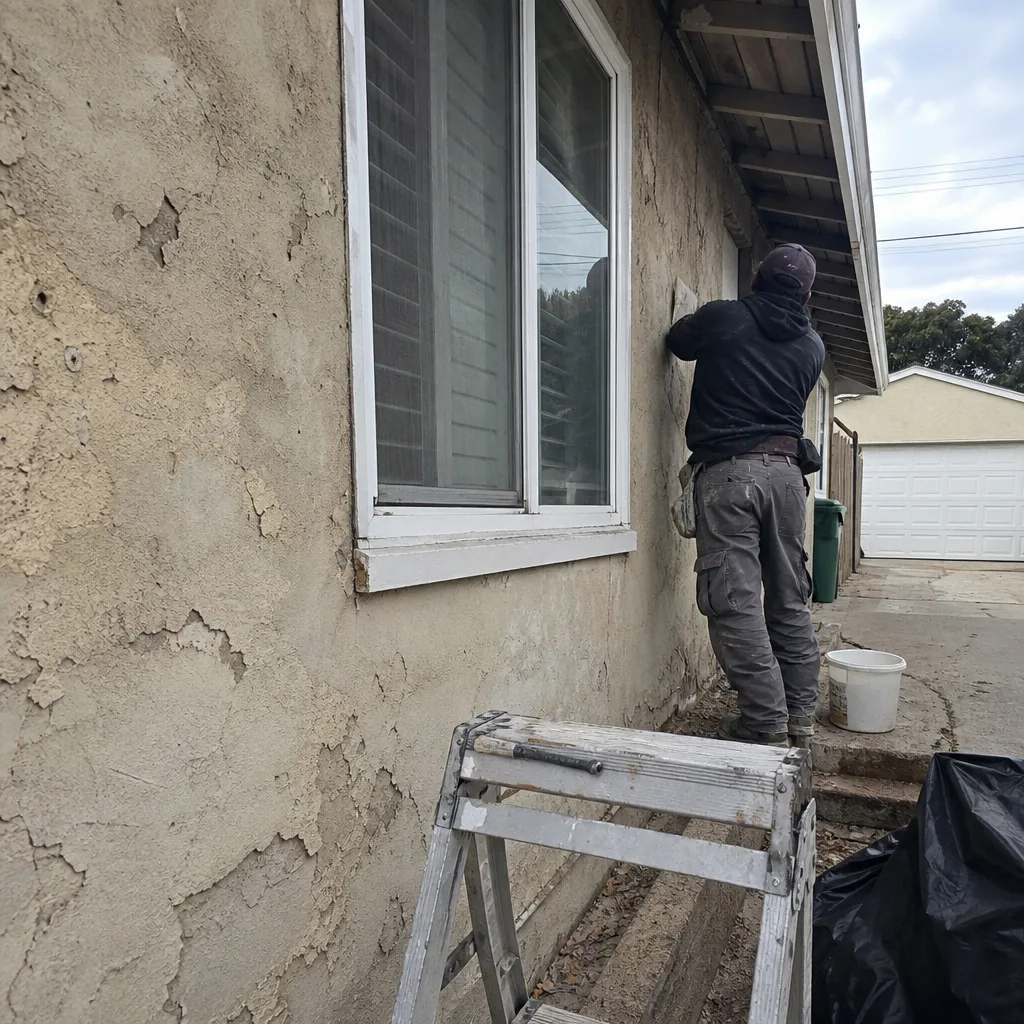 Before
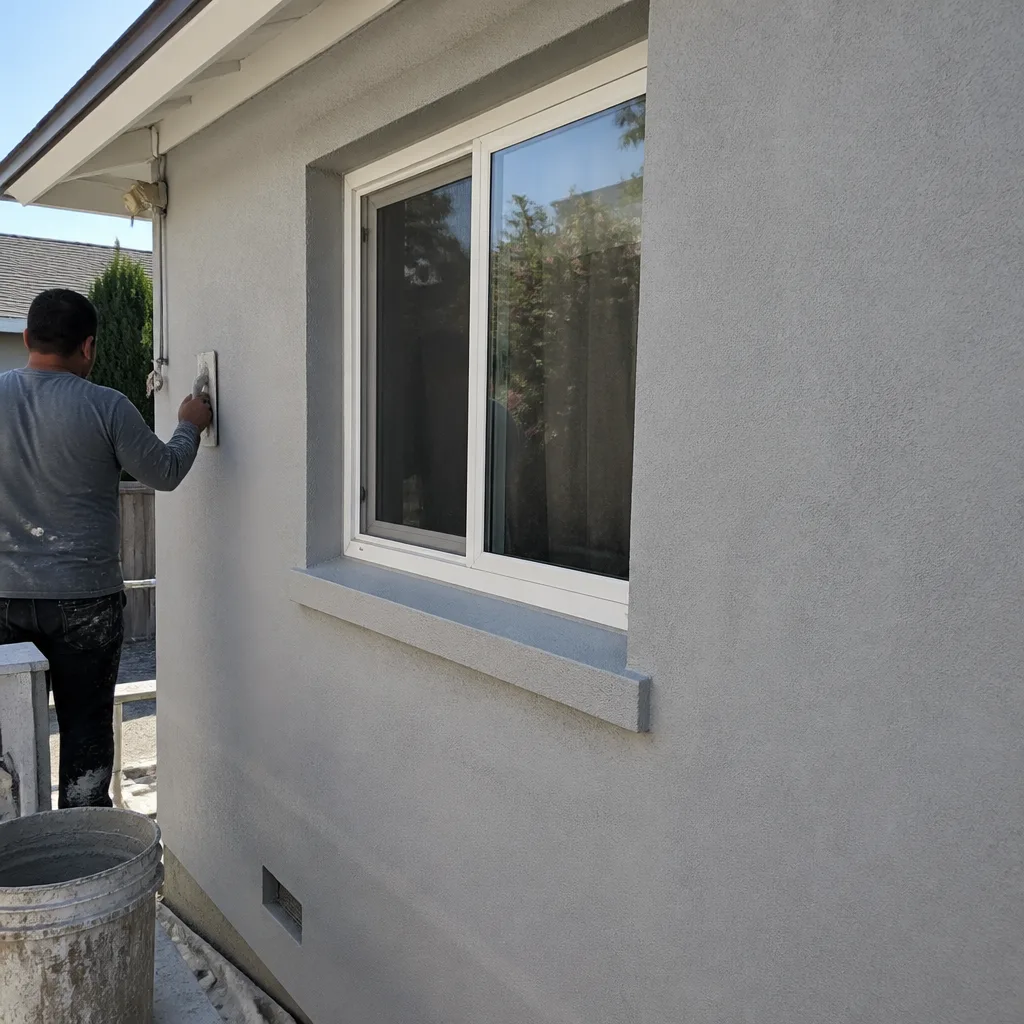 After
AfterReplacement Cost & What’s Included
| Component | Union City Price Range |
|---|---|
| 6-mil vapor barrier replacement (temporary fix) | $1,800 – $2,800 |
| 10-mil full encapsulation, standard crawl space | $3,800 – $5,400 |
| 16-mil reinforced encapsulation with drainage mat | $5,200 – $7,200 |
| Rim joist spray foam (CertaSpray or equivalent) | $1,200 – $2,400 |
| Mechanical dehumidifier installation | $1,400 – $2,800 |
What drives the range: square footage is obvious, but access matters more than people expect. A crawl space with less than 18 inches of clearance between soil and joist means we work on our backs with pole tools, doubling labor hours. Foundation wall condition is the other variable: if the original adhesive pulled off paint or spalling concrete, we need to grind and prime before resealing. We don’t guess at this. Our written price includes a scope line for wall prep, and we photograph the condition before we quote.
Every encapsulation job carries our 365-Day Done Right Promise and a written warranty against seam separation and material defect. The documented photo record shows the barrier layout, all seam overlaps (minimum 12 inches, per manufacturer spec), and the final blower-door reading if we’re also sealing the attic as part of a whole-house envelope job.
DIY or Call Us?
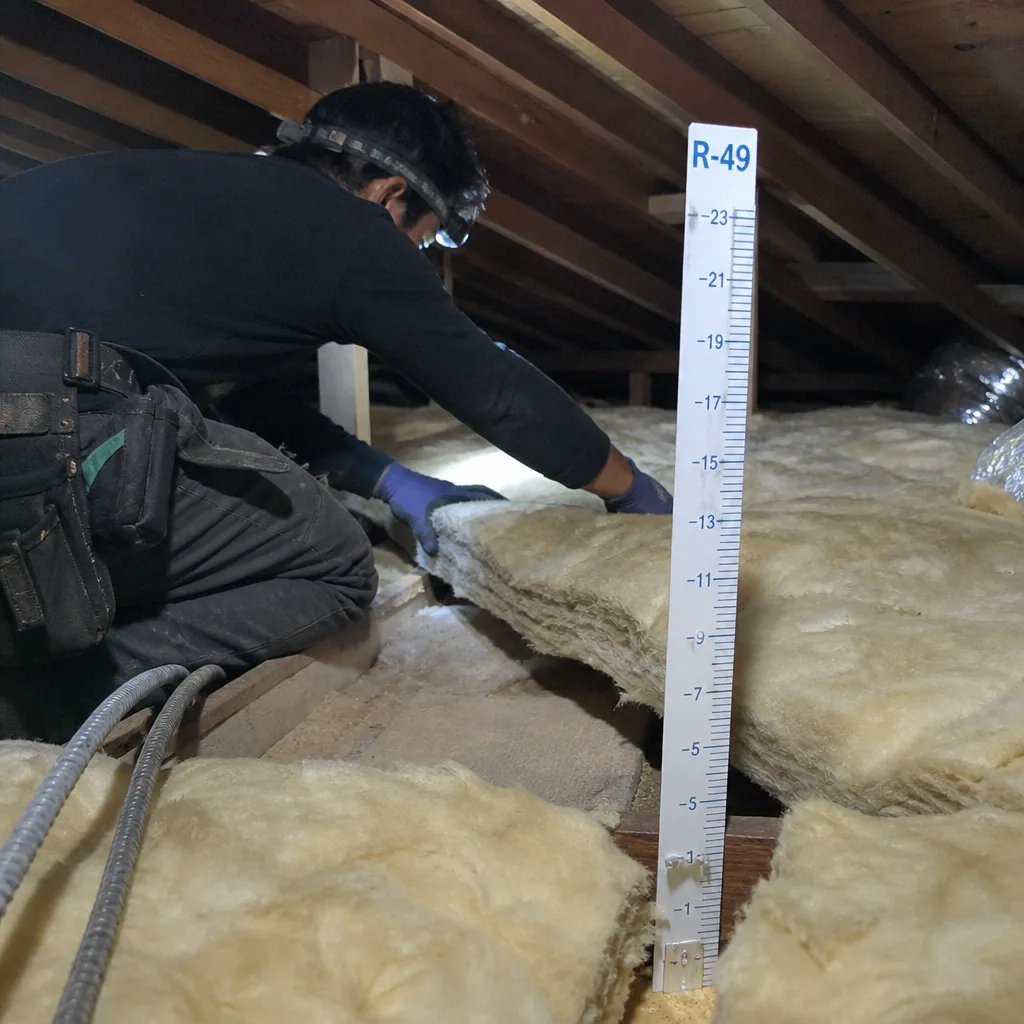
There’s no high-tension danger in crawl space work the way there is with garage door springs, but there are plenty of ways to spend money and make things worse. A homeowner can safely check: whether the dehumidifier display shows it’s running and the reservoir is empty; whether the barrier has obvious tears or displaced seams; whether foundation vents are actually sealed (not just covered with cardboard). Take photos. That’s useful information for any contractor.
Where DIY goes wrong: laying new polyethylene over old without addressing the moisture source traps water between layers and accelerates joist rot. Using hardware-store 6-mil sheeting without reinforcement means replacement in two years. And skipping the blower-door test means you never know if your crawl space is still connected to your attic via chase ways, plumbing penetrations, and top plates, which makes the encapsulation half-effective at best. Wes Okafor has seen this exact scenario in post-war Union City ranches where the owner sealed the crawl space beautifully but left the attic floor wide open. The R-value on the bag is what the material does in a lab. The number on your blower-door report is what your house actually does, and those two figures are not always friends.
If your CertainTeed encapsulation is failing, call (650) 381-1512. We’ll read your original scope if you have it, inspect what’s actually down there, and give you a written price before any work starts. Free second opinion on any competing estimate.
FAQs
A properly installed 10-mil or 16-mil reinforced barrier with mechanical dehumidification should last 20-25 years in Union City’s climate. The 6-mil grade commonly used in budget jobs typically fails at 3-5 years, especially where soil contact abrades the soil face. Call (650) 381-1512 and we’ll inspect what you have and tell you honestly whether it’s worth repairing or replacing.
Patching works for isolated punctures smaller than a dinner plate using compatible polyethylene tape and primer. If seams are failing at multiple points, if the barrier has become brittle, or if rodent damage is extensive, partial replacement usually costs more in labor than full replacement and leaves you with mismatched material ages. We stock patch kits for emergency repairs and will show you the difference during inspection.
Most Union City crawl spaces under 1,200 square feet are completed in one day if access is reasonable and no wall prep is needed. Tight crawl spaces, foundation grinding, or simultaneous dehumidifier installation push to two days. We don’t charge per day; the written price is the price.
We stock 10-mil and 16-mil reinforced polyethylene barriers, closed-cell spray foam for rim joist work, drainage matting, mechanical dehumidifiers, and all seam tapes and adhesives. CertainTeed CertaSpray is ordered to spec for each job due to shelf-life constraints on the A and B components. We also stock Reflectix radiant barrier materials for hybrid encapsulation jobs where the homeowner wants thermal reflection at the foundation walls. Topside Attic Insulation Union City is an independent service provider and is not affiliated with CertainTeed Corporation.
Written by Wes Okafor, Owner & Lead Insulation Technician, Topside Attic Insulation Union City at Topside Attic Insulation Union City, serving Union City and nearby areas.