
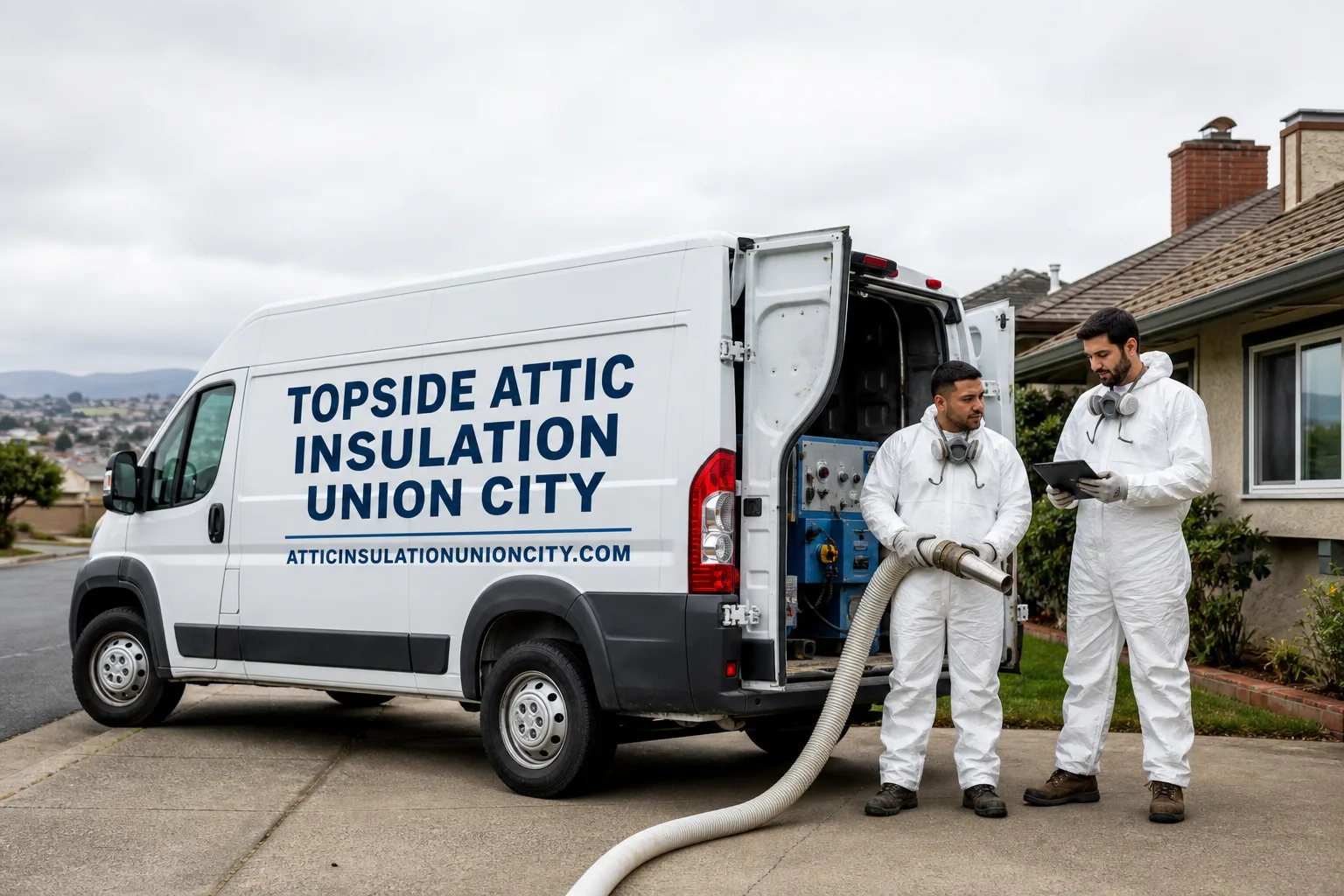
How Much Does Wall Insulation Cost in Union City?
Wall insulation in Union City, CA typically costs between $1.50 and $4.25 per square foot of wall area, which works out to roughly $1,800 to $6,500 for an average single-family home depending on wall type, insulation material, and whether air sealing is done first. Most homes we visit in the Decoto and Alvarado neighborhoods fall in the $2,400 to $4,800 range once you account for labor, material, and a proper blower-door test to confirm the result. At Envelope Insulation Co., our Wall Insulation services come with a written price before any work starts – that number is on paper before anyone touches a wall.
Wall Insulation Cost Breakdown (2026)
Wall insulation in Union City is priced by method and material. The three paths most homeowners choose are blown-in dense-pack for existing walls, batt insulation during a remodel when walls are already open, and spray foam for specific problem areas like rim joists and band joists. Here is how the numbers typically land in this market:
| Method | Material | Installed Cost per Sq Ft | Typical Job Total (1,400 sq ft home) |
|---|---|---|---|
| Blown-in dense-pack (retrofit) | Cellulose (GreenFiber) | $2.00 – $3.25 | $2,400 – $4,200 |
| Blown-in dense-pack (retrofit) | Fiberglass (Johns Manville) | $2.25 – $3.50 | $2,600 – $4,500 |
| Batt (open-wall remodel) | Fiberglass (Owens Corning, CertainTeed) | $1.50 – $2.50 | $1,800 – $3,200 |
| Batt (open-wall remodel) | Mineral wool (Rockwool) | $2.00 – $3.25 | $2,400 – $4,200 |
| Spray foam (targeted / rim joist) | Open-cell (Icynene/Demilec) | $1.75 – $3.00 (wall area) | $800 – $2,500 (partial) |
| Spray foam (targeted / rim joist) | Closed-cell | $3.50 – $5.50 | $1,200 – $4,000 (partial) |
| Air sealing (pre-insulation) | Foam, caulk, gaskets | $0.40 – $0.90 per sq ft | $500 – $1,200 (standalone) |
| Blower-door test | Diagnostic (before and after) | Flat fee | $300 – $600 |
A note on how we count “square footage” here: this is the wall cavity area to be insulated, not the floor plan square footage of your home. A 1,400 sq ft ranch in the Barnington neighborhood might have 1,100 to 1,400 square feet of insulated wall cavity area once you subtract windows, doors, and interior partitions. We measure this on-site and give you the exact number in writing before we price anything.
What drives the number up
Union City has a large share of 1960s and 1970s tract homes – particularly around Decoto Road and the older blocks near Union City BART – built with 2×4 stud walls and very little or no original insulation. Those walls are a clean slate in one sense, but they also tend to have old knob-and-tube-era blocking, horizontal fire blocks every four feet, and wiring that makes drilling access holes more involved. That drives labor time up. Expect the higher end of the range on a pre-1980 home with original walls.
Climate also plays a role that is specific to the East Bay. Union City sits at the base of the hills and gets marine air pushing in through the Altamont Pass corridor more than inland cities like Livermore or Tracy. That persistent delta breeze means wall air leakage – the rate at which conditioned air escapes through gaps in the building envelope – causes more discomfort in Union City than in a drier climate would suggest. We see this in blower-door numbers regularly. A home on Alvarado-Niles Road that reads 5,800 CFM50 (cubic feet per minute at 50 pascals of pressure, a measure of whole-house air leakage) before we touch a wall cavity can drop to 3,200 after sealing top plates, can lights, and wall penetrations. That sealed result matters for comfort far more than the R-value of the insulation material alone.
What keeps costs lower
Open walls during a kitchen or bathroom remodel are the single biggest cost reducer. When drywall is already off, batt installation runs significantly less than drilling and blowing into finished walls. If you are planning a remodel in the next 12 months, coordinating insulation at the rough framing stage is the most cost-efficient path by a clear margin. We also see lower per-square-foot labor on larger homes – the mobilization cost is the same whether we’re doing 800 square feet of wall cavity or 2,000, so the unit price drops on bigger jobs.
What Affects Wall Insulation Pricing in Union City
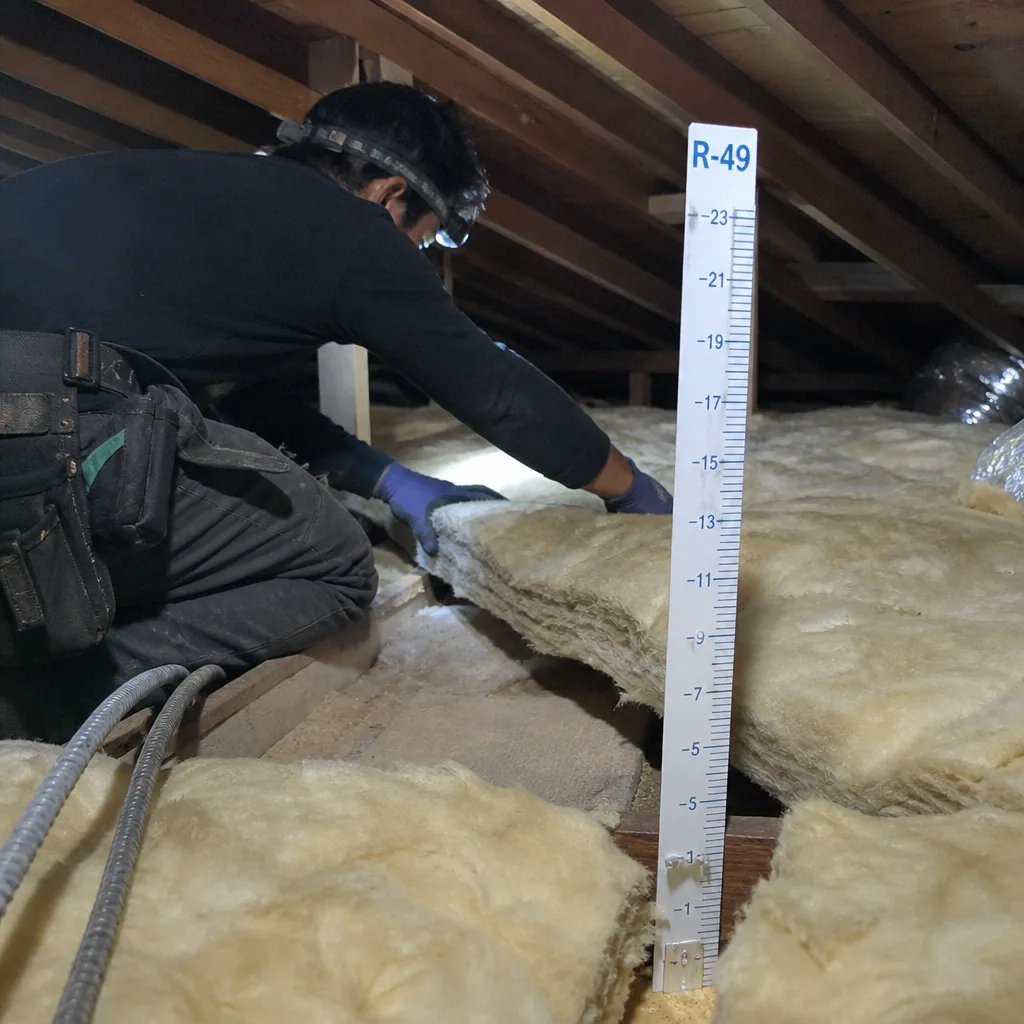
- Wall construction type: 2×4 framing (common in pre-1990 Union City homes) holds less insulation depth than 2×6 framing. A 2×4 cavity maxes out at roughly R-15 with dense-pack cellulose; a 2×6 can reach R-21 or higher. If you’re adding continuous rigid foam to the exterior – a strategy some Decoto-area homeowners use during siding replacements – the total assembly R-value climbs further, and so does cost.
- Access method for retrofit jobs: Blowing insulation into closed walls requires drilling 2-inch holes from the exterior (through siding) or interior (through drywall), filling every cavity bay, and patching afterward. Vinyl or stucco siding – both common in Union City’s newer tracts – adds complexity compared to wood lap siding. Stucco patch and repaint can add $300 to $800 to a job depending on how many holes need to be made and matched.
- Air sealing prerequisites: At Envelope Insulation Co., air sealing is a hard prerequisite, not an optional add-on. We do not blow insulation over an unsealed wall or attic floor. In practice, this means sealing top plates, electrical penetrations, and any can lights before insulation goes in. On a home that needs meaningful air sealing work – which is most Union City homes built before 1995 – that adds $500 to $1,200 to the total project cost, but it’s also the step that actually moves the blower-door number and the comfort of the house.
- Insulation material choice: Dense-pack cellulose (GreenFiber) is often the most cost-effective blown material for retrofit walls and performs well in Union City’s mild but damp coastal climate because of its ability to absorb and release moisture without degrading. Rockwool batts cost more per square foot but are dimensionally stable, fire-resistant, and worth the premium in specific applications like garage-adjacent walls or shared-unit demising walls. Closed-cell spray foam costs the most but creates both a vapor barrier and a structural bond.
- Permit requirements: Alameda County building permits for insulation-only work on existing walls are not typically required in Union City for interior improvement projects, but projects that include changes to wall assemblies, exterior cladding, or HVAC systems may trigger a permit. We walk through this during the estimate – and the written scope will note whether a permit applies before any work starts.
- Number of stories and wall height: Single-story ranch homes are straightforward. Two-story homes in Union City’s newer planned tracts – particularly around Appian Way and the Mission Boulevard corridor – require scaffolding or ladder positioning for second-floor exterior wall access. That added setup time is reflected in the quote, not discovered afterward.
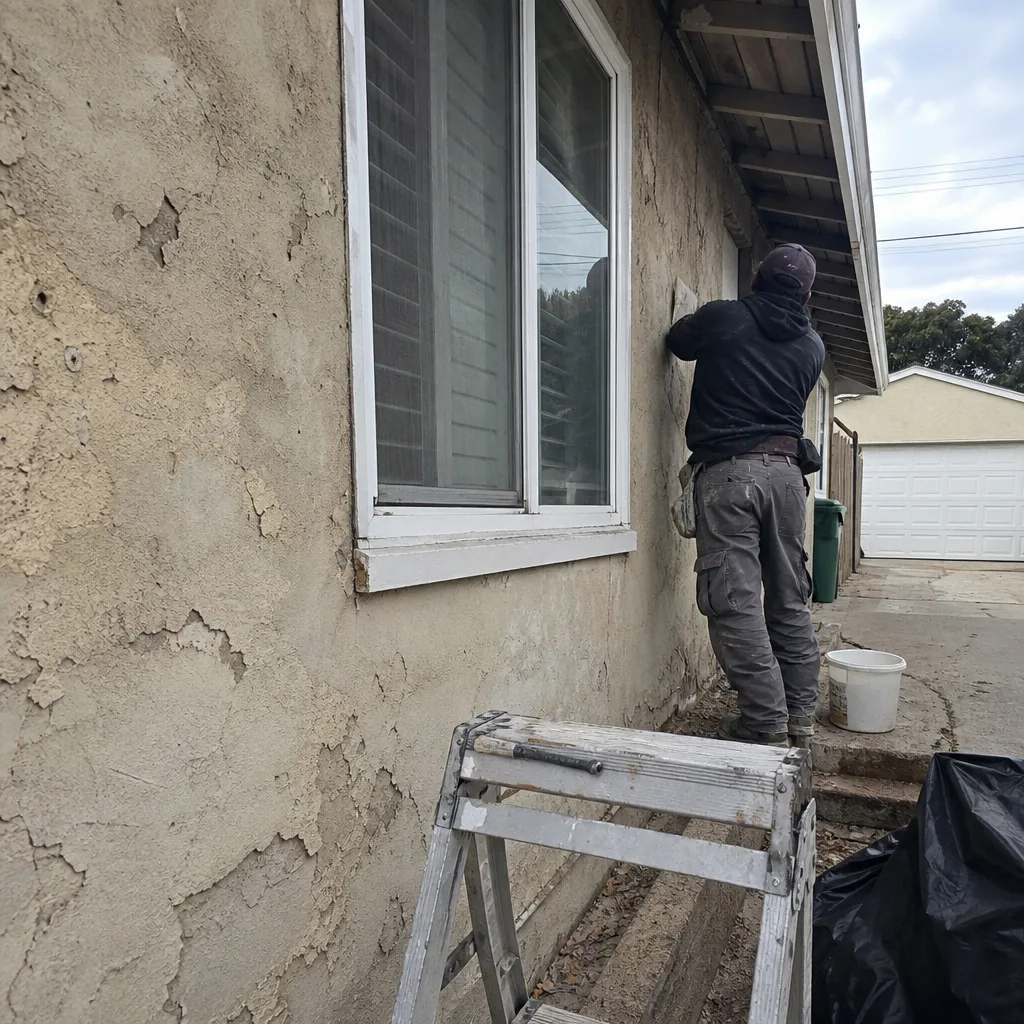 Before
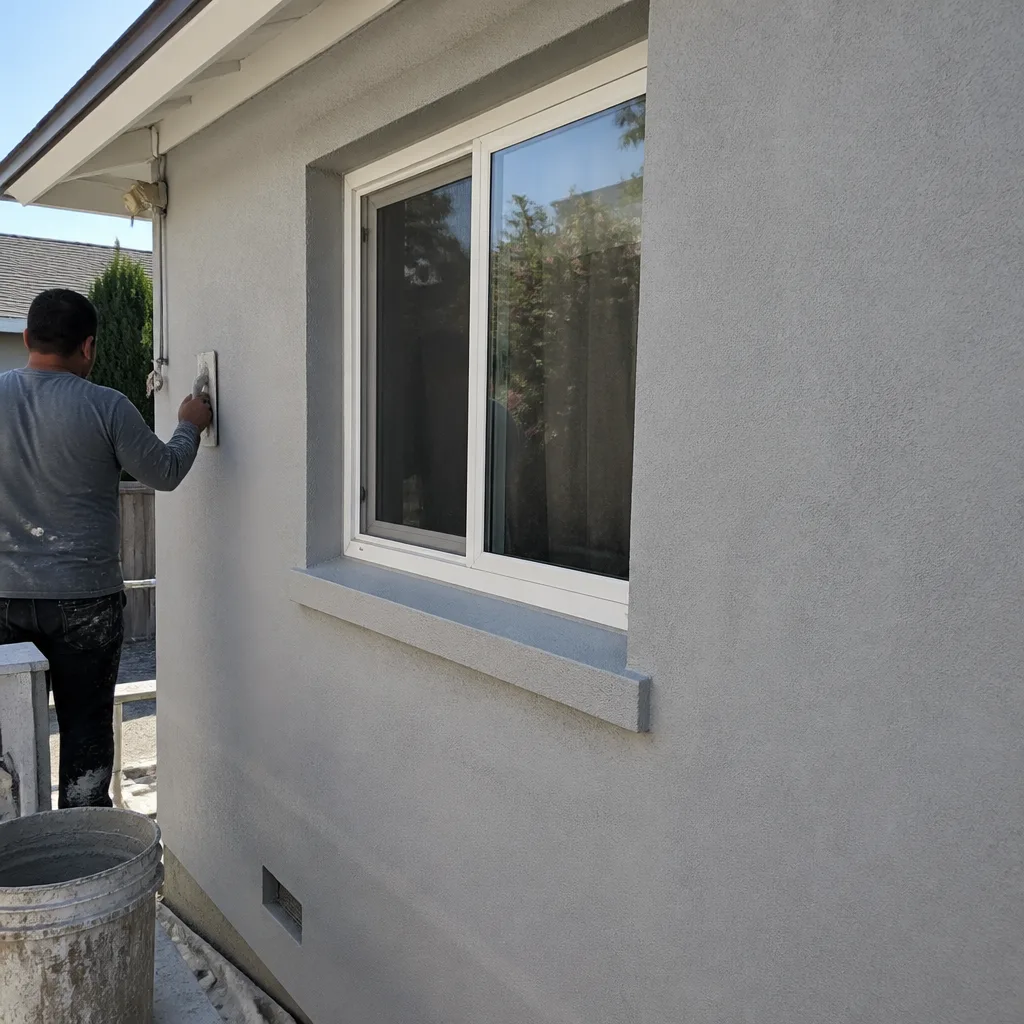 After
AfterDense-Pack vs. Batt vs. Spray Foam: Which Makes Sense for Your Home
This comes up at almost every estimate we run in Union City, so it’s worth walking through plainly.
Dense-pack blown-in (retrofit walls)
This is the right call for most finished Union City homes where you’re not planning to open the walls. We drill small access holes, blow cellulose or fiberglass at high density so it can’t settle, patch, and paint. The result is a wall cavity filled end to end at R-13 to R-21 depending on depth. GreenFiber cellulose holds up well in the Bay Area’s coastal humidity cycle. On a typical 1,400 square foot Decoto-area home with 2×4 walls, expect $2,400 to $4,200 all-in for this method.
Batt insulation (open walls during remodel)
Owens Corning and CertainTeed fiberglass batts, or Rockwool mineral wool, are the standard choice when walls are already open. Batts are faster to install and cost less per square foot because there’s no drilling, patching, or specialized equipment. The trade-off is that batts must be installed without gaps or compression to perform at their rated R-value – a 2×4 cavity with a compressed batt or a missed section will perform worse than its label suggests. We document the installation with photos before drywall goes back up, so there is a record of what’s inside the wall.
Spray foam (targeted applications)
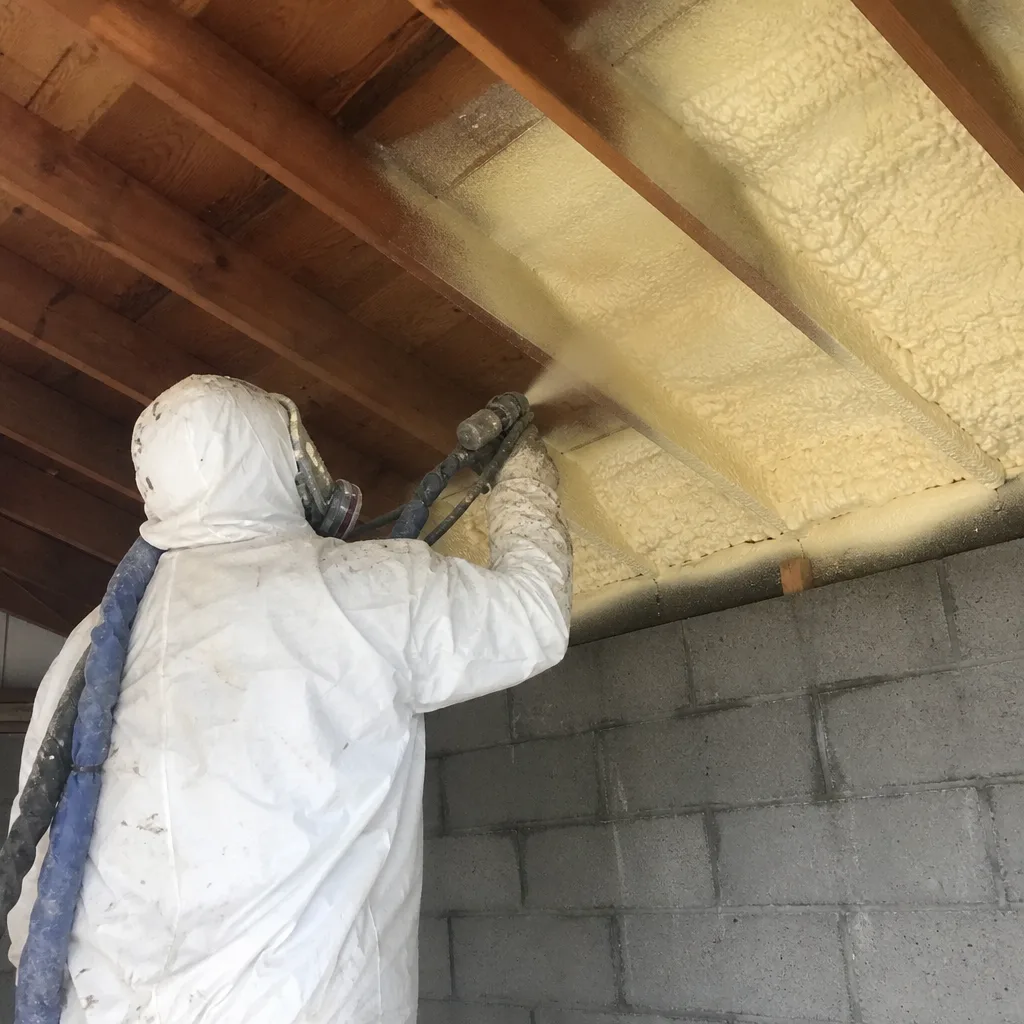
Open-cell foam from Icynene or Demilec works well in specific situations: rim joists, band joists, irregular cavities, or walls where you also need vapor management. Closed-cell foam is the highest-performance option per inch of depth – useful in tight spaces where you can’t achieve adequate R-value any other way. It’s also the most expensive. For whole-house wall insulation in a standard Union City single-family home, spray foam is rarely the most cost-effective path; it’s most useful as a targeted solution alongside other methods.
Why Air Sealing Comes Before the Insulation – Every Time
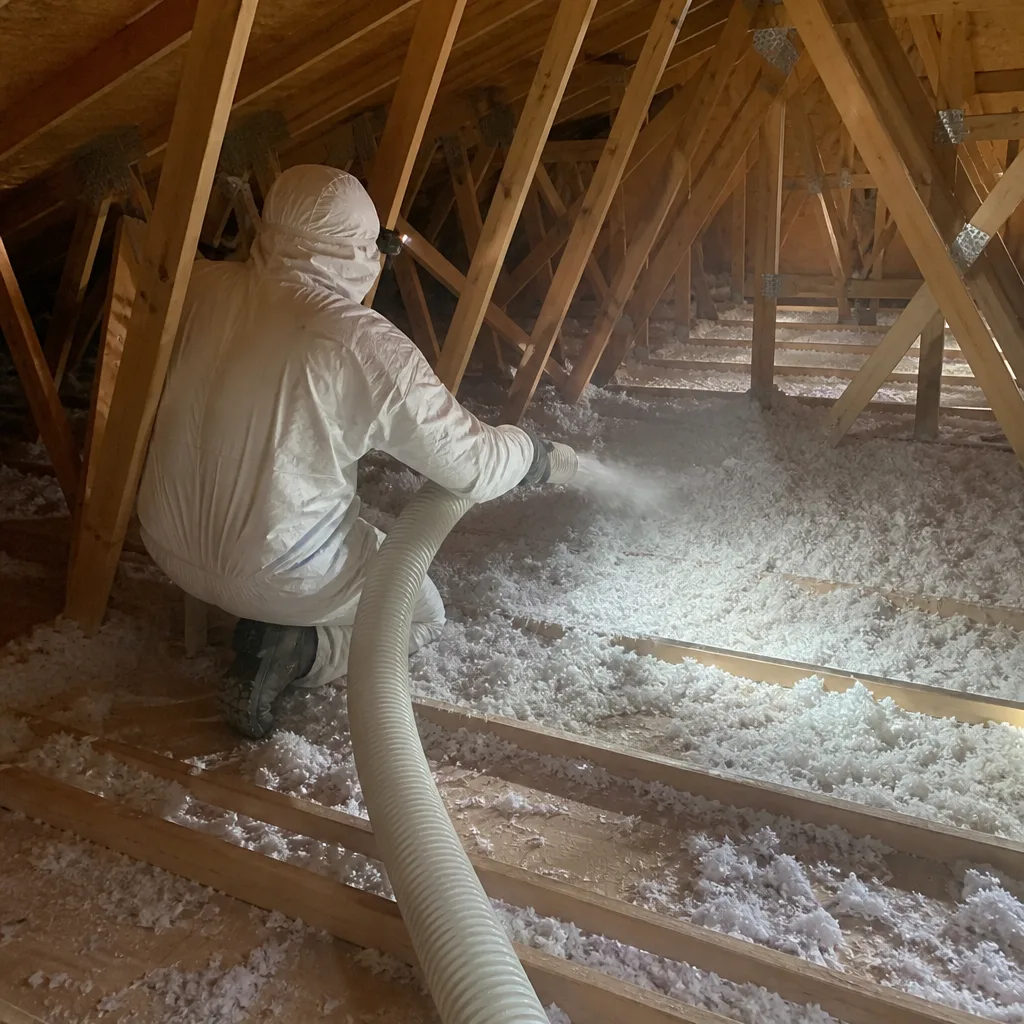
This is the part of our process that most homeowners haven’t heard from other contractors, and it matters for both performance and cost transparency.
Insulation slows the conduction of heat through a wall. Air sealing stops the movement of air through gaps, cracks, and penetrations in the building envelope. These are two separate mechanisms, and they work best when done in sequence: seal first, then insulate. A wall filled with R-15 dense-pack cellulose but bypassed by an air leak at the top plate or an unsealed electrical box is still going to move conditioned air out of the house. The insulation label won’t warn you about that.
We measure the starting condition with a blower-door test – a pressurization measurement that puts the whole building envelope under 50 pascals of pressure and reads how many cubic feet of air per minute are escaping. In Union City homes built before 1990, we regularly read 4,000 to 7,000 CFM50. After sealing top plates, penetrations, and recessed lights, and then installing wall insulation, that number drops – typically 35 to 55 percent on homes that hadn’t been touched since original construction. We publish those before-and-after numbers on every applicable job. You’ll see the actual figure, not a percentage claim without a baseline.
This is what the Haven Standard means in practice. The written scope we hand you before work starts will list the expected pre and post blower-door targets. If we don’t hit the target, the 365-Day Done Right Promise covers the remediation – in writing.
Union City-Specific Considerations
A few things about Union City’s housing stock and climate that affect insulation decisions in ways that don’t apply the same way in, say, Fremont or Hayward.
The marine influence is real. Union City’s location relative to the San Francisco Bay means nighttime temperatures drop sharply in summer while daytime temps can reach the mid-80s. That daily temperature swing drives thermal load through walls in ways that favor continuous insulation assemblies over batts with gaps. We see more condensation-related issues in Union City wall cavities – particularly on north-facing walls – than in drier East Bay cities. Dense-pack cellulose handles this better than fiberglass batts alone because cellulose can absorb and release moisture without losing structural integrity.
The older Decoto neighborhood has a lot of original walls. Homes built between 1955 and 1975 in the Decoto area frequently have no insulation at all in exterior walls – just hollow 2×4 cavities. A blower-door test on one of these homes before any work reads like a screen door. The good news is that a dense-pack retrofit on a completely empty cavity is more straightforward than one with deteriorated original insulation that needs removal first. Removal adds cost: typically $0.75 to $1.50 per square foot on top of reinstallation.
Some Union City homes have stucco exteriors. Stucco is common on the post-1980 ranch and two-story homes along Mission Boulevard. Drilling through stucco for blown-in access requires a carbide-tipped bit and more care to avoid cracking the finish coat. Patch and color-match add cost and require a separate drywall and paint trade or a combined scope. We build this into the written quote and photograph the stucco condition before drilling so there’s no dispute about pre-existing cracks.
How to Save on Wall Insulation
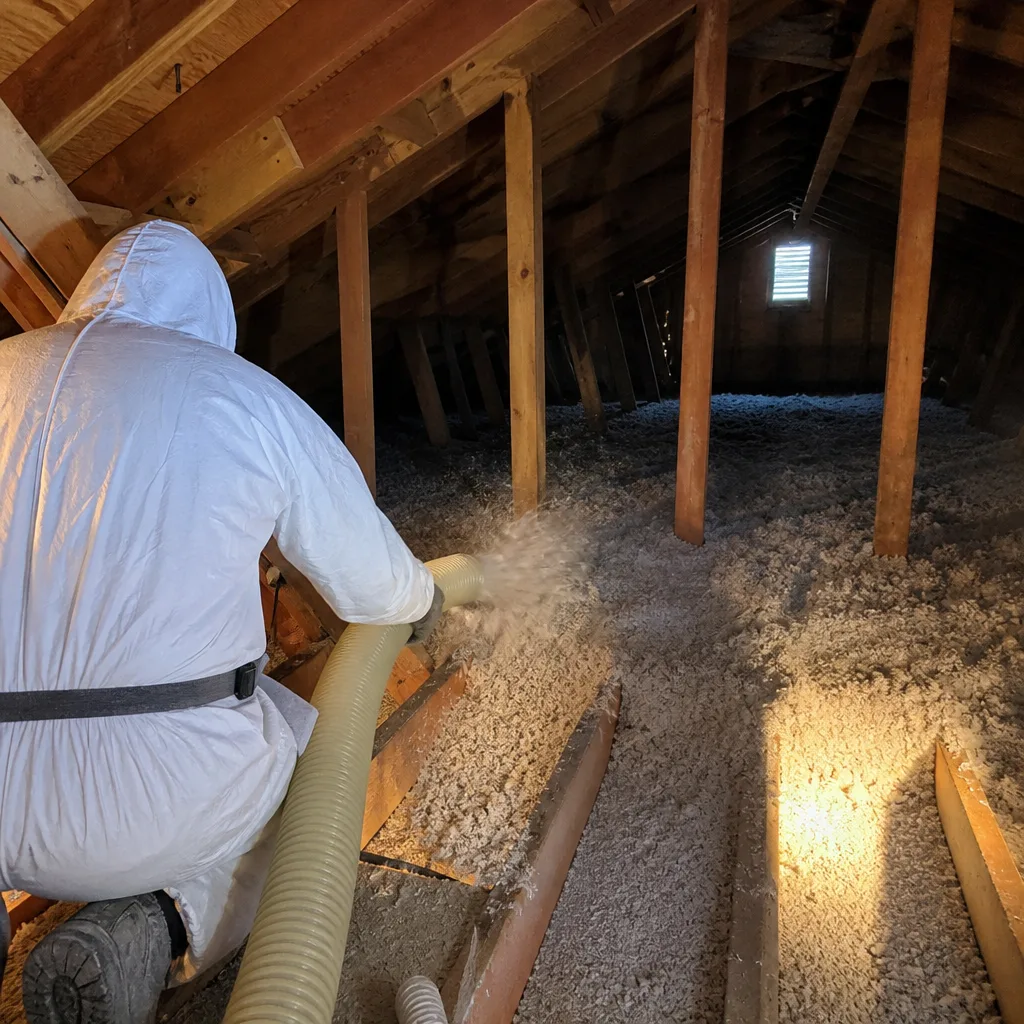
There are real ways to reduce the cost of this project without cutting corners on performance. Here’s what we tell homeowners who are working with a firm number.
- Time it with a remodel: If you’re opening walls for a kitchen update, bathroom renovation, or electrical panel upgrade in the next 12 months, add insulation to the rough-in scope. Batt installation on open walls costs 30 to 50 percent less per square foot than blowing into finished walls.
- Prioritize by exposure: Not every wall needs to be done at once. In most Union City homes, the biggest thermal and air-leakage gains come from north and west-facing exterior walls. We can sequence the work so you address the highest-impact walls first and budget the rest across a second phase.
- Check for utility rebates: PG&E’s Energy Upgrade California program offers incentives for qualifying insulation work in Alameda County. The rebate amounts shift year to year, but in 2026, wall insulation paired with air sealing has qualified for rebates in the $150 to $500 range depending on square footage and pre-improvement blower-door readings. We document the before-and-after blower-door numbers you need for those applications.
- Get a second opinion on any written estimate: Under the Haven Standard, we offer a Free Second Opinion on any written estimate you’ve received. Bring us the competing quote and we’ll walk through it with you line by line – material by material, access method, whether air sealing is included, whether the blower-door test is in there. A lot of low bids leave out air sealing entirely; that’s not a savings, it’s a gap in the scope that shows up in your energy bill.
- Bundle with attic work: Mobilization is the same whether we’re doing walls only or walls plus attic. If your attic insulation is also below current California Title 24 minimums – R-38 for most Union City climate zones – bundling the two scopes on one mobilization usually saves $400 to $900 compared to scheduling them separately.
To get a written price specific to your home’s wall area, construction type, and condition, call us at (650) 381-1512. The estimate is free, the price is written before anyone starts, and if you’ve already got a quote from another contractor, bring it with you.
What You’ll Receive After the Job
This section exists because most homeowners have no idea what documentation they should expect from an insulation contractor, which makes it hard to hold anyone accountable afterward.
When Envelope Insulation Co. completes a wall insulation job in Union City, here is what you receive:
- Written scope and written price, signed before work starts – Haven Standard Clause 1.
- Documented photo record of conditions before work begins: wall cavity access points, any existing insulation or damage found, stucco or siding condition at drill points.
- Installation photos showing material density and coverage before walls are closed – so there is a record of what’s inside the cavity.
- Before-and-after blower-door readings (CFM50) on applicable jobs, so you can see the air-leakage change as a specific number, not a claim.
- Written warranty under the 365-Day Done Right Promise: if it’s not right, we make it right.
Most insulation contractors hand you a receipt. We hand you a file. That distinction matters when you’re selling the home, applying for a utility rebate, or trying to understand why a room still runs warm two years later.
FAQs – Wall Insulation Cost in Union City
How much does it cost to insulate walls in an average Union City home?
Most single-family homes in Union City run between $2,400 and $4,800 for a full exterior wall insulation project using blown-in dense-pack cellulose or fiberglass in finished walls. Homes with open walls during a remodel can come in lower – $1,800 to $3,200 for batt installation. Older homes in the Decoto area with no original wall insulation, or homes with stucco exteriors, tend toward the upper portion of the range. The only way to get a number specific to your home is a written estimate after a site visit. Call (650) 381-1512 – the estimate is free and the price is on paper before any work starts.
Is it worth insulating walls in an existing Union City home that already has some insulation?
It depends on what’s there. Fiberglass batts installed in the 1970s and 1980s can settle and lose 20 to 30 percent of their original R-value over time. A blower-door test will tell you more about actual performance than the original installation date. If the existing insulation is significantly settled or was never installed correctly, removal and reinstallation typically runs $2.25 to $4.75 per square foot all-in, compared to $2.00 to $3.50 for a retrofit on an empty cavity. We inspect the existing condition before quoting and photograph what we find. Call (650) 381-1512 for a written assessment.
Does wall insulation require a permit in Union City, CA?
In most cases, insulation-only improvements to existing interior walls in Union City do not require a building permit from the City of Union City’s Community Development Department. However, if the scope includes changes to exterior cladding, structural modifications, or HVAC work, a permit may be required. Projects subject to California Title 24 energy compliance – typically triggered during permitted renovations – may require documentation of insulation R-values. We clarify permit requirements during the estimate and note them in the written scope. If a permit is needed, we tell you before work starts, not after.
What’s the difference in cost between blown-in and batt wall insulation?
Blown-in dense-pack in finished walls runs $2.00 to $3.50 per square foot installed. Batt insulation in open walls runs $1.50 to $3.25 per square foot depending on material (fiberglass vs. Rockwool mineral wool). The cost gap narrows when you factor in patching and painting for blown-in work. For a finished Union City home where walls won’t be opened, blown-in is usually the only practical option and performs better than batts when installed at proper density. For open-wall remodels, batts are faster and less expensive. The right answer depends on your home’s situation, which is why the estimate starts with a site visit.
Does Envelope Insulation Co. include air sealing with wall insulation?
Yes, and it’s not optional. Air sealing of top plates, electrical penetrations, can lights, and wall bypasses is a hard prerequisite before any insulation is installed. We do not blow insulation over an unsealed building envelope. In practical terms, this adds $500 to $1,200 to most Union City jobs where meaningful sealing work is needed – but it’s also what actually moves the blower-door number and the comfort of the house. The air sealing scope is itemized in the written price so you can see exactly what you’re paying for. On applicable jobs, we run a blower-door test before and after to document the result. Call (650) 381-1512 if you want to walk through what that looks like for your specific home.
Explore More From Envelope Insulation Co.
If you’re researching wall insulation costs in Union City, these related resources may also be useful. You can learn more about our full service line on our home page, or go deeper into what the installation process looks like on our Wall Insulation in Union City service page.
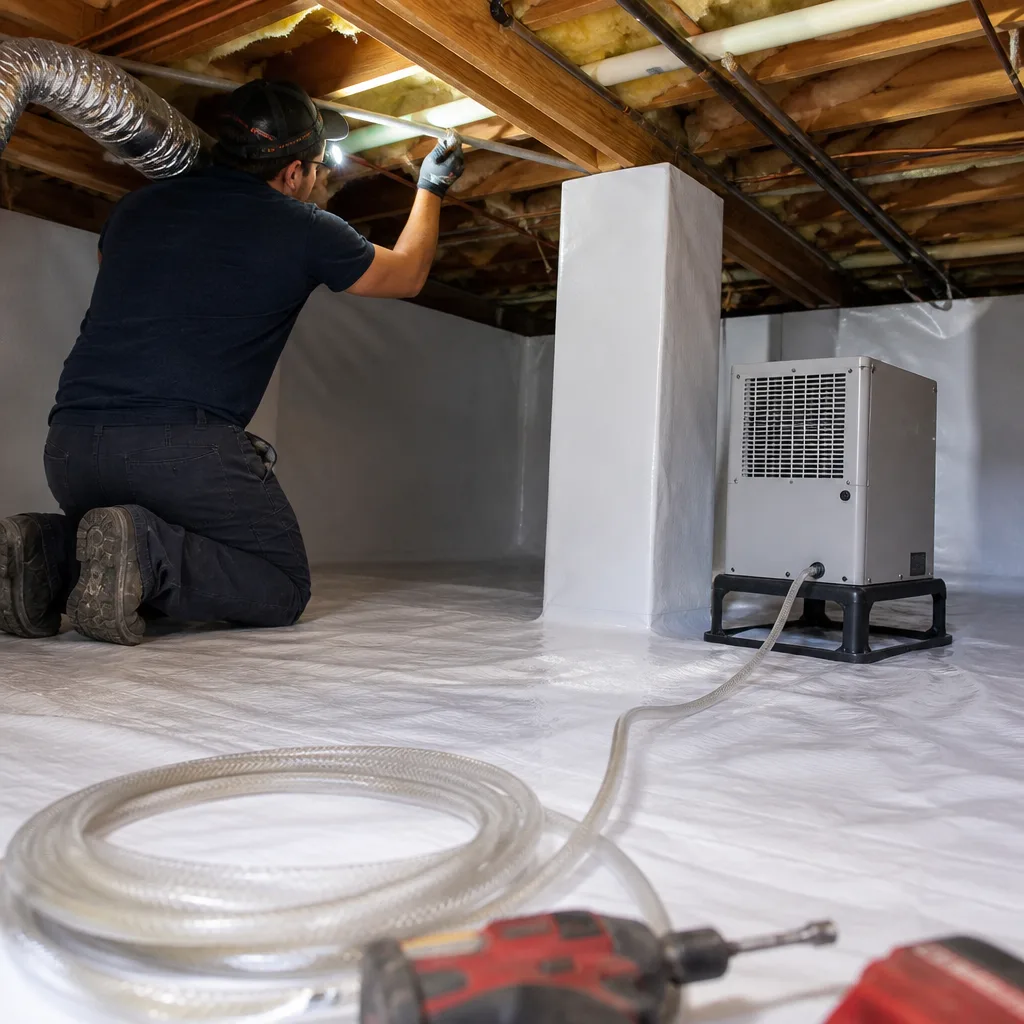
Wall insulation is one part of a complete building envelope. Many homeowners in Union City pair wall insulation projects with attic insulation, blown-in insulation, attic air sealing, crawl space encapsulation, or a home energy audit to get a full picture of where conditioned air is being lost. We can scope any or all of these on a single visit.
Get a Written Price for Your Union City Home
Wall insulation pricing in Union City ranges from $1,800 to $6,500 for most single-family homes, with the majority of jobs landing between $2,400 and $4,800. The exact number depends on wall construction, material choice, access method, air sealing needs, and whether existing insulation needs to come out first.
At Envelope Insulation Co., Wes Okafor and the team have documented every job with a written price and a photo record since 2016 – 9,000-plus homes sealed and insulated, every one under the Haven Standard. The written price comes before any work starts. The blower-door numbers confirm the result after. The 365-Day Done Right Promise covers the work if anything falls short.
Call (650) 381-1512 to schedule a free estimate. A live person answers. You’ll get a named technician, a text when they’re on the way, a written price at the appointment, and no pressure to decide on the spot.
Pricing reflects the Union City, CA market as of 2026. Written by Wes Okafor, Owner at Envelope Insulation Co. (operating as Topside Attic Insulation Union City), serving Union City since 2016. Call (650) 381-1512 for a free written estimate.
What Our Customers Say
"They air-sealed the attic floor before insulating and showed me the blower-door number before and after. The upstairs is finally the same temperature as downstairs."
- Marisol D."Two other companies quoted to blow more insulation on top of what was there. These were the only ones who said the existing material had to come out first, and explained why."
- Clifford E."They photographed rodent damage in the old insulation that we had no idea about, and priced the exclusion work separately so we could decide."
- Harriet N.