
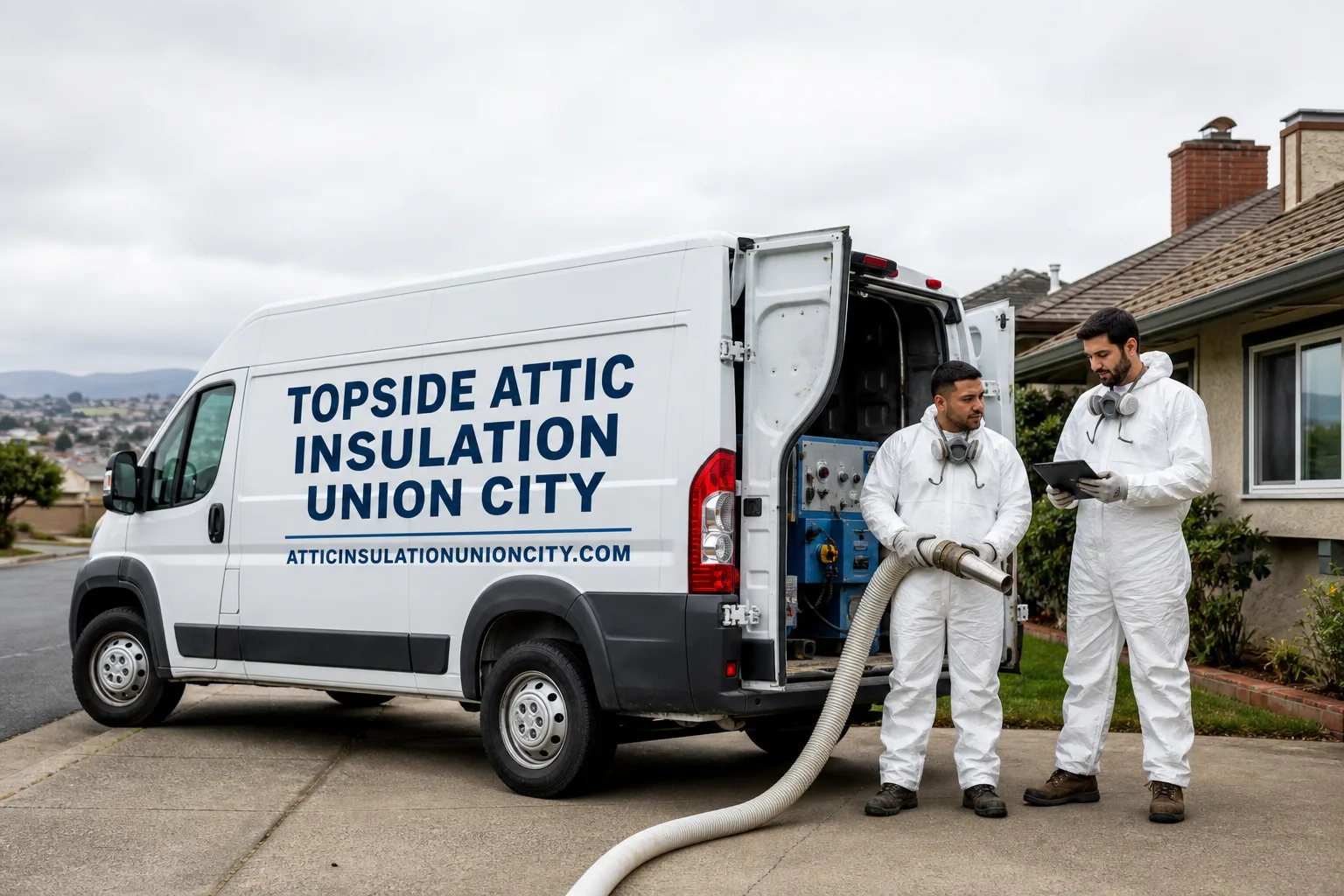
Fast, Reliable Blown-In Insulation Across Milpitas
Blown-in insulation in Milpitas typically runs $1.80-$3.20 per square foot for attic work, with most complete retrofits falling between $2,400 and $5,800 depending on whether air sealing and dense-pack wall fill are included. Our crews dispatch to Milpitas from our San Francisco Bay Area office, and we regularly serve the Sunnyhills neighborhood, the McCarthy Ranch area, and homes along Calaveras Boulevard. If your house was built before 1980, there’s a strong chance it was constructed with minimal or no cavity insulation, and the inland valley heat trap here pushes attic temperatures 8-12°F above what coastal Santa Clara sees. That gap matters. Call (650) 381-1512 for a written price before any work starts.
Why Topside Attic Insulation Union City Is Milpitas’s Preferred Blown-In Insulation Company
We’ve sealed and insulated more than 9,000 homes since 2016, and a significant share of them sit in Milpitas’s 1960s-70s housing stock. Our reviews from Milpitas customers consistently note two things: we show up with a written scope and price before lifting a tool, and we leave behind blower-door numbers that prove the work performed. Response time to Milpitas is typically same-day or next-day for assessments, with crews already familiar with the local permitting office on Abbot Avenue and the Title 24 compliance triggers that accompany any permitted renovation in this city.
Our technicians know the difference between a Sunnyhills ranch with original kraft-faced batts collapsed against the ceiling drywall and a late-2000s McCarthy Ranch townhome that just needs a top-up to meet current R-49 attic requirements. That local housing knowledge changes what we recommend, what we price, and what documentation we deliver. Every Milpitas job closes with a Documented Photo Record and, on applicable work, before-and-after blower-door readings so you can verify the air-sealing result yourself.
Our Blown-In Insulation Services in Milpitas
Blown-In Cellulose
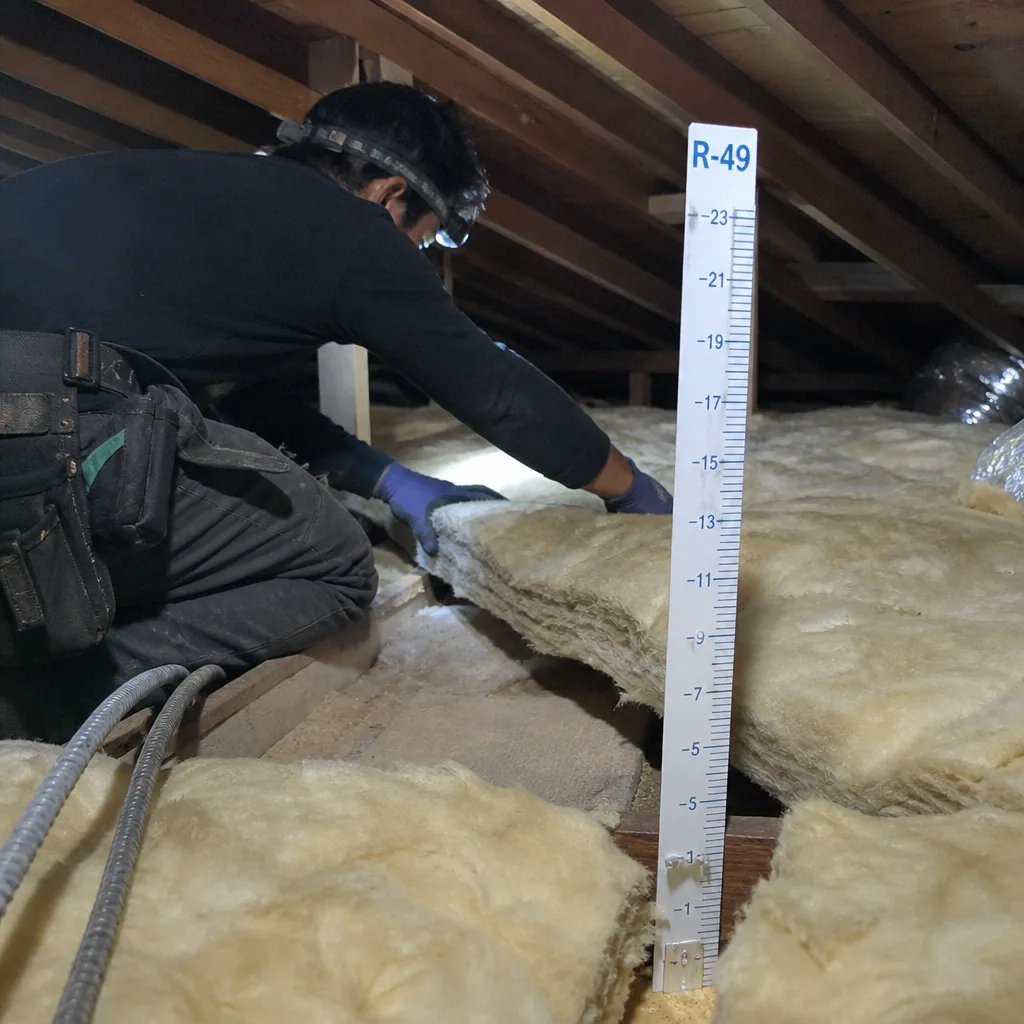
We blow GreenFiber cellulose in most Milpitas attics, particularly the older stock in Sunnyhills and the neighborhoods off Jacklin Road where original insulation is absent or degraded. Cellulose handles the wide diurnal temperature swing here well, it settles less than fiberglass in the 130°F-plus peak attic temperatures our inland valley position produces, and it packs density at R-3.2 to R-3.8 per inch. In the field vignette that still comes up in our crew meetings: we were called to a 1971 Sunnyhills-era ranch home where the attic had never been touched; the original kraft-faced batts had collapsed and the homeowner complained of a hot front bedroom by 3 p.m. We air-sealed the top plates and can lights, then blew GreenFiber cellulose to an even depth over the existing joists, and the afternoon temperature swing inside dropped noticeably the same week. The blower-door test read 4,200 CFM50 before sealing and 2,100 after. Those numbers went on the final documentation.
Blown-In Fiberglass
For attics with active knob-and-tube wiring or specific moisture conditions, we specify Owens Corning fiberglass loose-fill. Fiberglass doesn’t hold moisture the way cellulose can, and in certain Milpitas crawl spaces and knee-wall applications where ventilation is marginal, that matters. We don’t default to one material. We specify based on what we find during assessment, and we explain the choice in the written scope before you sign.
Dense-Pack Wall Insulation
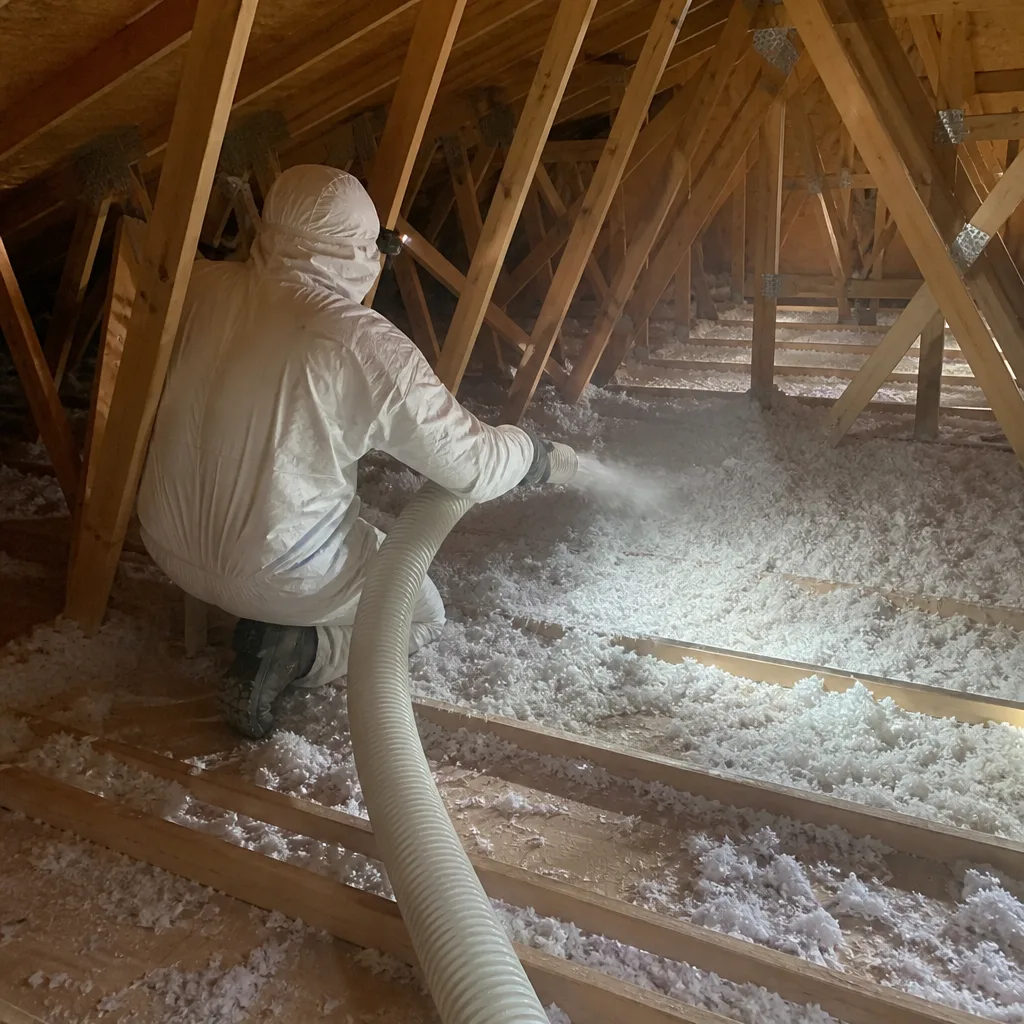
This is the service most Milpitas homeowners don’t know they need until we explain it. The 1960s-70s Sunnyhills-era tract homes that dominate this city’s housing stock were built with little or no cavity fill in the walls. Blowing insulation into the attic alone leaves those walls as thermal bypasses, and in Milpitas’s inland heat-trap climate, that means your conditioned air is leaking out through the studs while attic heat radiates down. Dense-pack cellulose or fiberglass, installed through exterior siding or interior drywall access points, fills those cavities at 3.5 pounds per cubic foot or higher, creating an air-impermeable wall assembly. For homes near the Newby Island Sanitary Landfill in north Milpitas, this step is especially critical. A long-documented odor and methane source cited by BAAQMD, the landfill creates a unique failure mode: gaps in the air barrier that would be harmless a few miles south in San Jose can admit landfill gases into living space here. Our Blown-In Insulation team pairs every dense-pack wall job in this zone with continuous air-barrier detailing at top plates, penetrations, and knee-wall transitions.
Blown-In Top-Up
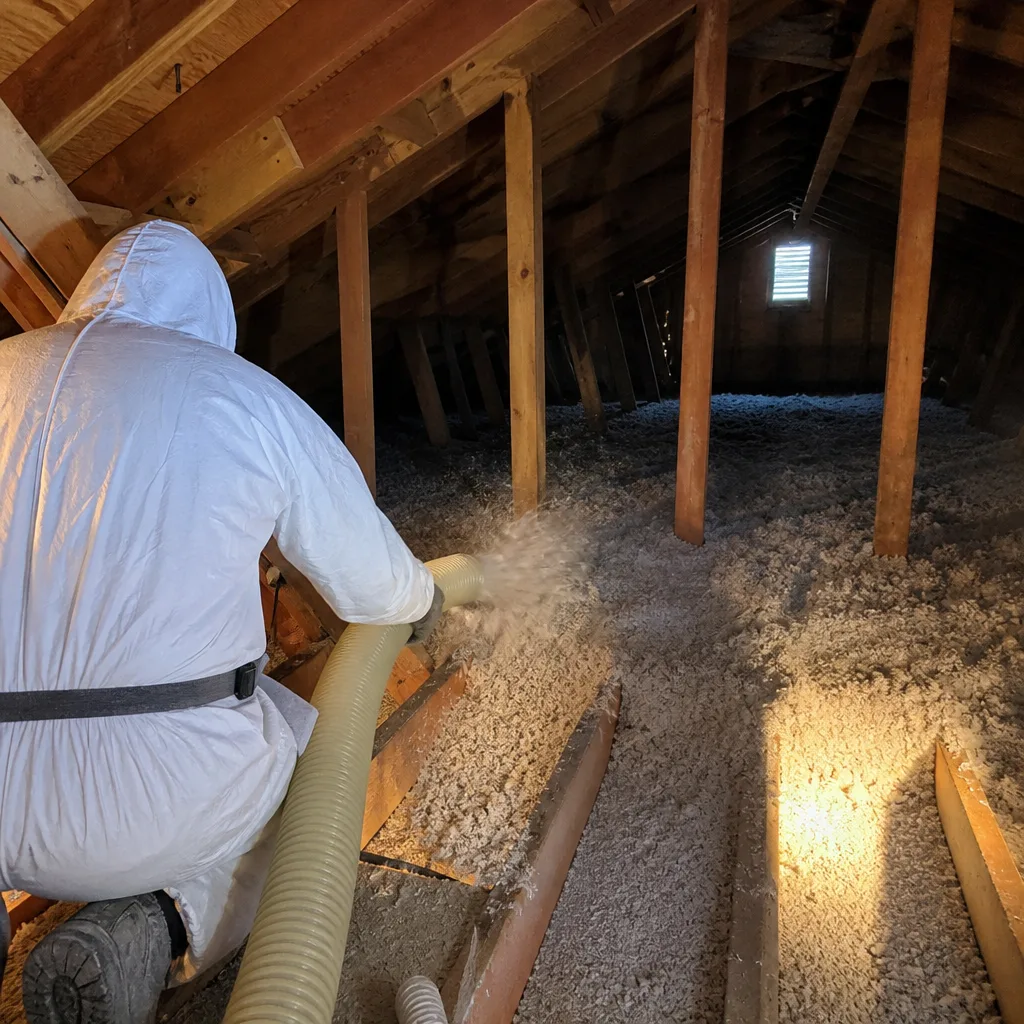
For newer Milpitas homes that already have some attic insulation but have settled below current Title 24 R-value requirements, we measure existing depth, identify compression or disturbance from prior trades, and blow additional material to an even, specified depth. We don’t top up over unsealed air leaks. That’s not how we work. Air sealing of top plates, can lights, and penetrations is completed before any insulation is added.
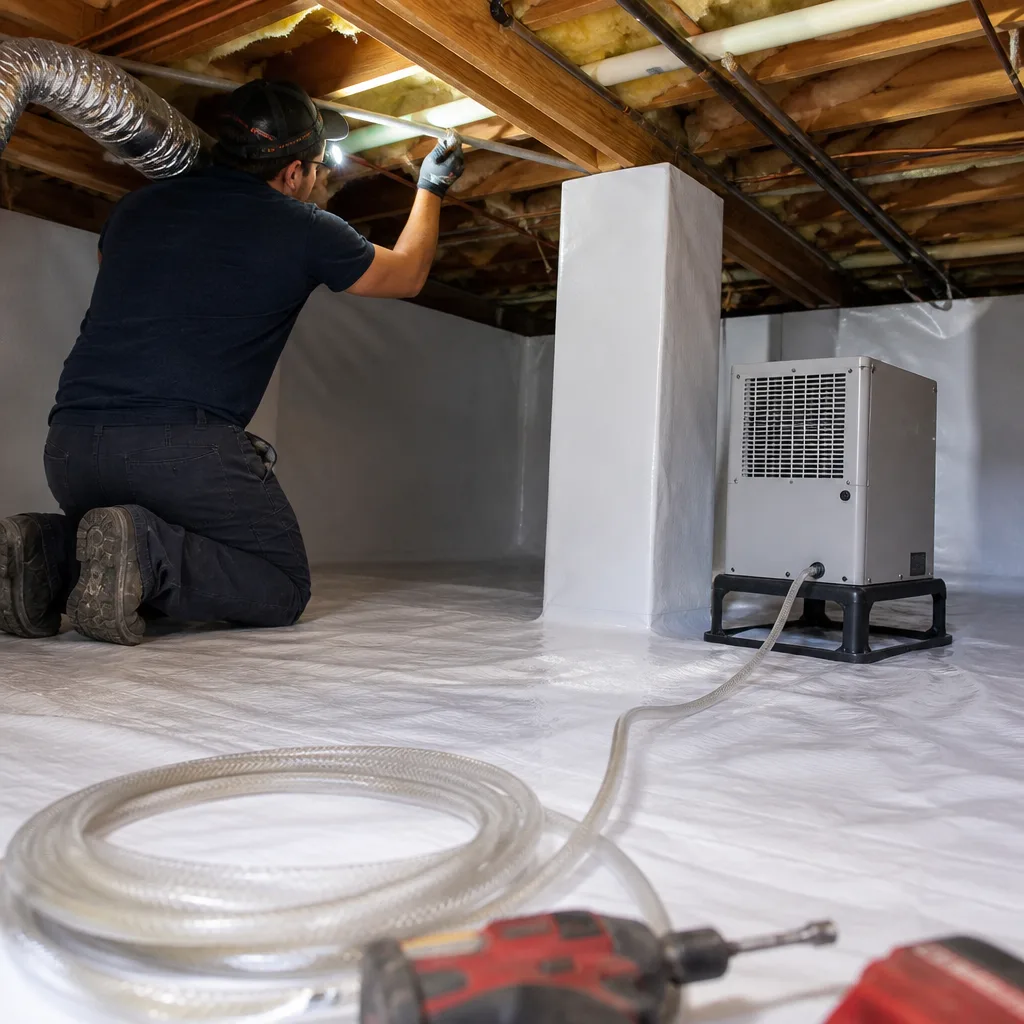
What happens when you call
- 1
A real person answersNo phone trees - you reach a local pro.
- 2
You get an upfront price rangeHonest numbers before anyone is dispatched.
- 3
A background-checked tech heads outLicensed & insured, dispatched right away.
- 4
You approve before work beginsNothing starts until you say go.
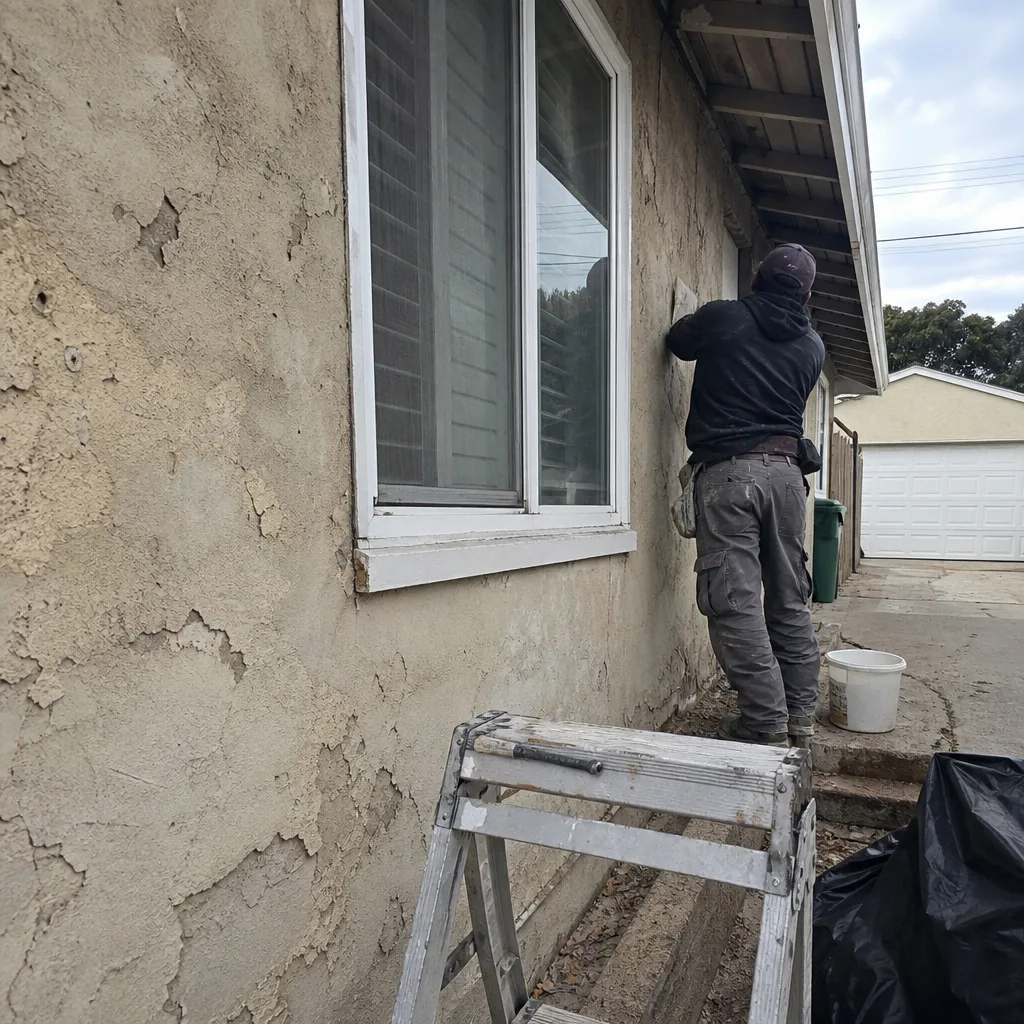 Before
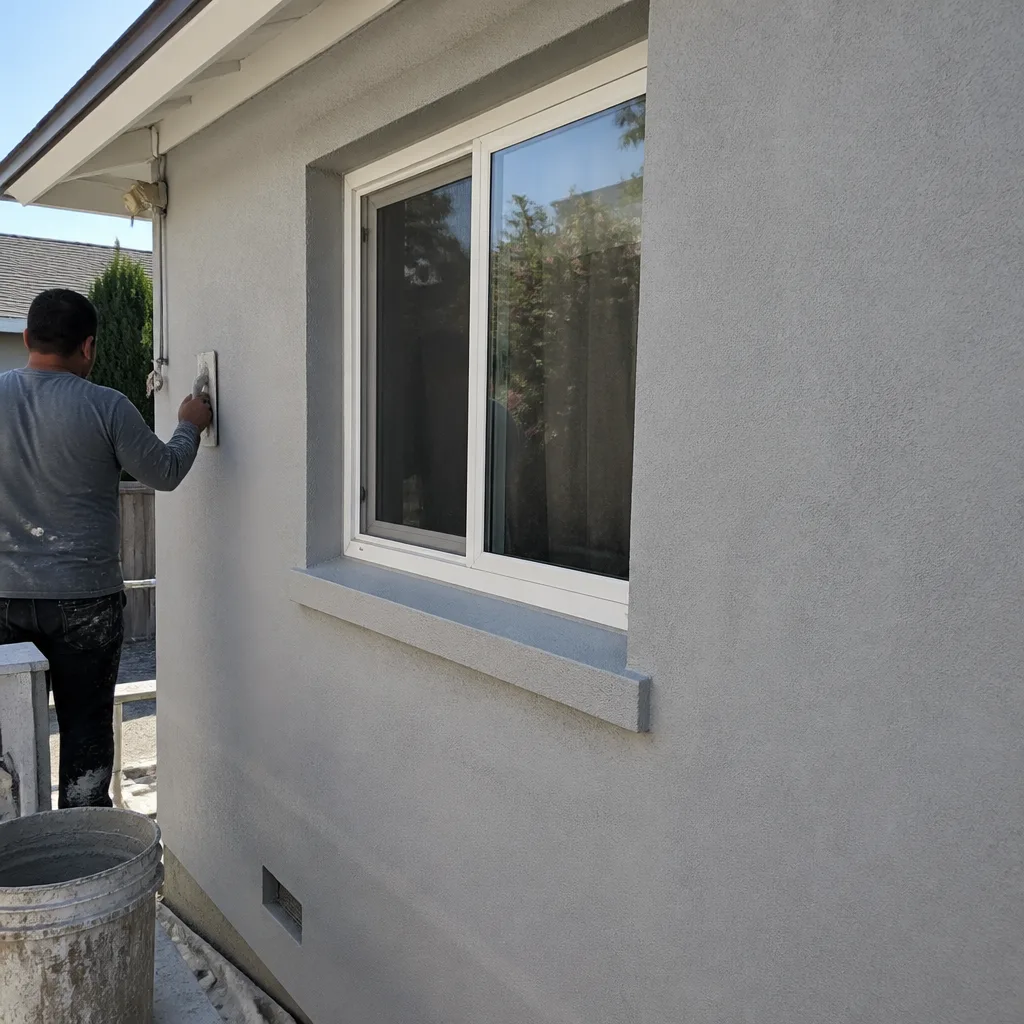 After
AfterTrusted Brands We Service in Milpitas
We source materials from Owens Corning, Johns Manville, Knauf, GreenFiber, Icynene, and Demilec, among others. No proprietary lock-in means we specify what performs for your specific Milpitas home, not what a manufacturer requires us to move. We stock common cellulose and fiberglass densities locally, so material lead time doesn’t delay your job. If your project calls for a specific product, we document the specification in the written scope and deliver the product data sheet with your final packet.
Common Blown-In Insulation Problems We See in Milpitas Homes
- Collapsed original batts in Sunnyhills-era homes. The 1960s-70s tract homes throughout Sunnyhills and surrounding neighborhoods were built with kraft-faced fiberglass batts that have degraded, compressed, or fallen off fasteners after sixty years. We regularly find attics with less than R-11 effective coverage where R-38 to R-49 is now required by Title 24.
- Unsealed can lights and bath fans creating hot spots. The inland valley heat trap pushes Milpitas attic temperatures into the 130s°F by mid-afternoon. Cellulose or fiberglass blown over unsealed can lights and bath fans settles unevenly and loses R-value at those hot spots first. We see this pattern repeatedly in homes off Calaveras Boulevard and Jacklin Road.
- Missing wall cavity insulation in pre-mandate construction. Original 1960s-70s Sunnyhills-era tract homes were built with little or no cavity insulation, so blown-in top-ups alone leave knee walls and sloped ceilings under-insulated unless dense-pack is added. Homeowners wonder why the bedroom still runs hot after the attic was done. This is usually why.
- Air-barrier failures in the Newby Island influence zone. In north Milpitas near the Newby Island Sanitary Landfill, a long-documented odor and methane source formally cited by BAAQMD, blown-in insulation installed without continuous air-barrier detailing allows landfill gases to infiltrate living spaces. This failure mode simply doesn’t exist for installers working even a few miles south. We treat this zone with specific protocols.
Pricing for Blown-In Insulation in Milpitas, CA
Most attic insulation jobs in a Milpitas home of 1,200-1,800 square feet run between $2,400 and $4,200 for blown-in cellulose with air sealing included. Dense-pack wall insulation adds $1.80-$2.80 per square foot of wall area, and a complete attic-plus-walls retrofit in a typical Sunnyhills ranch typically falls between $4,800 and $7,200. Blown-in top-up work, where existing insulation is adequate but below depth, runs $1.20-$1.80 per square foot. Homes in the Newby Island landfill influence zone may incur additional air-barrier detailing, typically $400-$800 depending on penetration count and attic complexity.
What moves the number: attic accessibility, existing insulation condition, whether knob-and-tube wiring is present, and whether dense-pack walls are included. We deliver a flat price, written scope, and written warranty before anyone lifts a tool. Haven Standard Clause 1. No exceptions. Call (650) 381-1512 for a free assessment and written estimate.
We Also Serve Cities Near Milpitas
Our crews work throughout the South Bay, including Milpitas and neighboring Santa Clara, Sunnyvale, Newark, and Fremont. Each city’s housing stock and climate conditions shape how we specify and install. Dispatch and scheduling are coordinated from our San Francisco Bay Area office.
Serving Milpitas, CA - Our Local Coverage Area
We’re based in the Milpitas area and know this community well. Use the map below to see our service coverage - if you’re nearby, we can almost certainly help.
FAQs - Blown-In Insulation in Milpitas
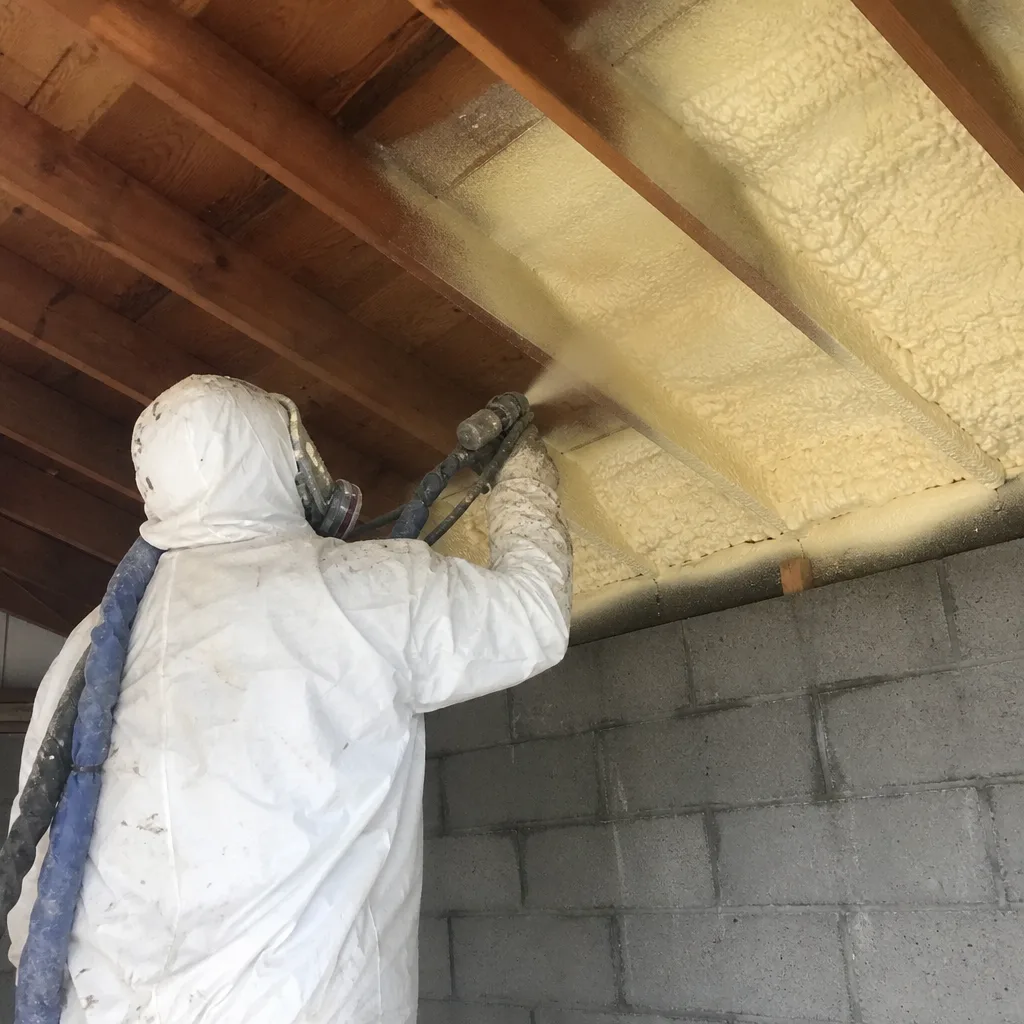
You’ll likely need both. Attic blown-in addresses the roof plane, but 1968 Sunnyhills construction typically left wall cavities empty. Without dense-pack wall fill, your conditioned air bypasses through the studs while attic heat radiates down. We assess wall cavity access during our initial visit and price both options in the written scope. Call (650) 381-1512 for a free estimate.
Yes. In the Newby Island Sanitary Landfill influence zone, a BAAQMD-cited odor and methane source, we install continuous air-barrier detailing at all top plates, penetrations, and knee-wall transitions before blowing any insulation. Gaps that would be harmless in San Jose can admit landfill gases here. This protocol is non-negotiable for our crews working north of Highway 237. Call (650) 381-1512 to confirm whether your address falls in this zone.
Milpitas’s inland valley position creates a heat-trap effect that pushes summer afternoon highs 8-12°F above coastal Sunnyvale and Santa Clara, while still delivering cool marine-influenced nights. That wide diurnal swing stresses underinsulated attics hard. Combined with a housing stock built before meaningful insulation mandates, the gap between what your home has and what it needs is larger here. Call (650) 381-1512 for a blower-door assessment and written price.
We default to GreenFiber cellulose for most Milpitas attics because it performs better in the high peak temperatures our inland valley produces and settles less over time. We specify Owens Corning fiberglass for active knob-and-tube wiring situations or where moisture conditions warrant it. The material choice is documented in your written scope before work begins. Call (650) 381-1512 to discuss your specific attic conditions.
Yes. Every permitted renovation in Milpitas triggers Title 24 compliance upgrades, making insulation retrofits a near-mandatory part of any remodel pull in this aging housing belt. Most pre-1980 homes fall short of current R-value requirements for attics and walls. We coordinate with homeowners and their contractors to sequence the insulation work within the permit timeline and deliver the documentation the city requires. Call (650) 381-1512 for a free second opinion on any written estimate you’ve already received.
Ready to get a written price before any work starts? Call (650) 381-1512 for a free assessment. We’ll measure your attic, run a blower-door test if applicable, and deliver a flat-price proposal with scope, warranty, and documentation details spelled out. Under The Haven Standard, no work begins until you have it in writing.
Written by Wes Okafor, Owner at Topside Attic Insulation Union City, serving Milpitas since 2016.