
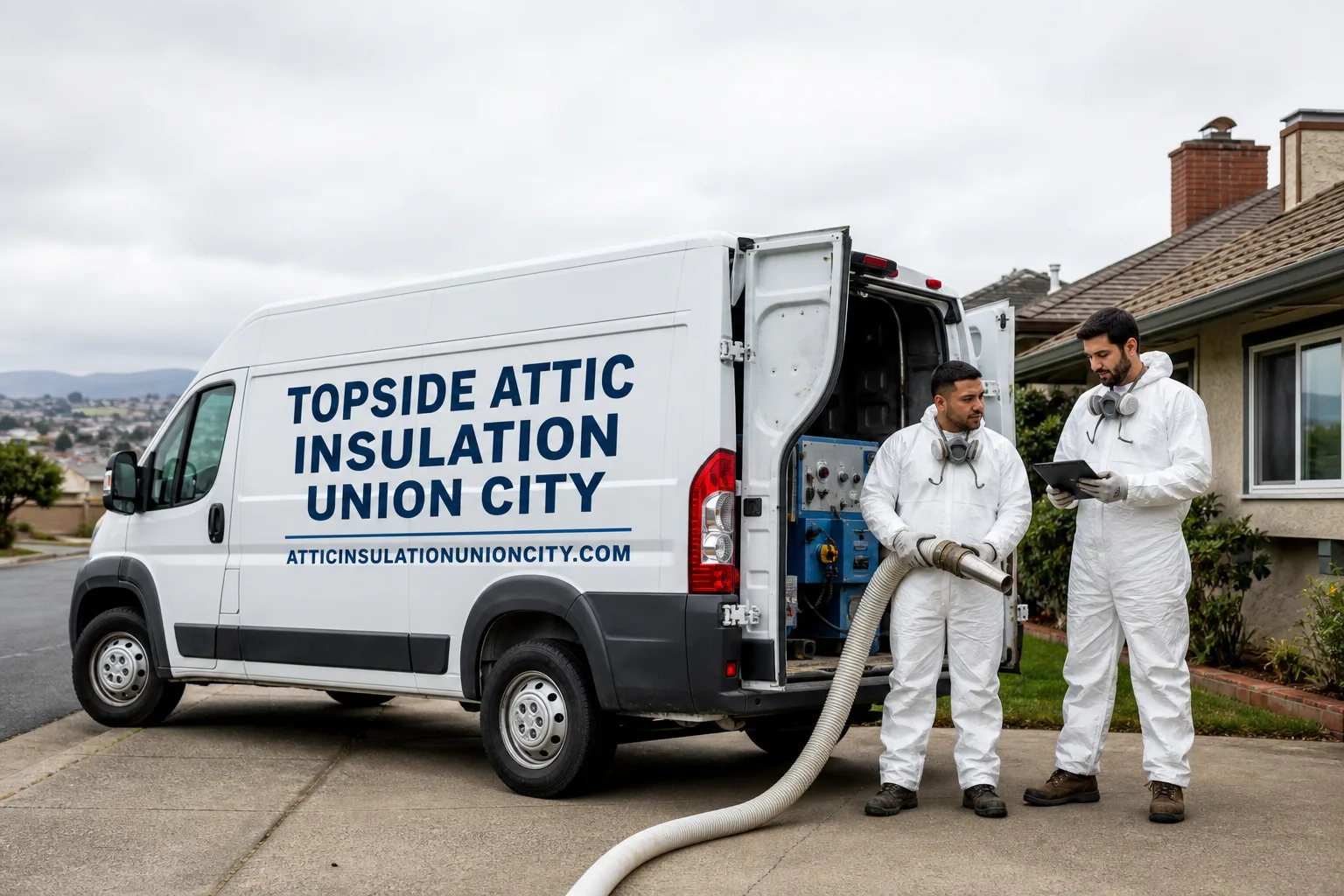
How Much Does Attic Insulation Cost in Union City?
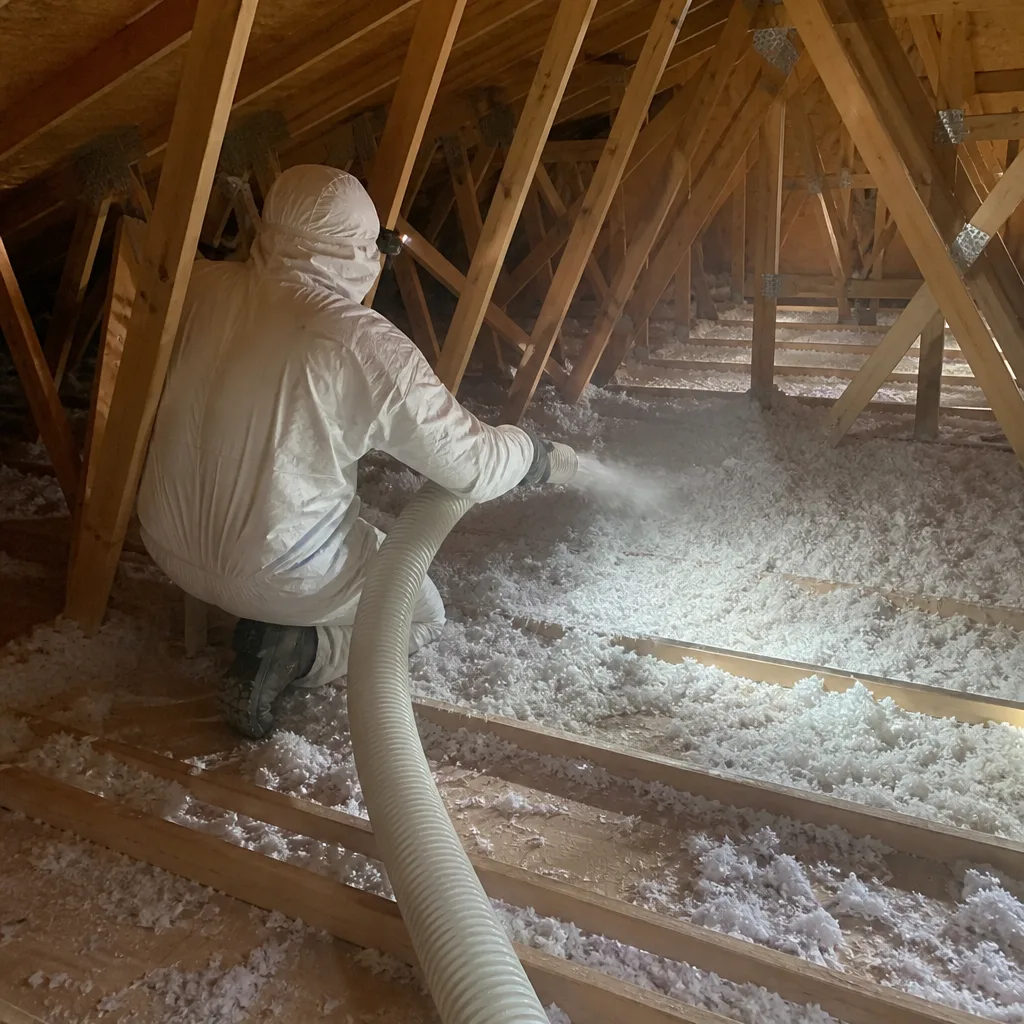
Attic insulation in Union City, CA typically costs between $1,800 and $4,200 for a standard single-family home, with most jobs landing around $2,400 to $3,100 when air sealing is included – which it always should be. The final number depends on your attic’s square footage, current insulation condition, the material you choose, and whether you need Attic Insulation Replacement first.
That range covers the full job: air sealing the attic floor before any insulation goes in, the insulation itself brought to current California Title 24 standards (R-38 minimum for Climate Zone 3, which covers Union City), and a documented photo record so you can see exactly what was done. We’re Envelope Insulation Co., operating as Attic Insulation in Union City under The Haven Standard since 2016, and every price we quote is written down before anyone touches your attic.
Attic Insulation Cost Breakdown (2026)
Most Union City homeowners want a number before they call anyone. Here it is. These are real market figures for the East Bay in 2026, not national averages adjusted by a zip-code multiplier.
| Service | Typical Range (Union City, 2026) | Notes |
|---|---|---|
| Blown-in cellulose (1,000-1,200 sq ft attic) | $1,400 – $2,100 | R-38 to R-60; most common in Union City tract homes |
| Blown-in fiberglass (1,000-1,200 sq ft attic) | $1,500 – $2,300 | Slightly higher material cost than cellulose; Owens Corning, Knauf |
| Attic air sealing (top plates, can lights, penetrations) | $500 – $950 | Required before insulation on unsealed attic floors |
| Spray foam (rim joists, specific penetrations only) | $300 – $700 | Targeted use; Icynene or Demilec two-part kits |
| Radiant barrier installation | $600 – $1,200 | Foil stapled to rafters; adds value in Union City’s warmer inland microclimates |
| Old insulation removal | $700 – $1,800 | Wide range due to depth, contamination, access difficulty |
| Attic cleaning and rodent proofing | $400 – $1,100 | Common in older Alvarado and Decoto-area homes |
| Full attic project (air seal + insulation, no removal) | $1,800 – $3,400 | Most common project scope in Union City |
| Full attic project (removal + air seal + new insulation) | $2,800 – $5,500 | Older homes with degraded or contaminated insulation |
A few things drive these numbers. Homes in the Alvarado neighborhood and the older sections near the Union Landing corridor tend to have 1,100-1,400 sq ft attics with 2×4 framing and more top-plate penetrations than newer builds – that adds air-sealing time. Newer construction in the eastern parts of Union City near I-880 typically has tighter envelopes to start and reaches target R-values with less material. Homes that back up to the bay-influenced marine layer tend to have better natural temperature moderation, but they also accumulate more moisture in attic spaces, which matters when you’re choosing between cellulose and fiberglass.
The number that matters most isn’t the material cost – it’s what happens to your energy bill after. On jobs where we run a blower-door test – a pressurization reading that shows, in one number, how much air your building envelope is losing – we regularly see Union City homes come in at 3,800 to 5,200 CFM50 before sealing. After sealing and re-insulating, that same house typically reads 2,000 to 2,800 CFM50. That’s real, documented performance, not a projection. We publish those numbers on every applicable job.
What Affects Attic Insulation Pricing in Union City
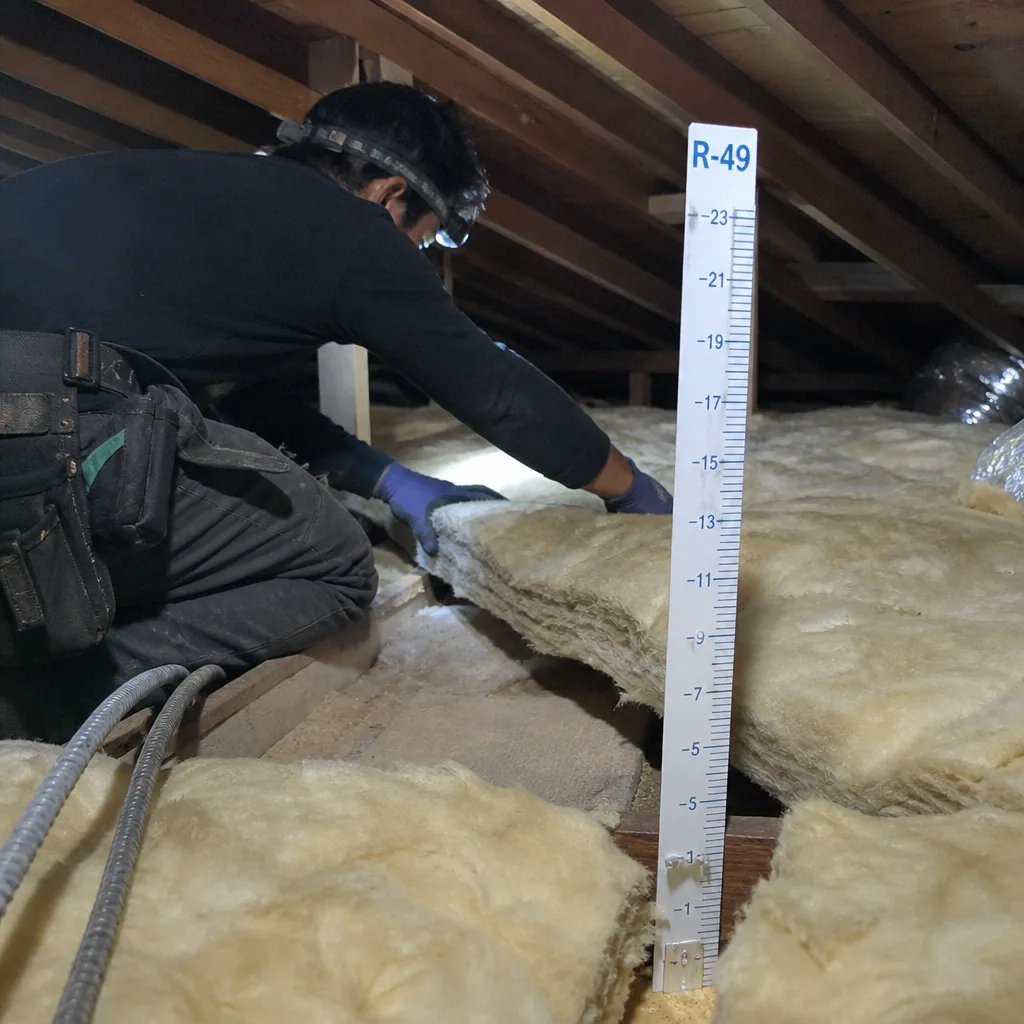
- Attic square footage and access difficulty: Union City’s split-level homes and those with low-pitch rooflines (common in the Woodmont and Alvarado Park areas) require more labor time and specialized hose positioning for blown-in material. Tight knee walls or narrow access hatches add 15-30% to labor costs compared to a fully walkable attic.
- Current insulation condition: If your existing insulation is compressed, water-damaged, or contaminated by rodents, it has to come out before new material goes in. Leaving degraded insulation in place and blowing over it is how you get a padded R-value on paper and a drafty house in practice. Removal runs $700-$1,800 depending on depth and debris load.
- Air sealing scope: An attic with recessed can lights, a furnace in the attic cavity, multiple HVAC penetrations, and interior partition walls (every top plate is a potential bypass) will take four to six hours to seal properly. A simpler attic floor with minimal penetrations might take two. In Union City, the post-1970s tract construction in the central neighborhoods tends to have moderate penetration counts; the pre-1960 Decoto-area homes often have more complicated framing that adds sealing time.
- Material choice: Johns Manville and Knauf blown-in fiberglass costs slightly more per bag than GreenFiber cellulose but performs better in humid microclimates near the bay. Rockwool batts, used for specific cathedral ceiling or hard-to-access sections, run higher still. Icynene open-cell spray foam, used on rim joists and stubborn air bypasses, is priced by board-foot and adds cost when the scope goes beyond targeted spots.
- Title 24 compliance target: California Energy Code requires R-38 as a minimum for attic insulation in Climate Zone 3, which is Union City’s designation. Some homeowners opt for R-49 or R-60 to capture the incremental energy benefit; others are bringing a home up from R-11 or less (we see this regularly in 1950s-built Decoto properties). Starting from bare sheathing costs more than topping up from R-19.
- Rebate eligibility: PG&E’s existing rebate programs for insulation upgrades can reduce net project cost, but eligibility depends on pre-existing R-value and project scope. We document the before condition with photos specifically so homeowners have the paperwork rebate programs require. The rebate amount varies; as of 2026, attic insulation projects on qualifying Union City homes have reduced out-of-pocket costs by $150-$400 in documented cases we’ve worked on.
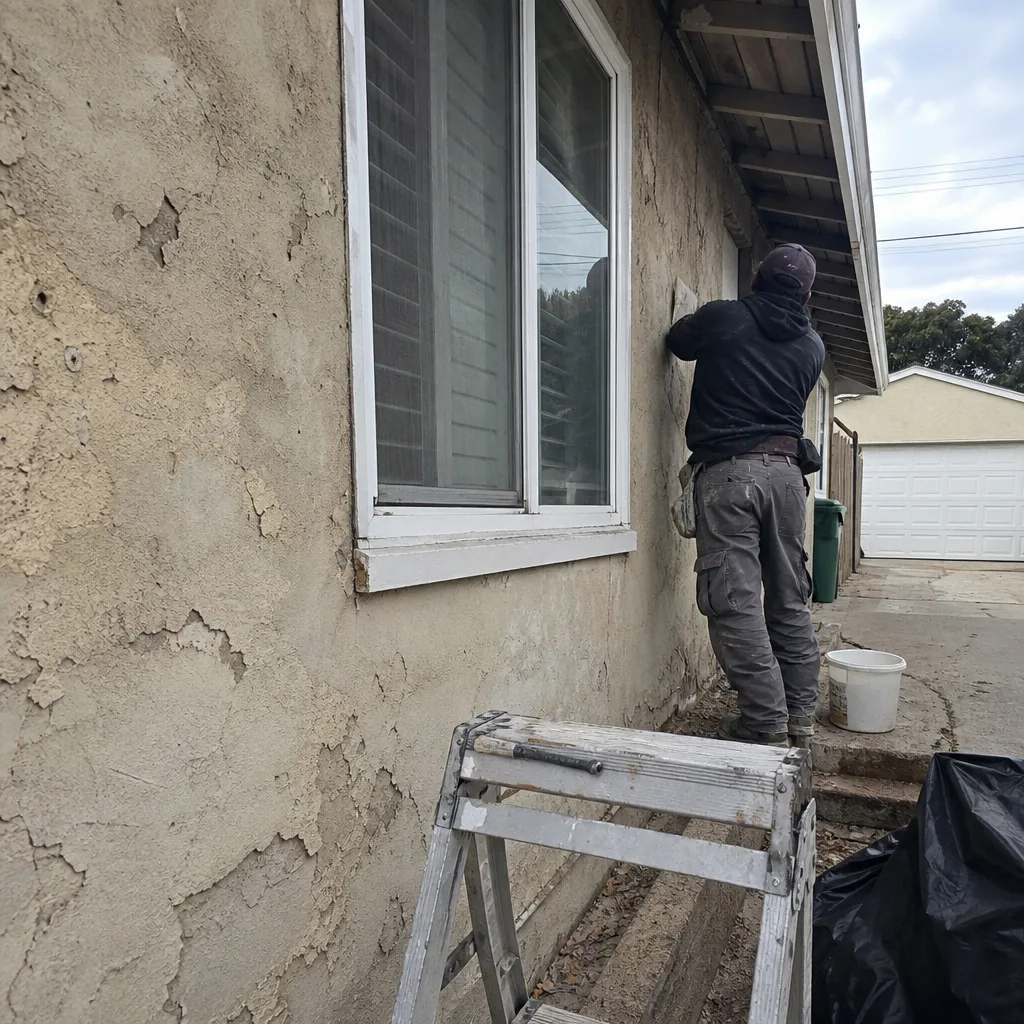 Before
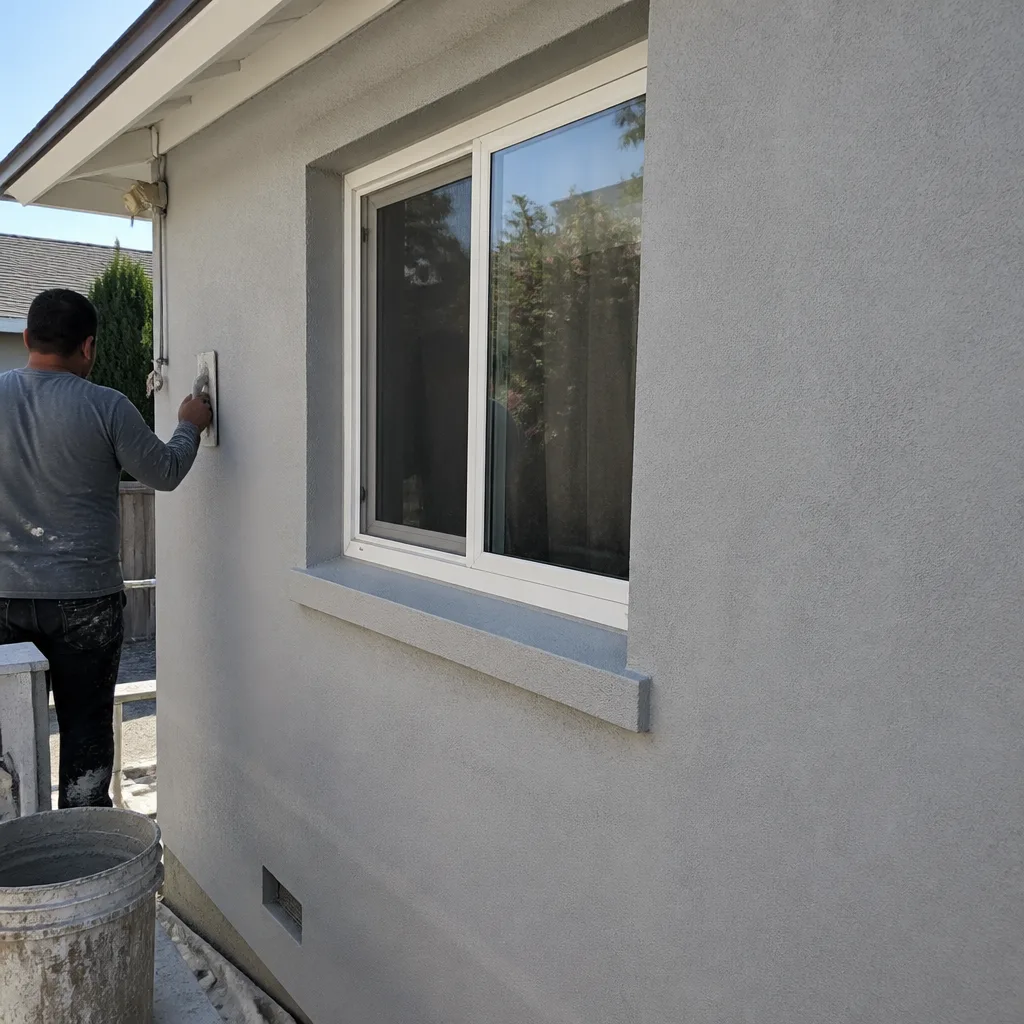 After
AfterHow to Save on Attic Insulation in Union City
Don’t Skip the Air Sealing – It’s the Wrong Place to Cut Cost
This is the one piece of advice that runs counter to getting the lowest number on paper. Skipping air sealing and just blowing in more insulation is a known pattern in the insulation trade – it hits a lower bid price, and it performs far below what the R-value rating suggests. Insulation resists heat transfer by conduction. It does almost nothing to stop air movement. An attic with R-49 blown-in cellulose and 40 linear feet of unsealed top plates will underperform a properly sealed attic with R-38 every time. We don’t offer an insulation-only option when the attic floor isn’t sealed, and we’re specific about why: the blower-door numbers tell the story more clearly than any sales pitch.
Bundle Air Sealing with Insulation on the Same Visit
Scheduling both on one project visit eliminates a second mobilization cost and crew setup time. For most Union City homes, bundling saves $200-$400 compared to doing the work in two separate calls.
Get a Free Second Opinion on Any Written Quote
Under The Haven Standard, Envelope Insulation Co. offers a free second opinion on any written estimate you’ve already received. Bring us the scope of work and the number – we’ll read it with you and tell you what’s included, what’s missing, and what our written price would be for the same work. There’s no obligation. Call (650) 381-1512 and ask for Wes Okafor directly if you want to talk through a competing quote before making a decision.
Check PG&E Rebate Eligibility Before You Schedule
Union City is served by PG&E, and insulation upgrades on homes with pre-existing R-values below code minimums often qualify for rebate programs. The documentation requirement is usually a pre-project photo record and R-value verification – both of which are standard on every Envelope job, not add-ons. Make sure whatever contractor you hire provides that documentation; without it, you can’t submit a rebate claim regardless of what work was done.
Avoid Partial Projects That Create More Work Later
Replacing insulation in half the attic while leaving old, degraded material in the other half creates uneven performance and usually means the entire attic needs attention again within a few years. The one-time cost of doing the full scope now is typically lower than two partial projects. We see this pattern frequently in Union City homes where a previous contractor insulated the main attic body but left the knee-wall sections untouched.
Time It for Off-Peak Scheduling If Your Project Isn’t Urgent
Attic insulation demand in Union City peaks in late fall (before PG&E rate increases hit) and late spring (before summer cooling bills). If your situation isn’t urgent, scheduling in January or February or in October typically means faster availability. We don’t manufacture urgency – if your attic already meets R-38 and you’re doing an Attic Insulation Top-Up to R-49, there’s no reason to rush. Get the price in writing, take your time, and schedule when it works for you.
FAQs – Attic Insulation Cost in Union City
How much does attic insulation cost in Union City, CA in 2026?
Most Attic Insulation Near Me in Union City, CA jobs run between $1,800 and $4,200 for a standard single-family home, depending on square footage, material, and whether air sealing and removal are included. The most common project scope – air sealing plus blown-in insulation on a 1,000-1,200 sq ft attic floor – lands between $2,100 and $3,100. Homes in older neighborhoods like Decoto or Alvarado that need removal first tend toward the higher end. Call (650) 381-1512 and we’ll give you a written price after a free estimate visit – no obligation, and no work starts without that written number in your hands first.
Is it cheaper to add insulation on top of old insulation or remove it first?
Adding on top costs less upfront – roughly $1,400 to $2,300 for blown-in material only – but it’s only the right choice if the existing insulation is dry, uncontaminated, and not compressed below R-11. Rodent damage, moisture, or heavy settling means removal first at $700-$1,800, then fresh material on a clean attic floor. Blowing insulation over damaged material doesn’t fix the performance problem; it buries it. We photograph the existing condition on every estimate visit so you have documentation of what we found before any decision is made – that’s standard under the Haven Standard, not optional.
Does attic insulation in Union City qualify for rebates or tax credits?
Yes, in most cases. Union City homes served by PG&E may qualify for utility rebates on insulation upgrades when the pre-existing R-value is below current code. Federal tax credits under the Inflation Reduction Act (Section 25C) allow homeowners to claim up to 30% of qualifying insulation costs, up to $1,200 per year, for projects that meet energy efficiency standards. Eligibility depends on your specific situation and tax filing – we’re not tax advisors – but we provide the documentation (before photos, R-value verification, written scope) that makes submitting claims possible. The rebate paperwork is part of every job’s Documented Photo Record.
How long does attic insulation take to install in a typical Union City home?
A standard project on a 1,000-1,200 sq ft attic – air sealing the floor penetrations, then blowing in insulation to R-38 or R-49 – takes one crew one full day, typically six to eight hours. Attics with complex HVAC equipment in the cavity, low pitch, or significant rodent damage can run longer. Removal adds two to four hours depending on depth and debris. Before the crew leaves, you receive a Documented Photo Record of the completed work, and on applicable jobs, before-and-after blower-door readings so you can verify the air-sealing result.
What R-value does my Union City attic need to meet California code?
Union City falls in California’s Climate Zone 3, which requires R-38 minimum for attic insulation under Title 24 energy code. Many homeowners opt for R-49 or R-60 for incremental energy performance – the cost difference between R-38 and R-49 in blown-in cellulose is typically $200-$400 on a standard attic, and the additional depth does meaningfully reduce heat flux during the hotter inland-influence days Union City sees in July and August. We’ll document the installed depth and R-value on every job so you have that verification if you ever need it for a home sale or permit inspection.
Why does Envelope Insulation Co. require air sealing before insulation?
Because insulation and air sealing do different jobs, and doing them out of order produces a predictable result: an attic with an impressive R-value on paper that doesn’t perform like one. Insulation slows heat moving through solid materials (conduction). Air sealing stops conditioned air from escaping through gaps in the building envelope – around top plates, recessed light cans, plumbing and electrical penetrations. A home in Union City losing 4,500 CFM50 through attic bypasses will continue to lose that conditioned air no matter how much insulation sits on top of the unsealed gaps. We seal first, then insulate – in that order, no exceptions – and the blower-door numbers before and after show exactly what changed.
What the Project Documentation Looks Like
This section exists because one of the most common complaints homeowners in Union City have about past insulation jobs is that they don’t actually know what was done. The contractor left, the attic is closed up, and there’s no record of the depth, the R-value, or what the attic floor looked like before. That’s a problem when you’re trying to file a rebate, sell the house, or call back about warranty work.
On every Envelope Insulation job, the Documented Photo Record includes: photos of the attic floor condition before any work, photos of air-sealing work at each top plate, can light, and penetration location, photos of the insulation depth at multiple measurement points, and the final blower-door reading paired against the pre-job reading on applicable projects. You receive this documentation when the crew leaves – not on request, not after a follow-up call, on the day of the job.
The written scope you receive before work starts names the material, the manufacturer (Owens Corning, Johns Manville, Knauf, Rockwool, CertainTeed, Icynene, Demilec, or GreenFiber depending on project type), the target R-value, and the price. That document is also your warranty under the 365-Day Done Right Promise – if something isn’t right within 365 days of the job, Envelope makes it right. The scope and the warranty are both written down before anyone lifts a tool. That’s Haven Standard Clause 1, and it applies to every project in Union City.
Union City Attic Conditions We See Regularly
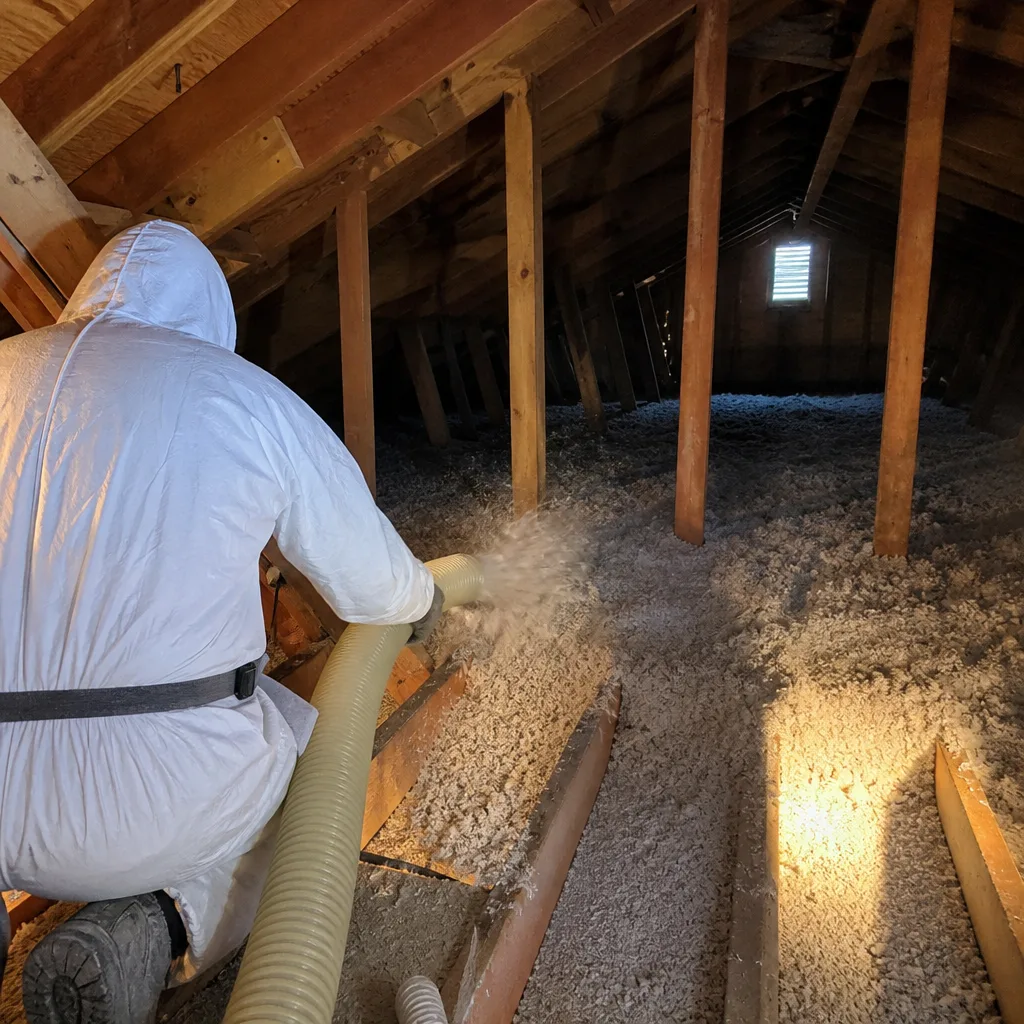
Union City sits at the intersection of bay-influenced marine air and the warmer Tri-Cities corridor, which creates a specific set of attic conditions that affect insulation performance and cost. The marine layer that rolls in through the Dumbarton Flat keeps overnight lows mild – helpful for cooling – but it also deposits enough moisture on attic assemblies to degrade cellulose faster than in drier East Bay cities like Pleasanton or Livermore. When we estimate projects in the Alvarado neighborhood or the older sections east of Decoto Road, we factor this in when recommending cellulose versus fiberglass.
Homes built in Union City between 1955 and 1975 – a substantial share of the existing housing stock in the central neighborhoods – typically have flat or low-slope ceilings with small attic cavities, aluminum wiring in some cases, and original can lights that weren’t air-sealed from the factory. Those penetrations become air bypasses over decades. We’ve measured blower-door readings on Decoto-area homes that were losing over 5,500 CFM50 – a figure that puts annual energy waste well above what the utility bill alone shows. After sealing and insulating, the same homes have come in at 2,400-2,900 CFM50. That’s a documented outcome, not a marketing projection.
The newer construction along the Whipple Road corridor and near the I-880 interchange tends to be better sealed from the factory, but many of those homes were built to meet the Title 24 standard of their construction year – which in many cases was R-19 or R-30, below the current R-38 minimum. Topping up from R-19 to R-49 on a 1,200 sq ft attic in that part of Union City typically costs $1,100-$1,600 in blown-in material plus air-sealing time, assuming our Attic Insulation services team finds the existing insulation in good condition. We verify that condition on the estimate visit and document it before quoting.
Why Air Sealing Before Insulation Is the Only Sequence That Works
We’re specific about this because it’s where most insulation projects in Union City go wrong. Contractors who skip air sealing aren’t always cutting corners to be dishonest – sometimes they simply don’t offer it, or they treat it as optional. The problem is physics, not opinion.
An unsealed attic floor has gaps. Top plates – the framing at the top of interior walls – are open to the attic cavity in most pre-2000 construction. Recessed light cans have gaps around their housings. Plumbing stacks, electrical conduit, and HVAC penetrations create openings that connect the living space directly to the attic. When the house is pressurized by wind or HVAC operation, conditioned air takes the path of least resistance: through those gaps and out of the building. Insulation sitting on top of those gaps slows heat movement through the batts. It does not stop air movement through the hole underneath.
The blower-door test – a fan mounted in the front door frame that depressurizes the home to a standard pressure differential – makes those air movements visible by measuring total airflow in CFM50 (cubic feet per minute at 50 Pascals). Before and after sealing, that number tells you exactly what changed. We’ve published that documentation on Union City jobs that started at 4,100 CFM50 and finished at 2,050 CFM50 after sealing and insulation. That’s the kind of number a homeowner can take to their utility company’s rebate program, to a home sale, or just to the next PG&E bill.
For a full picture of what an attic project with us involves from estimate to completion, the home page covers the full building-envelope service line and how the Haven Standard applies across all of them.
How to Get a Written Price for Your Union City Attic
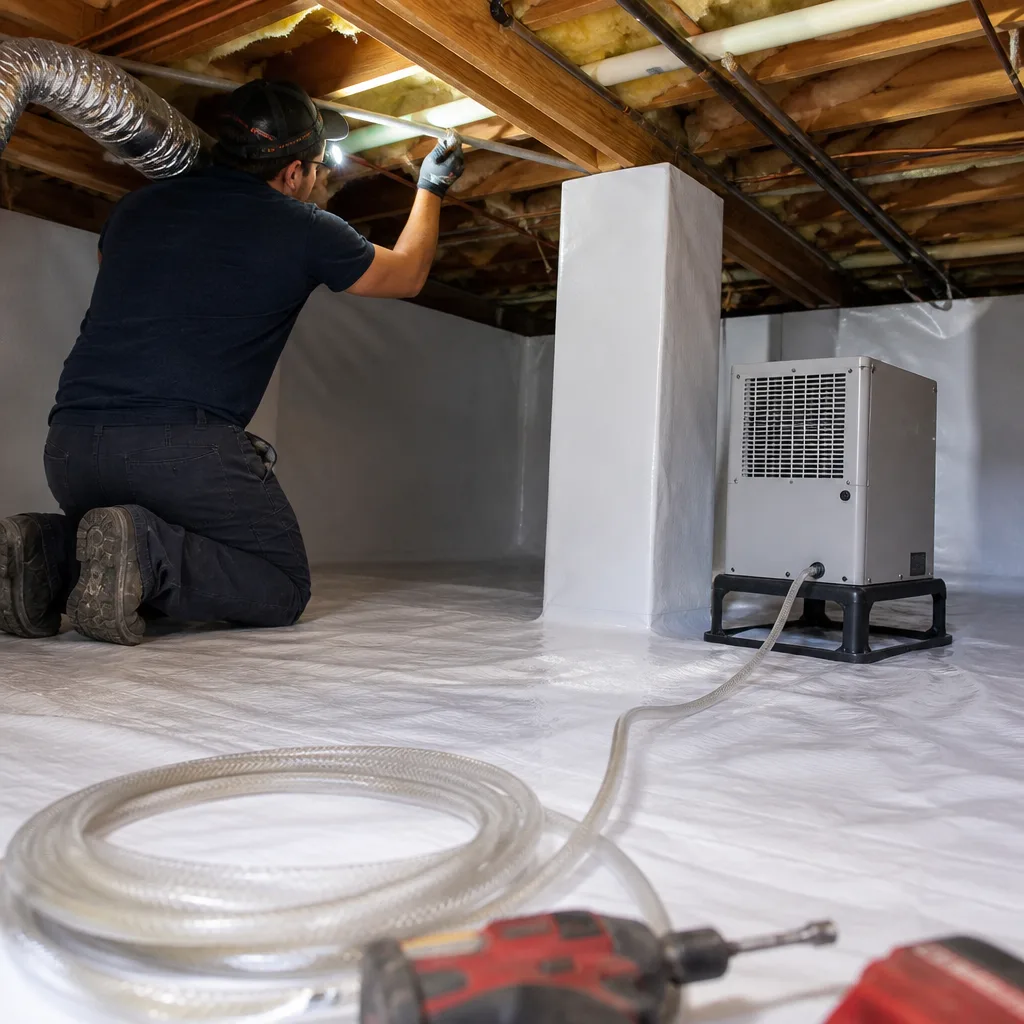
The estimate visit is free. Wes Okafor or a uniformed, background-checked Envelope technician visits your Union City home, photographs the attic’s current condition, takes depth and R-value measurements, identifies air-sealing scope, and produces a written price before leaving. That price is a flat number – no per-bag estimates, no “approximately depending on conditions.” If the scope changes after work starts because of something we couldn’t see from the attic hatch, we tell you before we do anything additional, and you get a revised written price before that work begins. That’s how Haven Standard Clause 1 works in practice.
If you’ve already received a written estimate from another contractor, bring it. We’ll read it with you, line by line, and tell you what our price would be for the same scope – and what we’d do differently if anything in the scope looks incomplete. That second-opinion service costs nothing.
Call (650) 381-1512 to schedule a free estimate visit. A live person answers – no voicemail, no callback window. If you prefer to start the conversation in writing, the same number accepts texts. We serve Union City and the surrounding Tri-Cities area, and most estimate visits can be scheduled within a few business days.
Key Takeaways
- Attic insulation in Union City costs $1,800 – $4,200 for most single-family homes in 2026, depending on scope.
- Air sealing should always be done before insulation is added – skip it and the R-value on paper won’t match the performance you get.
- Union City is in California Climate Zone 3: R-38 minimum under Title 24, with R-49 or R-60 common on full replacement projects.
- PG&E rebates and federal tax credits (Section 25C) can reduce net cost – documentation from the job is required to claim them.
- Before-and-after blower-door numbers, a Documented Photo Record, and a written warranty are standard on every Envelope project – not add-ons.
- The 365-Day Done Right Promise applies to all completed work: if it’s not right, it gets made right, backed by the written scope you received before work started.
- Free estimates and free second opinions on competing written quotes are both available at (650) 381-1512.
Written by Wes Okafor, Owner at Envelope Insulation Co. (operating as Topside Attic Insulation Union City), serving Union City, CA since 2016. Pricing reflects verified Union City market conditions as of 2026. For a written estimate on your specific attic, call (650) 381-1512 – estimates are free and no work starts without a price in writing.
What Our Customers Say
"They photographed rodent damage in the old insulation that we had no idea about, and priced the exclusion work separately so we could decide."
- Harriet N."Crawl space encapsulation done properly. Photographs of the vapour barrier at every seam, and the damp smell in the hallway is gone."
- Ainsley P."The winter gas bill dropped by about a third. They had estimated a quarter, so they under-promised."
- Genevieve R.