
Last updated September 24, 2026
Seasonal Insulation Care for Union City: Year-Round Homeowner’s Guide
The condensation that forms on the underside of an un-vented roof deck in January is not a roofing problem. It’s an insulation-and-air-seal problem, and Union City sees it at higher rates than most Bay Area cities because its grid streets funnel marine air under soffits with unusual consistency. We’ve documented this pattern across hundreds of homes in the 94587 zip code: the same roof assembly that performs adequately in Fremont or Hayward fails here because the sustained winter humidity meets attic air that hasn’t been properly sealed at the top plates. This guide replaces the generic four-season maintenance calendar with a two-transition system built around Union City’s actual climate mechanics: the October shift into wet, pressurized winter conditions, and the April emergence into dry, radiant summer heat. For a deeper dive into local materials and methods, see The Complete Guide to Insulation in Union City. You’ll learn how to inspect your insulation system at each transition, what specific measurements to record, and when the findings mean you need professional intervention.
Quick Answer
Union City homes need insulation maintenance twice yearly, timed to the October wet-season and April dry-season transitions. The October inspection focuses on attic ventilation ratios, vapor-drive direction, and air-seal integrity at top plates and can lights. The April inspection checks for winter moisture damage, disturbed insulation around attic ducts, and compression from pest activity. A written log of depth measurements and visual findings, maintained year over year, protects your investment and documents performance at resale. For a detailed task breakdown, download our Attic Insulation Maintenance Checklist for Union City Homeowners.
Table of Contents
- Union City’s Two-Season Reality: Why the Standard Calendar Fails
- The October Pre-Wet-Season Inspection Protocol
- The April Post-Wet-Season Inspection Protocol
- Summer Radiant Heat: What R-Value Doesn’t Capture
- HVAC Duct Inspection as Part of Seasonal Insulation Review
- Building Your Written Maintenance Log
- Common Mistakes to Avoid
- When to Call a Professional
- Frequently Asked Questions
- The Bottom Line
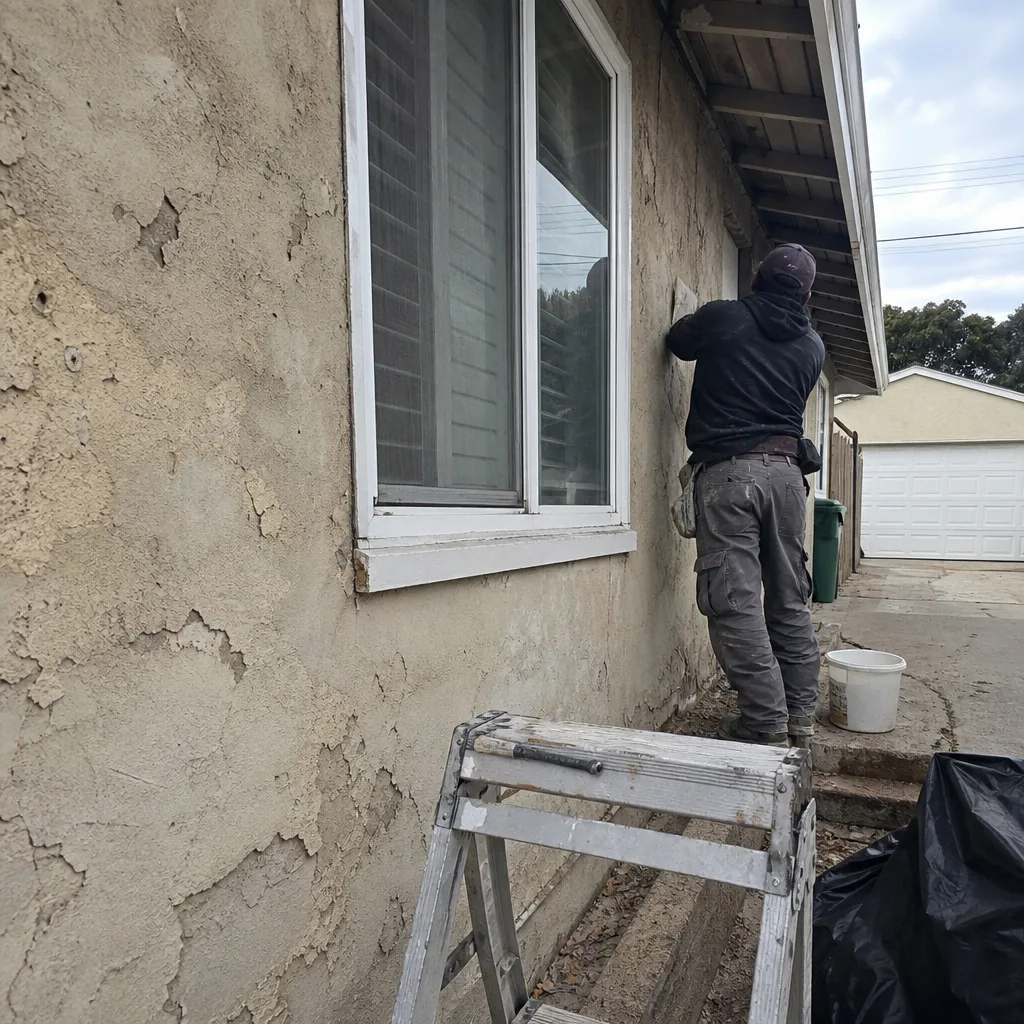 Before
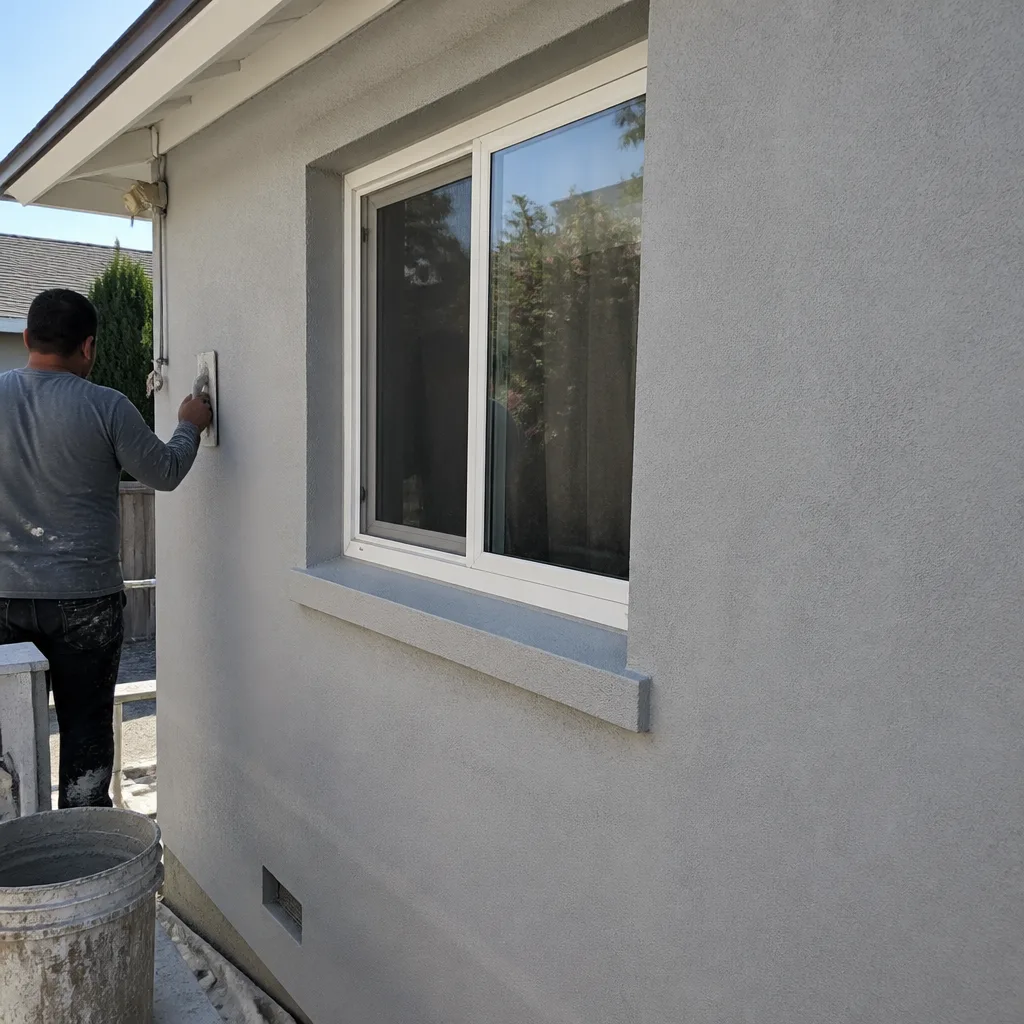 After
AfterUnion City’s Two-Season Reality: Why the Standard Calendar Fails
Most home-maintenance guides divide the year into four neat quarters. That template works for climates with distinct spring, summer, fall, and winter. Union City doesn’t have those. What we have is a marine-influenced pattern with two dominant modes: a wet season running roughly November through April, and a dry season from May through October, with a narrow shoulder period at each end.
The wet season is pressurized. Pacific storms push moisture-laden air against the Bay side of the East Bay hills, and Union City’s position at the foot of those hills means sustained high humidity with less diurnal temperature swing than cities further inland. The attic becomes a condensation chamber when warm, moist interior air leaks through ceiling penetrations and contacts cold roof sheathing. The dry season is radiant. South-facing rooflines in Union City’s older neighborhoods, particularly in the Decoto and Alvarado areas, absorb intense solar gain with minimal cloud cover, and the attic temperatures can spike 40 degrees above ambient.
These two modes stress insulation through completely different mechanisms. Winter failures are moisture-driven: condensation degrades fiberglass batts, compromises air-seal adhesives, and promotes mold on organic materials. Summer failures are thermal-driven: radiant heat overwhelms under-insulated assemblies, forces HVAC systems into longer run cycles, and can drive conditioned air out through pressure differentials if the envelope isn’t tight.
A four-quarter maintenance calendar spreads your attention too thin and misses the critical windows. The October inspection is your last chance to correct vulnerabilities before six months of wet conditions. The April inspection catches winter damage before summer heat compounds it. Everything else is secondary.
We’ve measured this in Union City homes since 2016. The blower-door tests we perform as part of our Topside Attic Insulation Union City home assessments show that homes inspected at these two transitions maintain tighter envelopes and more stable insulation performance than those on arbitrary quarterly schedules. The data is consistent: catch it in October, or remediate it in March at higher cost.
The October Pre-Wet-Season Inspection Protocol
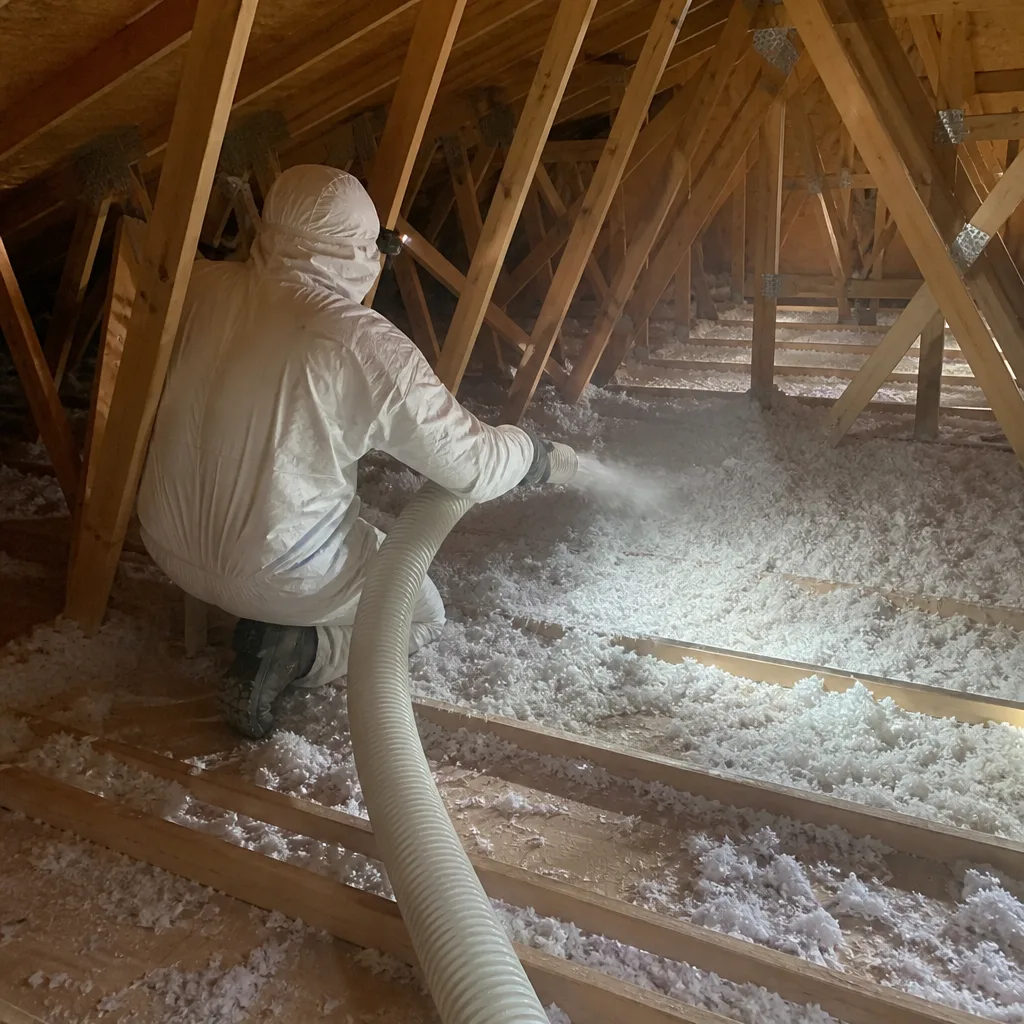
The October inspection is preventive. You’re verifying that your attic can handle six months of marine moisture without degradation. We recommend completing this by the third weekend of October, before the first sustained storm pattern typically arrives.
Step 1: Verify Attic Ventilation Ratios
California Title 24 requires 1 square foot of net free vent area per 150 square feet of attic floor area, or 1:300 if 50% of the ventilation is in the upper third of the attic space. In Union City, we prefer the 1:150 ratio because the marine layer reduces effective airflow. Measure your attic floor area and compare it to your vent openings, accounting for mesh and bug screening that reduces net free area by roughly 30%.
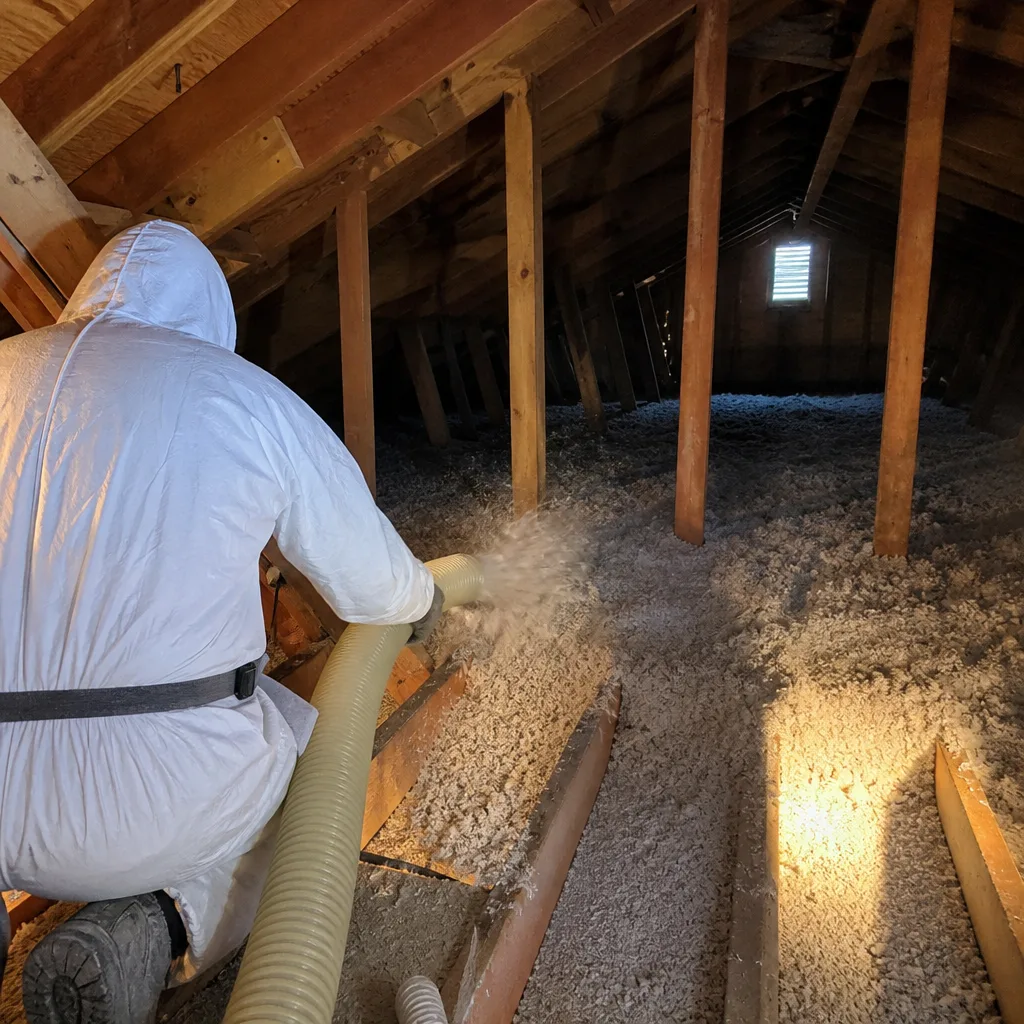
Check that soffit vents aren’t blocked by insulation. This is the most common ventilation failure we find in Union City homes built between 1955 and 1985, which is a substantial portion of the housing stock. Blown-in insulation, especially loose-fill fiberglass like GreenFiber, migrates over time and covers soffit vents. Use a ruler to verify at least 2 inches of clear space above the vent opening.
Step 2: Confirm Vapor-Drive Direction
Vapor drive is the force that pushes moisture through building assemblies. In Union City’s wet season, the drive is predominantly from interior to exterior: warm, moist indoor air wants to escape into the cold attic. Your air sealing must resist this direction.
Inspect the attic floor, not the roof. Look specifically at:
- Top plates - the horizontal framing member where wall studs meet the ceiling
- Can light housings, especially older non-IC rated fixtures
- Bathroom and kitchen exhaust fan penetrations
- Plumbing vent stacks and chimney chases
- Wire penetrations and electrical boxes
Any gap visible from the attic side is a pathway for moist air. In our experience, a 1/4-inch gap running the length of a top plate in a 1,200-square-foot attic can admit enough moisture to saturate 10-15 square feet of fiberglass batting over a typical winter. We seal these with fire-rated caulk or expanding foam before adding insulation, and we check existing seals annually for shrinkage or pest damage.
Step 3: Inspect for Summer Pest Activity
Union City’s warm dry season brings roof rats, mice, and occasionally raccoons into attics. These pests disturb insulation, compromise air seals by gnawing, and introduce organic material that becomes a mold substrate when winter moisture arrives.
Look for:
- Tunneling patterns in loose-fill insulation, especially near eaves
- Droppings concentrated near warm penetrations (recessed lights, flues)
- Compressed paths where insulation has been packed down to nest density
- Chewed foam or caulk at previously sealed penetrations
If you find active infestation, address it before sealing. Trapping and exclusion are prerequisites; sealing over active pest pathways traps animals and creates worse problems. Our Attic Insulation in Union City service includes rodent proofing as a standard preliminary step when evidence is found.
Step 4: Document Depth Measurements
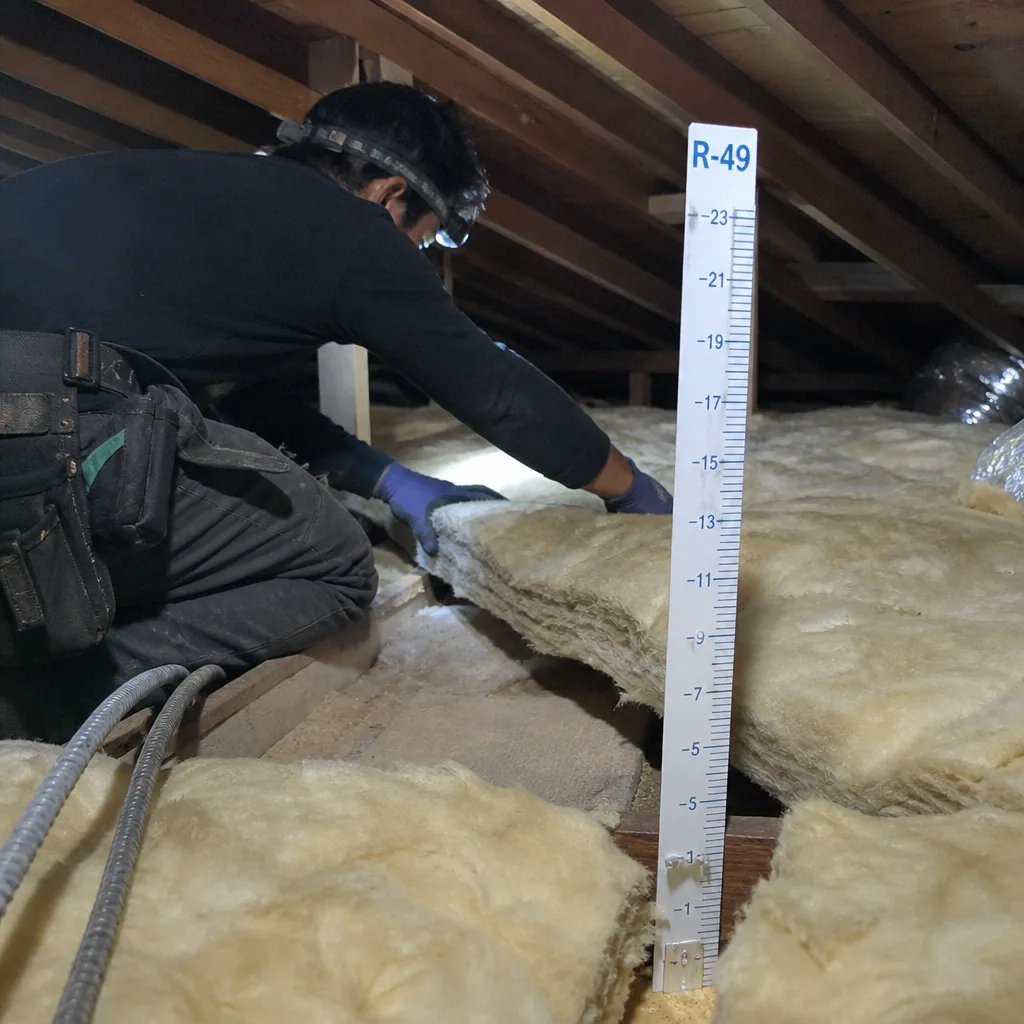
Use a yardstick or insulation ruler to measure depth at five points: center of attic and four quadrants. Record each measurement to the nearest half-inch. Compare to your previous year’s log. Depth loss indicates settling, disturbance, or removal by pests. In Union City, we typically see 5-10% settling in cellulose products like GreenFiber over the first three years, and 3-5% in fiberglass. Greater loss suggests a problem.
The April Post-Wet-Season Inspection Protocol
The April inspection is diagnostic. You’re assessing what the wet season did, and preparing the attic for the thermal stress ahead. Complete this by mid-April, before the first sustained 80-degree days.
Step 1: Assess Moisture Damage
Inspect all insulation materials for:
- Water staining on fiberglass batts or loose-fill surfaces
- Clumping in cellulose, which indicates it has been wet and partially dried
- Corrosion on metal fasteners, hangers, or HVAC components
- Mold growth on organic materials or framing, visible as dark spotting or fuzz
- Deteriorated facing on kraft-faced batts - the paper vapor retarder becomes brittle and separates
Union City’s winter humidity often produces sub-visible damage: insulation that looks intact but has lost R-value because air gaps have formed within clumped material. If you find any of the above indicators, professional assessment is warranted. We provide blower-door testing that can quantify performance loss even when visual inspection seems normal.
Step 2: Check Attic Duct Insulation and Seals
Flexible ductwork in unconditioned attics is particularly vulnerable. The insulation jacket on flex duct is typically R-6 or R-8 fiberglass with a mylar facing. Winter moisture can degrade the adhesive at seams, and the compression that occurs when homeowners or technicians step on ducts during other work reduces effective R-value permanently.
Inspect along the full duct run for:
- Gaps or separation at connections to plenums, boots, or other duct sections
- Compression from storage items or foot traffic
- Tears or abrasion in the outer mylar jacket
- Sagging that creates low points where condensation can pool
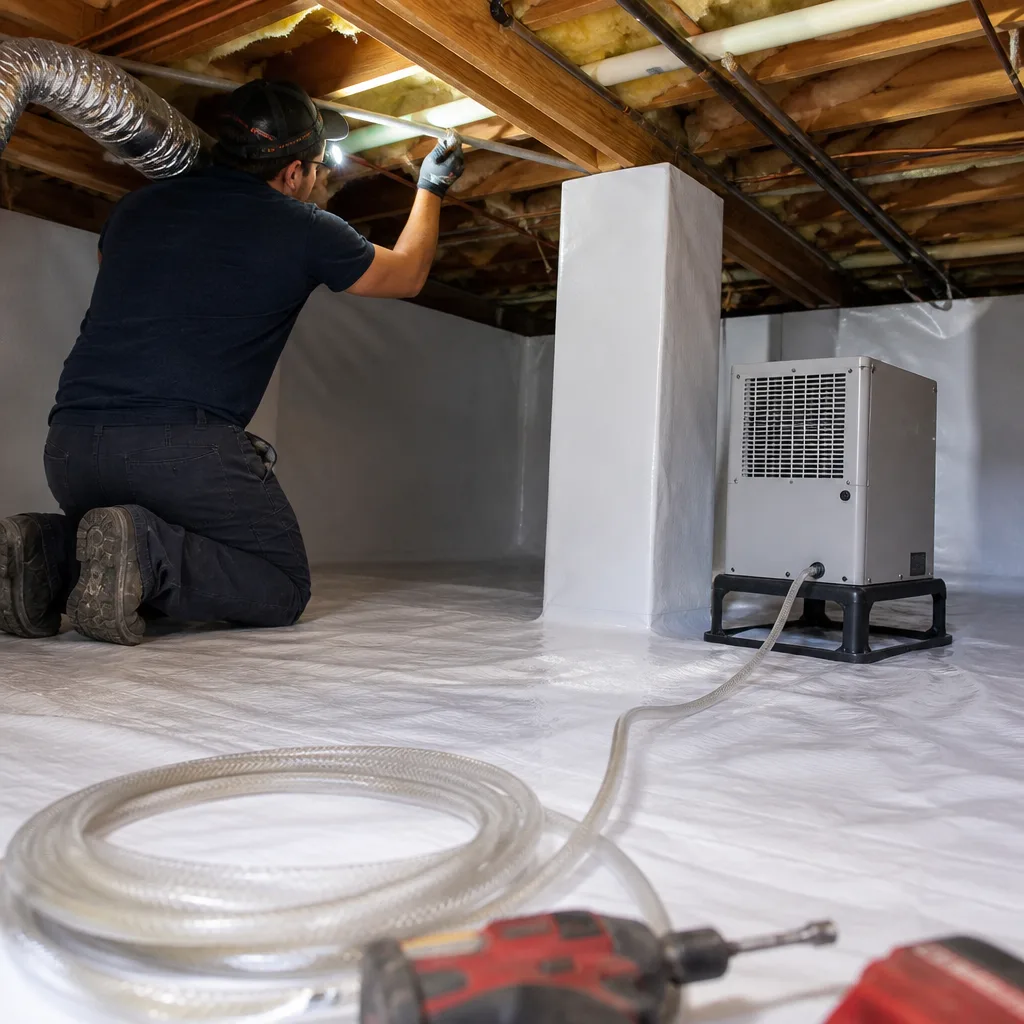
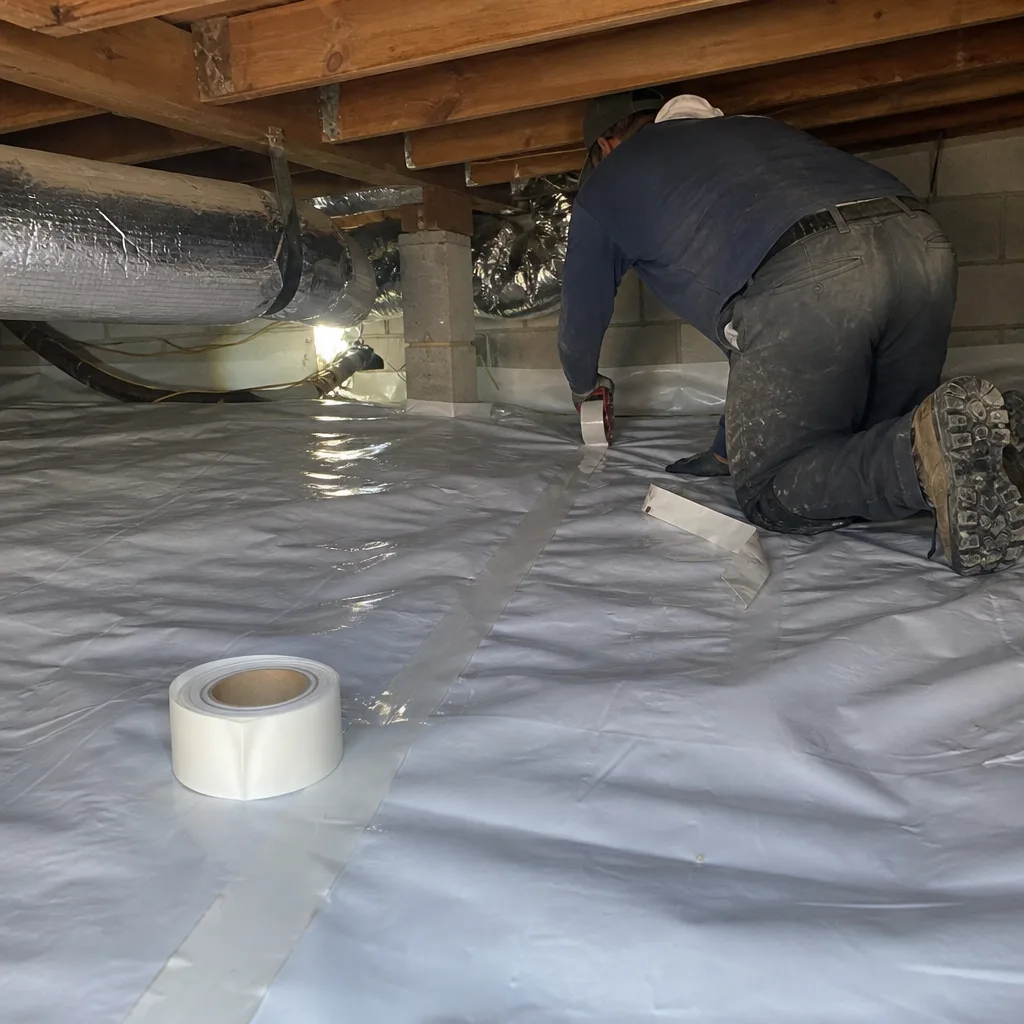
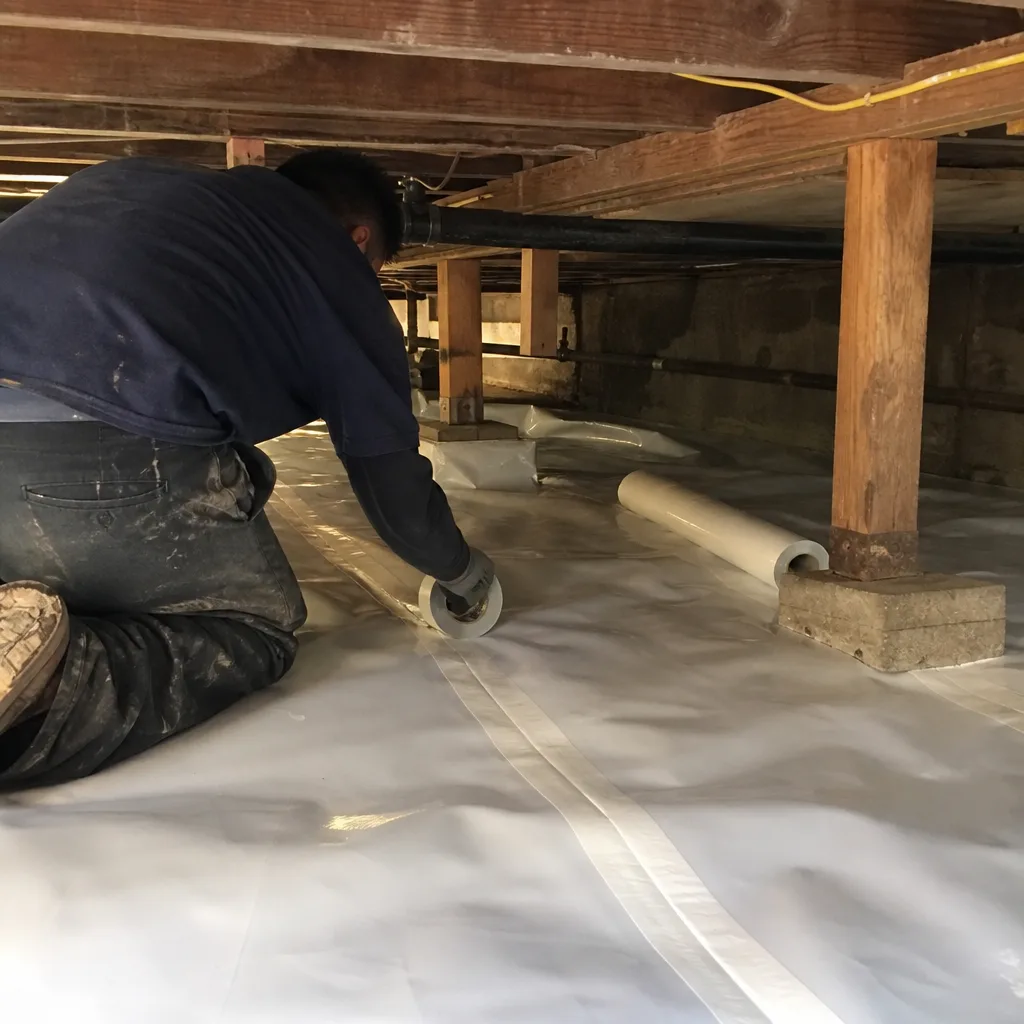
Duct leakage in an unconditioned attic is a double penalty: you’re losing conditioned air and drawing unconditioned air into the return path. In Union City’s climate, this can add 20-30% to heating and cooling costs. Our Crawl Space Encapsulation & Vapor Barrier in Union City service addresses similar dynamics at the lower envelope, and we often find homes need coordinated treatment of both boundaries.
Step 3: Evaluate Insulation Distribution
Wind washing - the movement of loose-fill insulation by air entering through soffit vents - is more common in Union City than guides typically acknowledge because of the sustained winter pressure differentials. Check for:
- Bare spots near eaves where insulation has been pushed inward
- Deep piles against vertical obstructions (chimneys, vent stacks) where wind has deposited material
- Thin coverage over exterior wall top plates, which are critical thermal bridges
Redistribute by hand or with a leaf blower on low setting if the material is loose-fill. For batts, reposition and secure with wire supports. Note any areas where redistribution is needed in your log; repeat patterns indicate ventilation or air-seal problems upstream.
Step 4: Prepare for Summer Radiant Load
The April inspection is your opportunity to verify that insulation characteristics are appropriate for the radiant heat ahead. R-value alone doesn’t predict summer performance. See the next section for specifics.
Summer Radiant Heat: What R-Value Doesn’t Capture
R-value measures resistance to conductive heat flow. It does not measure resistance to radiant heat transfer, which dominates Union City attic conditions from May through October. A south-facing roof in the Alvarado Niles corridor can reach 160°F surface temperature on a clear July afternoon. The roof deck radiates infrared energy downward, and standard fiberglass insulation absorbs much of it. The attic air temperature can exceed 130°F even with adequate ventilation.
This matters because your ductwork lives in that environment. Every degree above ambient in the attic is a degree of cooling loss your HVAC system must overcome. R-value tells you how fast heat conducts through the insulation layer; it doesn’t tell you how much radiant energy the insulation surface itself absorbs and re-radiates.
Emissivity and Facing Materials
Emissivity is the measure of how readily a surface emits thermal radiation. Low-emissivity surfaces reflect radiant heat rather than absorbing it. In attic applications, this characteristic is as important as R-value for summer performance.
Consider these material characteristics:
- Standard kraft paper facing: emissivity approximately 0.9 - absorbs and re-radiates most incoming radiant energy
- Foil-faced polyiso or radiant barrier: emissivity as low as 0.03 - reflects 97% of radiant energy
- Unfaced fiberglass: emissivity approximately 0.9 - performs similarly to kraft facing for radiant purposes
For Union City’s south-facing rooflines, we often recommend radiant barrier installation or foil-faced products as part of a Topside Attic Insulation Union City home upgrade. The performance difference is measurable: we’ve documented attic air temperature reductions of 20-30°F with properly installed radiant barriers, which translates directly to reduced cooling load and longer HVAC equipment life.
Demilec and Icynene spray foam products offer a different mechanism. Closed-cell spray foam at sufficient density provides both air sealing and insulation in one application, and the facing material (the cured foam surface) has moderate emissivity but excellent thermal resistance per inch. In confined attic spaces where adding bulk insulation would compress against the roof deck and compromise ventilation, Spray Foam Insulation in Union City can achieve comparable performance with less thickness. Our assessments include blower-door verification of the air-sealing component, which is where spray foam’s real advantage lies in this climate.
Roof Color and Age as Insulation Variables
Dark asphalt shingles absorb more radiant energy than lighter colors or reflective coatings. In Union City’s older neighborhoods, many homes still have original dark shingles approaching end of life. If you’re not ready for roof replacement, improving attic radiant barrier performance becomes more urgent. We document roof surface temperature with infrared thermography during summer assessments to quantify this variable for homeowners.
HVAC Duct Inspection as Part of Seasonal Insulation Review
The standard advice to “check your insulation” rarely mentions ductwork. This is a significant omission. In California, particularly in pre-1990 construction, ducts in unconditioned attics are the norm, and their thermal interaction with attic insulation is continuous and bidirectional.
When insulation around ducts is disturbed, compressed, or moisture-damaged, the consequences extend beyond the duct itself. The attic air temperature stratifies differently. Pressure imbalances develop. The HVAC system runs longer to achieve setpoint, which increases air handler runtime and can pull more conditioned air through ceiling leaks. It’s a feedback loop that degrades envelope performance systemically.
What to Check
- Duct insulation jacket integrity. Look for tears, compression, and separation at seams. The R-value of flex duct is largely in the fiberglass wrap; damage it and you have a thin plastic tube conducting attic temperature directly into your airflow.
- Duct-to-boot connections. These are common leak points. The connection should be sealed with mastic or foil tape, not duct tape (which degrades in attic temperatures). Check that insulation extends fully to the connection point.
- Support strap placement. Flex duct should be supported at intervals that prevent sagging, typically every 4 feet per manufacturer specification. Sagging creates low points where condensation collects and where insulation compresses.
- Return air pathways. The return duct is under negative pressure. Any leak pulls attic air directly into your breathing air. Inspect return plenums and filter housings with particular care; these are often assembled on site with less quality control than supply ductwork.
In our Union City work, we frequently find that duct insulation problems are the first visible symptom of broader attic performance issues. The homeowner calls about uneven cooling; we find disconnected ducts, but we also find that the attic insulation has been disturbed by technicians accessing the ducts repeatedly, and that air sealing was never completed at original construction. The Haven Standard approach is to treat the system: seal the envelope, then insulate, then verify with blower-door and duct-blaster testing. Written scope, written price, documented result.
Building Your Written Maintenance Log
A maintenance log transforms seasonal inspection from chore to asset. At resale, documented envelope performance is increasingly valued in California’s disclosure environment. More immediately, year-over-year data reveals degradation trends before they become expensive failures.
We provide a written scope and documented photo record on every job we complete, and we encourage homeowners to continue the practice. Here’s the minimum viable log structure:
Annual Log Template
Property: [Address]
Attic floor area: [Square feet]
Insulation type and original depth: [Material, date installed, depth]
Ventilation ratio: [Net free area / attic area]
October [Year] Inspection
- Date: ___
- Depth measurements (5 points): ___ ___ ___ ___ ___
- Average depth: ___
- Change from prior year: ___
- Visible air-seal condition: ___
- Pest evidence: Y/N, description ___
- Ventilation clear: Y/N
- Photos: [file references]
April [Year] Inspection
- Date: ___
- Depth measurements (5 points): ___ ___ ___ ___ ___
- Average depth: ___
- Change from October: ___
- Moisture damage: Y/N, description ___
- Duct condition: ___
- Redistribution needed: Y/N, areas ___
- Photos: [file references]
Store digital copies with your other home records. If you engage a professional for any work, request that they complete the relevant section and sign it. Our crews provide this documentation as standard practice.
For homes with blower-door testing, the single most valuable number to track is the CFM50 - the cubic feet per minute of air leakage at 50 pascals of pressure. A rising trend indicates degrading air sealing, which precedes visible insulation problems. We’ve seen Union City homes maintain stable CFM50 for five years post-sealing, then show 15-20% degradation in year six as caulk and foam age. Catching this early allows targeted remediation rather than full re-treatment.
Common Mistakes to Avoid
- Adding insulation over unsealed air leaks. This is the most common error we correct in Union City. Blown cellulose or fiberglass over a leaky attic floor simply filters the escaping air. The insulation becomes a gray or brown filter mat, and the leaks continue. Seal first, insulate second - always.
- Compressing insulation to inspect, then not restoring depth. Walking through loose-fill insulation compacts it permanently. R-value is proportional to thickness at standard density. If you must access the attic, use walk boards distributed across joists, and rake insulation back to original depth afterward.
- Ignoring the garage attic in attached-garage homes. Union City has many split-level and attached-garage plans where the garage attic shares a wall with conditioned space. This thermal bridge is often uninsulated at original construction and rarely inspected. The temperature differential can drive significant heat loss.
- Using recessed can lights as inspection lighting without checking IC rating. Non-IC (insulation contact) rated fixtures overheat when covered. If you’re working in the attic and need light, verify fixture ratings first. We’ve found scorched framing from this exact scenario in Decoto-area homes.
- Assuming new construction is properly sealed. California’s Title 24 requirements have tightened, but field verification remains inconsistent. We’ve tested Union City homes built in 2020-2023 that failed to meet air-sealing specifications. The builder’s insulation subcontractor is not your envelope’s guarantor.
- Waiting for energy bills to spike before inspecting. Bill spikes are a lagging indicator. By the time your PG&E statement shows a problem, insulation or air-seal degradation has been progressing for months. The October and April inspections catch issues before they cost money.
When to Call a Professional
Some conditions require trained assessment and equipment you don’t have. Call for professional evaluation if your October or April inspection reveals: moisture staining or mold on any surface; insulation depth loss exceeding 15% from your baseline; visible gaps at top plates, can lights, or chimney chases that you cannot safely reach; duct damage or disconnection; or pest infestation that has compromised air seals. Also call if your home was built before 1990 and has never had blower-door testing - the baseline performance is likely poor enough that DIY maintenance is insufficient.
Topside Attic Insulation Union City offers free estimates in Union City. We’ll review your maintenance log with you, perform blower-door testing if indicated, and provide a written scope and written price before any work starts. Call (650) 381-1512 to schedule.
Frequently Asked Questions
Professional inspection with blower-door testing typically runs $250-$450 in Union City, though we credit this toward any work you proceed with. If remediation is needed, most attic air sealing and insulation refresh projects in 1,200-2,000 square foot homes fall between $2,800 and $6,500 depending on access conditions and material choice. We publish before-and-after blower-door numbers on every applicable job so you can verify the performance change. Call (650) 381-1512 for a written price specific to your home - estimates are free.
Homeowners can safely perform the visual and measurement protocols described in this guide. You’ll need a sturdy ladder, a headlamp, a yardstick, and a camera. Do not attempt to seal electrical penetrations, work near active HVAC equipment, or disturb vermiculite insulation (common in pre-1990 homes, may contain asbestos). For these conditions, professional assessment is the appropriate path. We provide the documented photo record and written findings as part of our standard service.
Union City experiences more sustained winter humidity due to its position at the foot of the East Bay hills and the channeling effect of its grid street pattern on marine air flow. Summer conditions are similar, but the winter difference matters for attic moisture management. Homes in Union City need more rigorous air sealing at the attic floor and more attentive ventilation ratio verification than equivalent construction in drier microclimates just a few miles east.
Repair is cost-effective when damage is localized - a single wet area from a resolved roof leak, or compression from a removed storage platform. Replacement is indicated when: insulation is more than 20 years old, moisture damage is widespread, pest contamination is present, or the original installation was inadequate by current standards. In Union City’s market, partial replacement often costs 60-70% of full replacement while delivering 40-50% of the performance benefit. We assess this trade explicitly in our written scopes. Call (650) 381-1512 and we’ll walk through the numbers for your specific condition.
For attic floors in existing homes, we typically recommend loose-fill fiberglass or cellulose like GreenFiber at sufficient depth (R-38 to R-49 per Title 24) over comprehensive air sealing. For south-facing rooflines with severe radiant load, radiant barrier or spray foam products from Icynene or Demilec may be indicated. The optimal choice depends on your specific attic geometry, existing conditions, and performance goals. We don’t lock you into proprietary products - our materials come from Owens Corning, Johns Manville, Knauf, Rockwool, CertainTeed, Icynene, Demilec, and GreenFiber, selected for the application.
Well-installed, undisturbed fiberglass or cellulose can perform for 25-30 years. In Union City, the practical lifespan is often shorter because moisture events, pest activity, and technician traffic degrade materials faster. Our 9,000+ home database suggests that attics in this climate benefit from professional assessment at year 15, with replacement typically indicated between years 20 and 25 unless prior damage has accelerated degradation. Your maintenance log will reveal your specific trajectory.
We answer calls with a live person 24/7, and we prioritize active water intrusion, pest infestation, and HVAC failure related to attic conditions. Same-day service is often available for Union City addresses. For non-urgent seasonal inspections, we typically schedule within 3-5 business days. Call (650) 381-1512 to discuss your timeline.
The Bottom Line
Union City’s climate demands a two-transition maintenance calendar, not four arbitrary quarters. Inspect in October for wet-season readiness: ventilation ratios, vapor-drive resistance, and pest-free air seals. Inspect in April for winter damage assessment and summer radiant-heat preparation. Record depth measurements and visual findings in a written log. Treat ductwork as part of the insulation system, not an afterthought. And remember that R-value alone doesn’t predict summer comfort - emissivity and air sealing matter equally. The homeowners who maintain this discipline protect their investment, document performance for resale, and avoid the expensive surprises that come from deferred maintenance.
Written by Wes Okafor, Owner at Topside Attic Insulation Union City, serving Union City since 2016.