
Last updated September 24, 2026
Insulation Cost Breakdown: The Union City Homeowner’s Reference for 2026
The lowest insulation bid in Union City is frequently the most expensive job when measured by cost-per-point-of-ACH50-reduction. A bid that excludes air sealing leaves the largest source of energy loss untouched, and many homeowners end up paying a second contractor to fix what the first job should have addressed. In this guide, you’ll learn what Union City insulation actually costs in 2026, why identical R-values can price out $0.40 to $1.20 apart per square foot, and how to read a bid well enough to compare equivalent work. For more guides & resources, visit our blog.
Quick Answer
Most complete attic insulation jobs in Union City run $2.80 to $5.50 per square foot depending on material, with spray foam at the high end and blown cellulose at the low end. A proper scope includes air sealing of top plates, can lights, and penetrations before insulation goes in, plus a blower-door test to verify results. Expect $1,800 to $4,200 for a typical 1,200-square-foot attic with full air sealing and documentation, before PG&E rebates.
Table of Contents
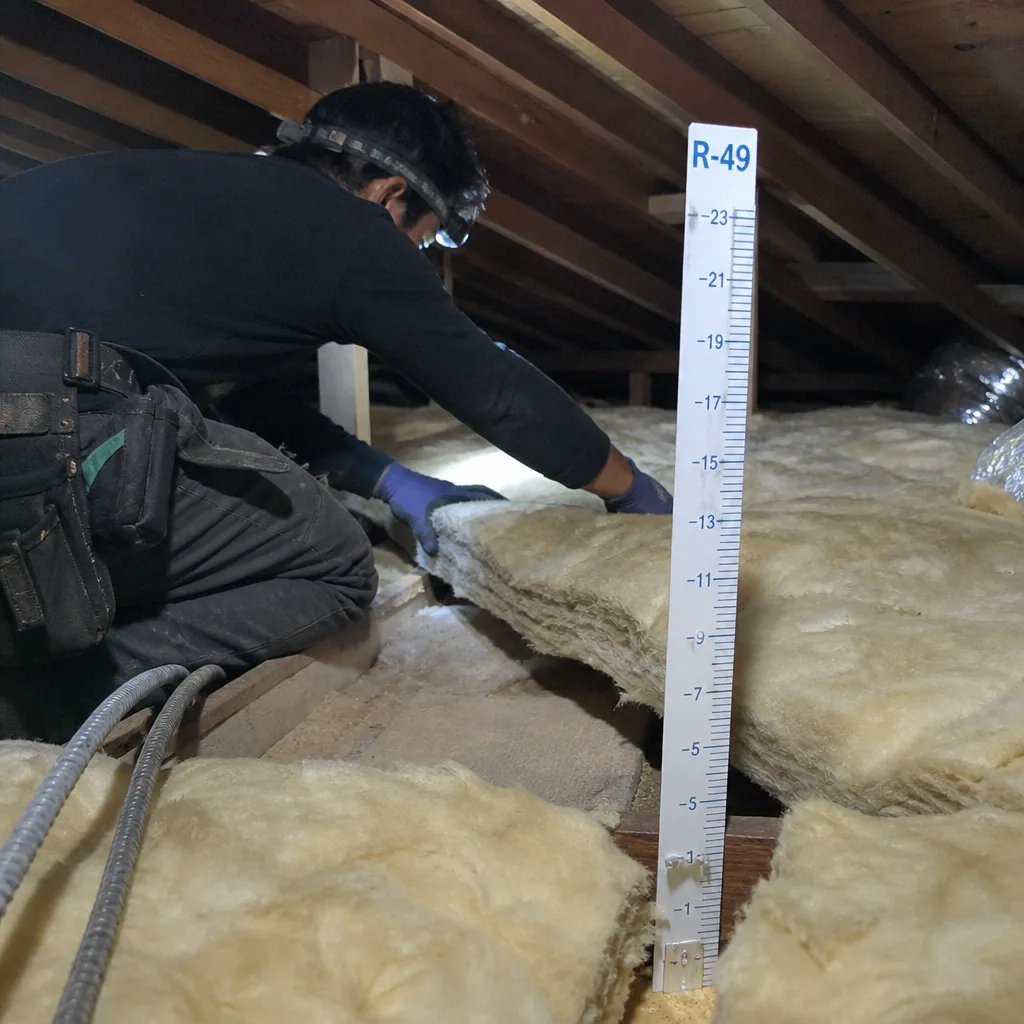
- Why Union City Insulation Bids Vary by 300% for the Same R-Value
- Material-by-Material Cost Ranges for 2026
- The Hidden Cost: Air Sealing as a Standalone Line Item
- Why the Blower-Door Test Changes Your ROI Calculation
- PG&E Enhanced Home Upgrade Rebates and Documentation Requirements
- Resale Value: What Documented Insulation Adds to Your Appraisal
- How to Read and Compare Insulation Bids in Union City
- Common Mistakes to Avoid
- When to Call a Professional
- Frequently Asked Questions
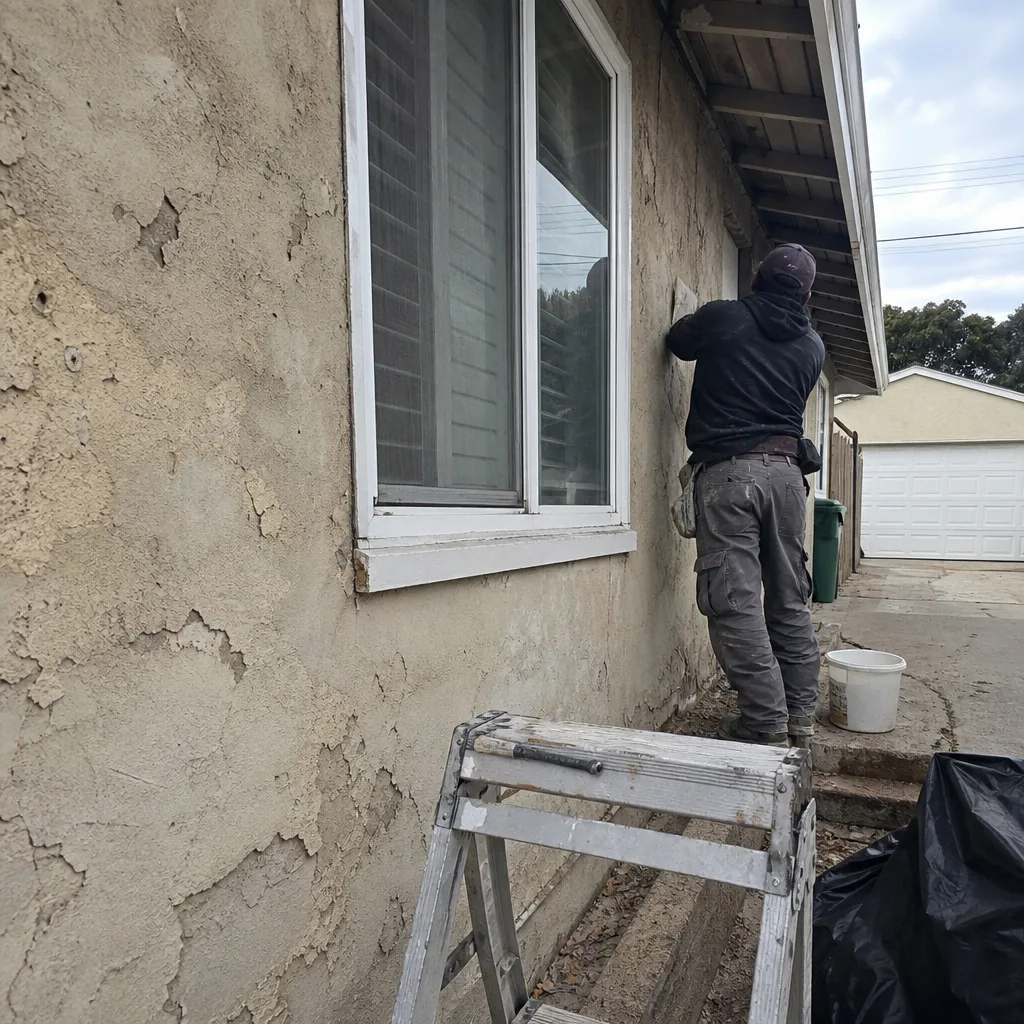 Before
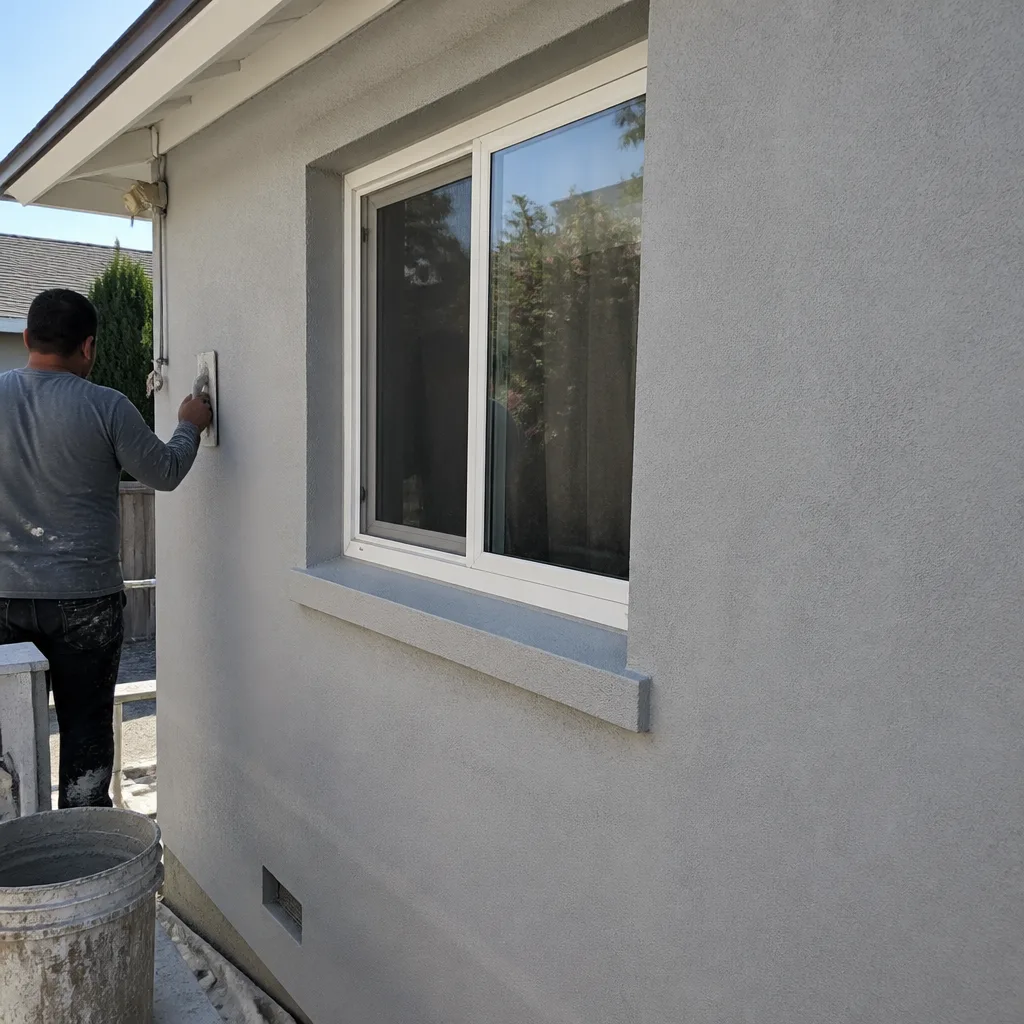 After
AfterWhy Union City Insulation Bids Vary by 300% for the Same R-Value
We see this every week. A homeowner in the Decoto neighborhood collects three bids for R-38 attic insulation and gets back $2,100, $3,400, and $5,800. Same house, same R-value, same square footage. The difference is not markup; it’s scope.
Union City sits in Alameda County’s mild marine climate zone, which means our building code requires less insulation than inland California but places heavier emphasis on moisture management and air tightness. Before starting any project, review Insulation Permits, Codes & Inspections in CA: What You Need to Know. Contractors know this, but not all of them price for it. Here’s what separates a $2,100 bid from a $5,800 bid:
- Material-only vs. complete envelope work. The low bid covers blowing cellulose over your existing insulation without lifting it to check for mold, gaps, or recessed can lights leaking conditioned air into the attic.
- Air sealing included or excluded. Top plates, plumbing and electrical penetrations, and the attic hatch are the primary leakage sites in most Union City homes built between 1960 and 1995. Sealing them adds 4 to 8 labor hours but reduces air leakage by 30 to 50 percent.
- Pre- and post-job testing. A blower-door test, which measures air leakage in cubic feet per minute at 50 pascals of pressure (CFM50), takes about 45 minutes and requires specialized equipment. Some contractors skip it; we consider it essential documentation.
- Removal and disposal of old insulation. Homes near Alvarado-Niles Road and the older sections of the Decoto District often have insulation compromised by roof leaks or rodent activity. Walking away without addressing this means insulating over a moisture or contamination problem.
- Photo documentation and written warranty. Under Haven Standard Clause 1, every job gets a written scope, written price, and written warranty before work starts, plus a Documented Photo Record when the crew leaves. Not every contractor operates this way.
The critical point: a bid without air sealing is not a lower price for the same job. It’s a different job entirely. In our experience across 9,000+ homes since 2016, the homes that perform best, the ones where homeowners actually see their PG&E bills drop, are the ones where sealing preceded insulating. Always.
Material-by-Material Cost Ranges for 2026
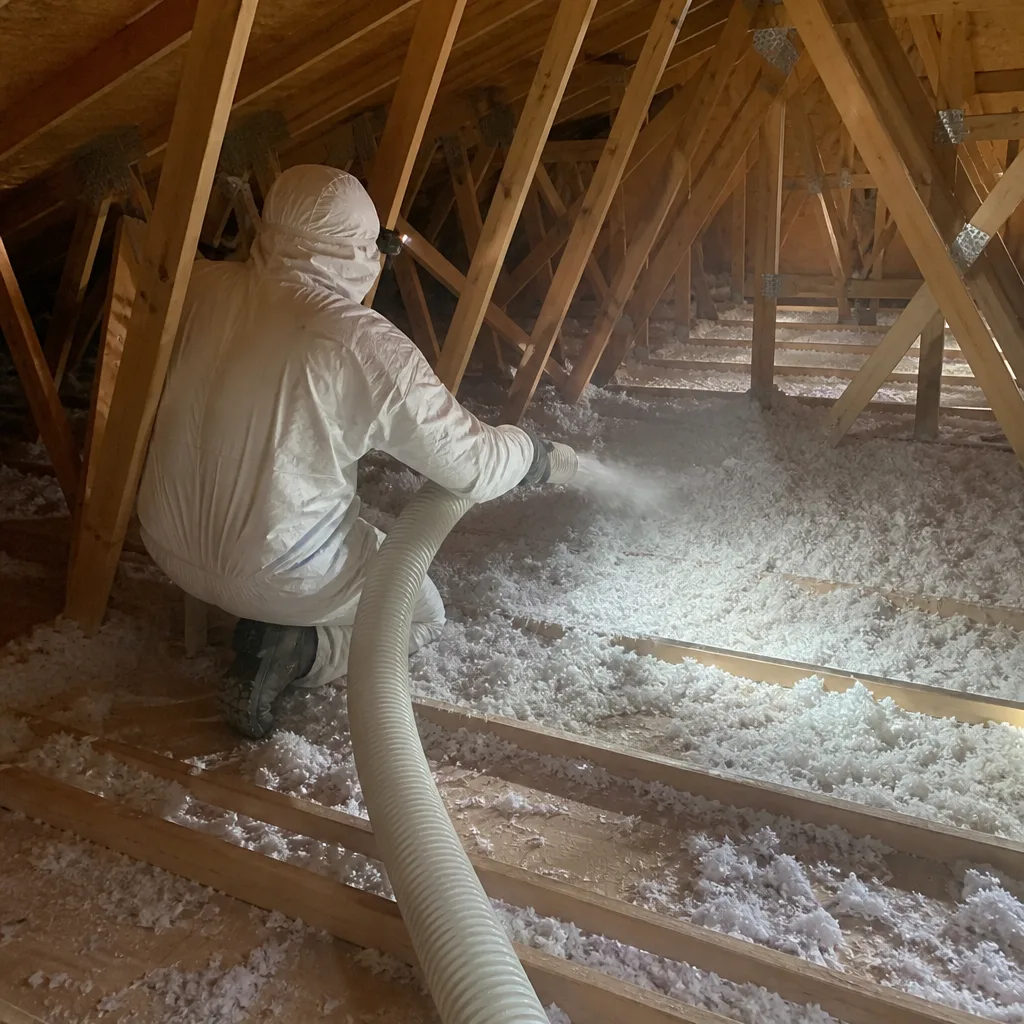
These are the per-square-foot installed prices we’re seeing in Union City’s 2026 labor market, based on jobs we’ve completed in the Alvarado, Decoto, and Station District neighborhoods. For ongoing maintenance tips, see Seasonal Insulation Care for Union City: Year-Round Homeowner’s Guide. Prices include material, basic labor, and equipment but assume a standard attic with reasonable access. Wall and crawlspace applications cost more due to restricted working space.
Attic Applications
| Material | Price per Sq. Ft. Installed | Typical R-Value Achieved | Best For |
|---|---|---|---|
| Blown cellulose (GreenFiber) | $1.80 - $2.80 | R-38 to R-49 | Cost-conscious retrofits, topping existing insulation |
| Blown fiberglass (Owens Corning, Johns Manville) | $2.20 - $3.40 | R-38 to R-60 | Fire resistance, minimal settling over time |
| Spray foam, open-cell (Demilec) | $3.50 - $5.50 | R-38 to R-49 | Air barrier and insulation in one, complex rooflines |
| Spray foam, closed-cell | $5.00 - $7.50 | R-38 to R-49 | Moisture-sensitive spaces, structural reinforcement |
| Fiberglass batts | $1.60 - $2.40 | R-30 to R-38 | New construction with perfect cavity geometry |
Wall Applications
| Material | Price per Sq. Ft. Installed | Notes |
|---|---|---|
| Dense-pack cellulose | $2.50 - $4.00 | Requires drilling and patching; best for retrofits |
| Spray foam, open-cell | $4.50 - $6.50 | Fills irregular cavities; air seals as it insulates |
| Spray foam, closed-cell | $6.50 - $9.00 | Higher R per inch; limited in older 2×4 walls |
Crawlspace Applications
| Material | Price per Sq. Ft. Installed | Notes |
|---|---|---|
| Rigid foam board + vapor barrier | $3.00 - $5.00 | Standard for vented crawlspace floors |
| Spray foam, closed-cell (rim joist) | $6.00 - $9.50 | Critical air sealing at foundation perimeter |
| Encapsulation system (full) | $4.00 - $7.00 | Sealed crawlspace with dehumidification; see Crawl Space Encapsulation & Vapor Barrier in Union City |
These ranges move based on access difficulty, existing insulation condition, and whether the job requires Attic Insulation in Union City removal first. A home in the hills above Alvarado-Niles with a 12/12 roof pitch and a 24-inch attic hatch will price toward the top of any range. A single-story ranch in the Station District with a gable vent and clear soffit access will price toward the bottom.
The Hidden Cost: Air Sealing as a Standalone Line Item
This is where most Union City homeowners lose money they don’t know they’re losing. A contractor bids $2,400 for R-38 blown cellulose in a 1,000-square-foot attic. Sounds reasonable. But that bid assumes the attic floor is already airtight, which it almost never is in homes built before 2005.
Here’s what air sealing actually costs when it’s broken out honestly:
| Component | Labor Hours | Cost Range |
|---|---|---|
| Top plate sealing (perimeter walls) | 2 - 3 | $280 - $420 |
| Recessed can light covers + seal | 1 - 2 per 6 lights | $180 - $340 |
| Plumbing/electrical penetration seal | 1.5 - 2.5 | $210 - $350 |
| Attic hatch weatherstrip + insulate | 0.5 - 1 | $70 - $140 |
| Duct boot seal + mastic | 1 - 2 | $140 - $280 |
| Chimney chase / flue damper seal | 1 - 2 | $140 - $280 |
| Complete attic air sealing, typical home | 6 - 12 | $840 - $1,680 |
A bid that rolls air sealing into “prep” or “miscellaneous” without specifying hours and materials is a bid you cannot compare. Worse, a bid that omits air sealing entirely is pricing a job that will underperform by 30 to 50 percent. We’ve tested this. In a 1972 ranch on Royal Ann Drive, the blower-door reading was 3,800 CFM50 before any work. After air sealing alone, it dropped to 2,400 CFM50. Only then did we add insulation. The homeowner’s PG&E bill dropped 23 percent the following winter.
Under Haven Standard, air sealing is never optional. We seal first, then insulate, in that order. Every time.
Why the Blower-Door Test Changes Your ROI Calculation
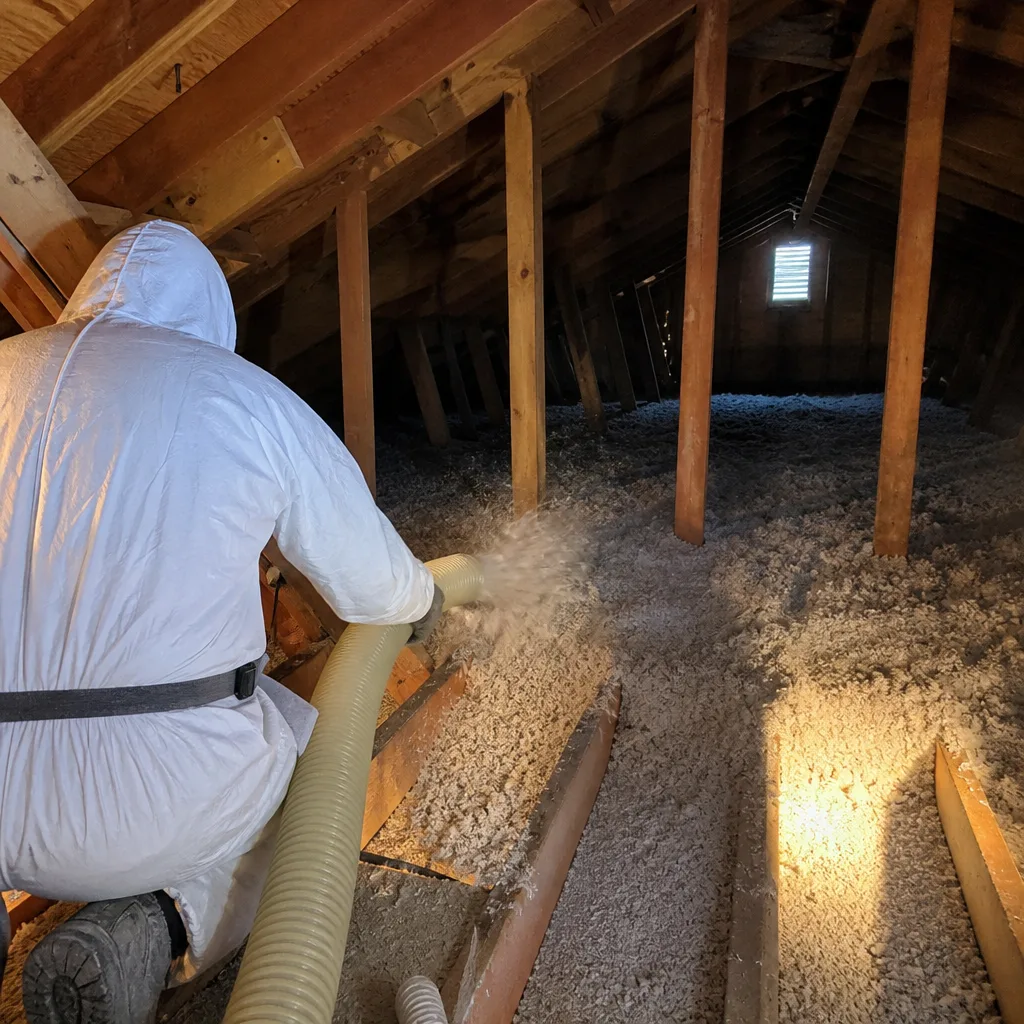
A blower-door test is a pressurization reading that shows, in one number, how much air your building envelope is losing. The equipment is simple: a powerful fan mounted in an exterior door, a manometer measuring pressure differential, and software calculating leakage at a standard 50 pascals. The whole process takes 45 minutes to an hour.
What matters is what you do with the number.
In Union City, the typical pre-1978 home tests between 3,500 and 6,000 CFM50. New construction targets 1,500 to 2,500. A well-sealed, well-insulated older home can reach 2,000 to 2,800. Here’s why the test pays for itself:
- It identifies the leaks worth fixing. Without a baseline, you’re guessing. With a baseline, you know whether the money is better spent on attic sealing, duct sealing, or wall insulation. In one Alvarado home, the test revealed 40 percent of total leakage was through the crawlspace rim joist, not the attic at all. We redirected the budget.
- It proves the work worked. A post-job test showing 3,800 CFM50 dropping to 2,100 CFM50 is documentation you can hold. Under Haven Standard, we publish before-and-after blower-door numbers on every applicable job. The homeowner gets the readings in writing.
- It unlocks rebates. PG&E’s Enhanced Home Upgrade program requires pre- and post-improvement testing by a certified contractor. No test, no rebate.
- It changes payback math. A job that reduces CFM50 by 1,000 points in a 2,000-square-foot home saves roughly 15 to 20 percent on heating and cooling. At Union City’s PG&E rates, that’s $400 to $700 annually. A $3,500 job with documented 1,000-point reduction pays back in 5 to 9 years. A $2,100 job with no testing and unknown results might pay back in 15, or never.
The test itself costs $350 to $600 as a standalone service. When bundled with insulation work, we typically charge $250 to $400. It’s the cheapest diagnostic you’ll buy for your house.
PG&E Enhanced Home Upgrade Rebates and Documentation Requirements
PG&E’s Enhanced Home Upgrade program, part of California’s statewide Energy Upgrade California initiative, offers rebates for comprehensive energy improvements, including insulation and air sealing. For Union City homeowners, the program can offset 30 to 50 percent of project costs, but the documentation requirements are specific and non-negotiable.
Here’s what your contractor must provide for you to claim the rebate:
- Pre-improvement Home Energy Score or equivalent audit. This must be performed by a Building Performance Institute (BPI) or Residential Energy Services Network (RESNET) certified auditor. The report establishes your baseline.
- Written scope of work with estimated savings. Generic proposals are rejected. The scope must list each measure, its projected impact, and the equipment or materials to be used.
- Post-improvement verification test. A second blower-door test and combustion safety test, performed after all work is complete. The post-test must show measurable improvement.
- Invoices with line-item detail. Lump-sum invoices are frequently rejected. PG&E wants to see what was paid for insulation, what for air sealing, what for testing.
- Completed rebate application with contractor signatures. The contractor must sign off that work was performed to program standards.
Typical rebate amounts for Union City homes in 2026:
- Attic insulation + air sealing package: $1,200 - $2,800
- Wall insulation (dense-pack or spray foam): $800 - $1,800
- Crawlspace sealing + insulation: $600 - $1,400
- Whole-home package (attic + walls + crawlspace + duct sealing): $3,500 - $6,500
The net effect: a $4,200 attic job becomes $2,400 to $3,000 after rebate. A $6,800 whole-home package becomes $3,300 to $4,600. But you cannot claim this retroactively. The pre-improvement audit must precede the work. We’ve had homeowners call us after another contractor finished, hoping to “get the rebate too.” It doesn’t work that way.
We handle the audit, the scope, the post-test, and the paperwork as part of our standard process. Under Haven Standard, the documentation the customer walks away with includes everything needed for rebate submission.
Resale Value: What Documented Insulation Adds to Your Appraisal
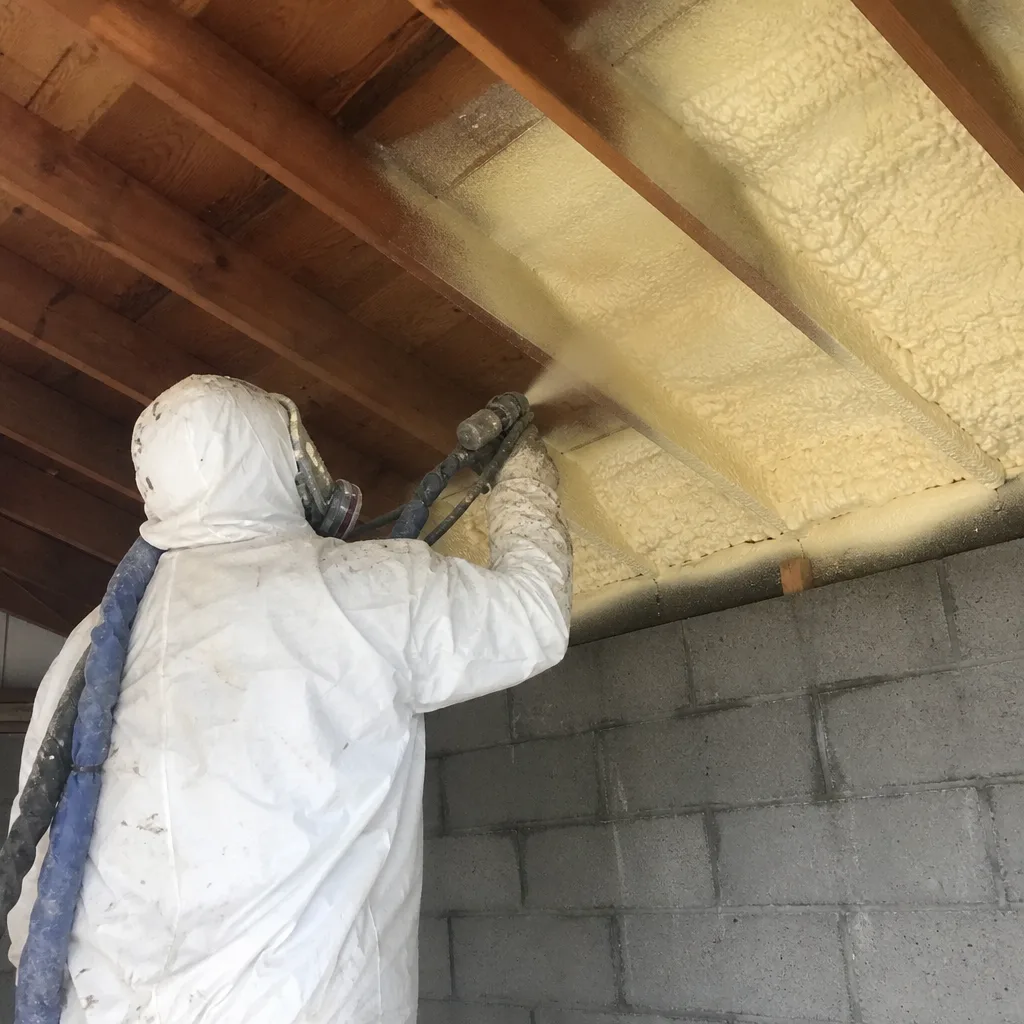
This is the point competitors almost never address. A completed, tested, documented insulation job is a transferable asset when you sell your Union City home. An undocumented job is not.
Here’s how the math works in Alameda County’s 2026 market:
Appraisers and buyer agents in Union City are increasingly attuned to energy costs. PG&E rates have risen 34 percent since 2020, and buyers ask about utility bills. A home with a documented blower-door result, a written scope, and a year’s worth of reduced PG&E statements commands a measurable premium.
Comparable sales data from the past 18 months in Union City and neighboring Fremont, Newark, and Hayward shows:
- Homes with documented energy improvements (written scope, test results, utility history) sell 3 to 7 days faster than comparable homes without documentation.
- Appraised value adjustments of $3,000 to $8,000 are being applied for homes with whole-envelope insulation and air sealing, based on modeled utility savings and buyer preference data.
- In competitive bidding situations, buyers prioritize homes with recent, documented mechanical and envelope upgrades over homes with cosmetic renovations but unknown energy performance.
The key word is documented. A seller who says “we insulated the attic a few years ago” has no proof. A seller who hands over a folder with a written scope, before-and-after blower-door readings, photos of the work, and 12 months of reduced PG&E bills has evidence. In our experience, the cost of documentation, which we include on every job, is recovered at sale time many times over.
For homeowners not planning to sell, the documentation still matters. It protects your investment, establishes a baseline for future work, and satisfies the growing number of insurers who ask about building envelope condition.
How to Read and Compare Insulation Bids in Union City
Comparing bids requires equivalent scopes. Here’s a checklist we recommend every Union City homeowner use:
| Line Item | Bid A | Bid B | Bid C |
|---|---|---|---|
| Material type and brand | |||
| R-value and coverage area | |||
| Air sealing scope (hours/specific components) | |||
| Old insulation removal/disposal | |||
| Pre-job blower-door test | |||
| Post-job blower-door test | |||
| Photo documentation | |||
| Written warranty (duration, coverage) | |||
| Rebate assistance included | |||
| Total price | |||
| Price per square foot | |||
| Price per point of CFM50 reduction (if tested) |
That last line is the one almost no one calculates. Divide total price by the measured reduction in CFM50. A $3,000 job that reduces leakage by 1,200 points costs $2.50 per point. A $2,100 job with no test might have reduced leakage by 300 points, or might have made it worse by disturbing existing insulation. At $7.00 per estimated point, or unknown, it’s not cheaper. It’s a gamble.
Under Haven Standard, we provide all of this upfront. Written price, written scope, written warranty. No work starts without it. We also offer a Free Second Opinion on any written estimate. Bring us a competing quote and we will read it with you, line by line, and explain what each item means.
Common Mistakes to Avoid
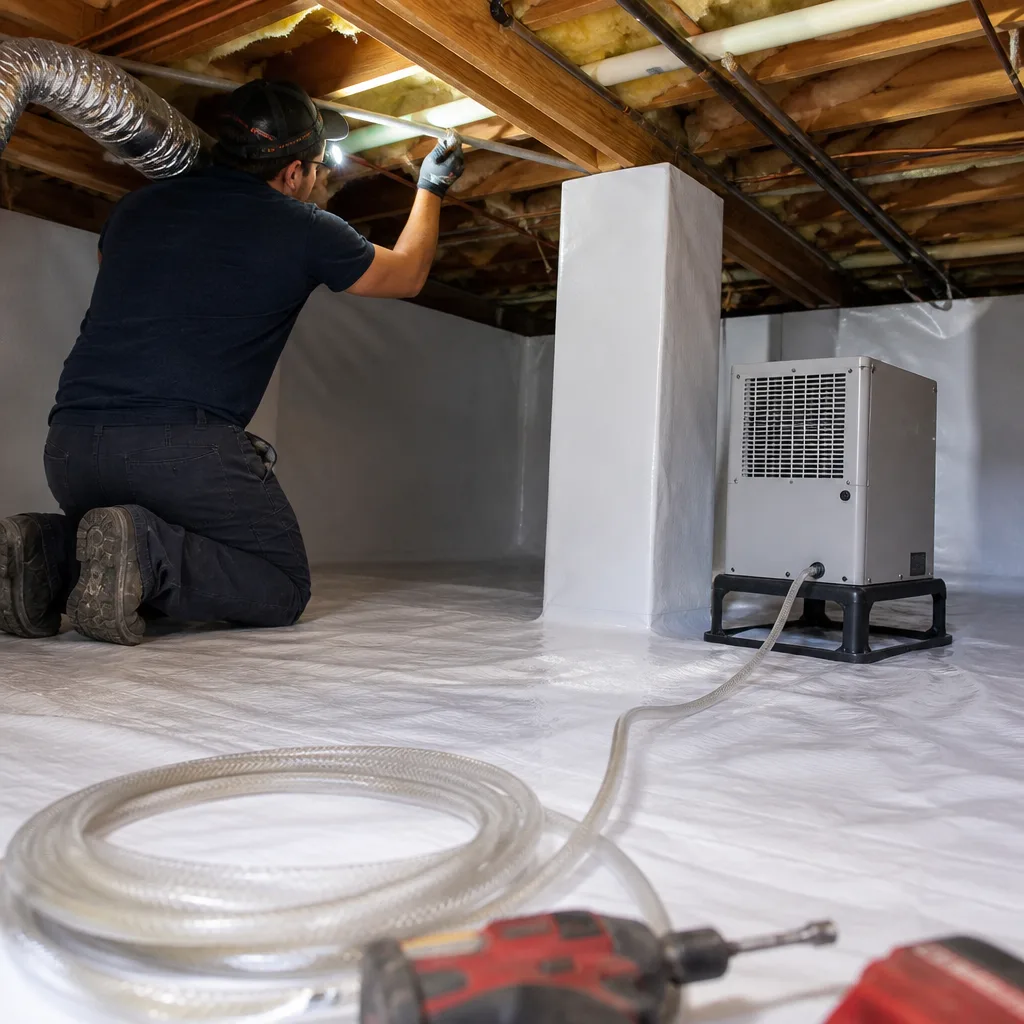
- Comparing bids by total price alone. A $2,400 bid for material-only and a $4,200 bid for complete envelope work are not comparable. Calculate price per square foot, then price per point of air leakage reduction.
- Insulating over wet or contaminated insulation. Union City’s marine climate means roof leaks often go unnoticed until insulation is saturated. In the older Decoto District homes, we’ve found decades of layered insulation with mold between layers. Blowing new material over this traps moisture and creates a health hazard.
- Skipping the pre-job test to save $300. The test often reveals that your biggest problem is not where you think it is. We’ve had homeowners budget for attic insulation when the blower-door showed 60 percent of leakage through the crawlspace.
- Assuming all spray foam is the same. Open-cell and closed-cell have different R-values per inch, moisture permeability, and cost. Closed-cell is not “better”; it’s different. In Union City’s climate, open-cell is often the right choice for attic applications where moisture needs to dry to the interior.
- Not verifying PG&E rebate eligibility before work starts. The pre-improvement audit must be completed first. We’ve seen homeowners lose $2,000+ in rebates because they didn’t understand the sequence.
- Hiring based on speed of availability alone. A contractor who can start tomorrow may be available for a reason. In our market, quality crews book 2 to 4 weeks out during peak season (September through November).
- Failing to get warranty details in writing. “Lifetime warranty” sounds good until you ask whose lifetime, what it covers, and whether it’s pro-rated. Under Haven Standard, warranty terms are specified in writing before any work starts.
When to Call a Professional
Call a professional when your PG&E bills are rising without rate changes, when rooms in your home maintain temperature unevenly, when you find insulation disturbed by rodents or moisture, or when you’re preparing to sell and need documented improvements. Watch for Insulation Warning Signs: A Union City Homeowner’s Reference Guide. In Union City, homes built before 1990 almost always benefit from professional assessment before any insulation decision.
Topside Attic Insulation Union City offers free estimates in Union City. We’ll perform a preliminary assessment, explain what a complete scope looks like for your specific home, and provide a written price before any work starts. Call (650) 381-1512. A live person answers 24/7.
Frequently Asked Questions
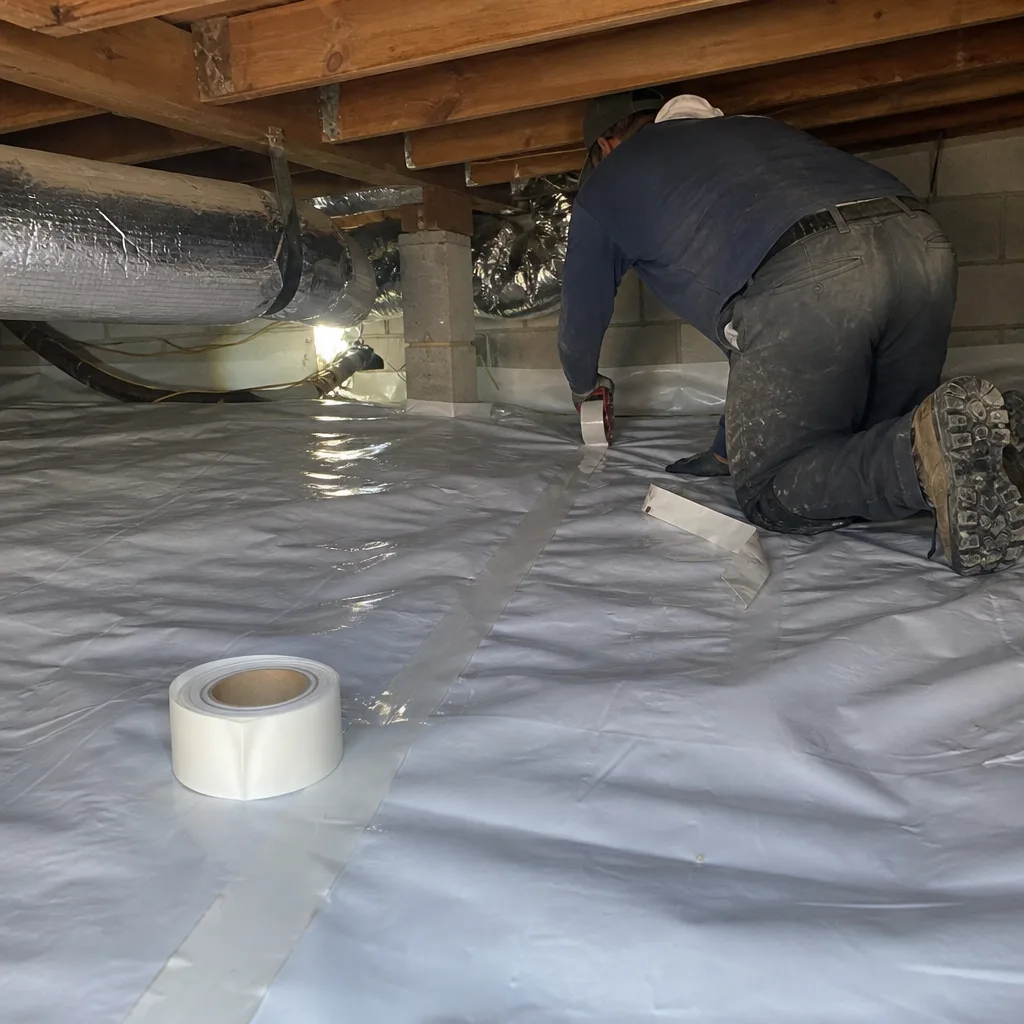
Most complete attic insulation jobs in Union City run $2.80 to $5.50 per square foot installed, with a typical 1,200-square-foot attic totaling $1,800 to $4,200 before rebates. The range depends on material choice, air sealing requirements, and whether old insulation must be removed first. Call (650) 381-1512 for a written price on your specific home, estimates are free.
Repair is rarely cost-effective. Disturbed, compressed, or moisture-damaged insulation cannot be restored to its original R-value, and patching leaves thermal bridges and air leakage paths. In most Union City homes we assess, removal and replacement with proper air sealing delivers better performance at lower lifetime cost than partial repair. Call us for a free second opinion on any repair estimate you’ve received.
Complete attic air sealing in a typical Union City home runs $840 to $1,680, broken out by component: top plates, can lights, penetrations, attic hatch, and duct boots. We do not offer air sealing as a standalone service without insulation, because sealing alone without adequate insulation leaves thermal performance incomplete. The complete scope, sealed first then insulated, is what delivers measurable results.
We typically schedule estimates within 48 hours, and same-day appointments are often available depending on current demand. Calls are answered by a live person 24/7, and you’ll get a text when your technician is en route with a named technician and arrival window. Under Haven Standard: Arrive on schedule, you get a named technician and a text when they are on the way.
PG&E’s Enhanced Home Upgrade program offers rebates of $1,200 to $2,800 for attic insulation plus air sealing, and up to $6,500 for whole-home packages. The program requires a pre-improvement energy audit, written scope, post-improvement testing, and detailed invoices. We handle all documentation as part of our standard process. The key is starting with the audit before any work begins.
Correct installation is verified, not assumed. A post-job blower-door test measures air leakage reduction. Photo documentation shows coverage depth and completeness. Your written scope specifies what was to be done, and your written warranty specifies what happens if it wasn’t. We provide all three on every job. If a contractor cannot show you test results and photos, you do not know if the job was done right.
The Bottom Line
Insulation cost in Union City is not a single number. It’s a range determined by scope, material, testing, and documentation. The lowest bid is rarely the best value when measured by performance per dollar spent. A complete job, sealed first then insulated, with before-and-after blower-door verification and written documentation, costs more upfront and pays back faster through lower utility bills, rebate capture, and resale value. Since 2016, we’ve completed 9,000+ homes this way, every one with a written price before work started and a documented record when the crew left. That’s Haven Standard.
Written by Wes Okafor, Owner at Topside Attic Insulation Union City, serving Union City since 2016.