
Last updated September 24, 2026
Insulation Warning Signs: A Union City Homeowner’s Reference Guide
A 15% unexplained jump in your winter gas bill is more reliable early evidence of insulation failure than anything you can spot from an attic hatch. That’s because insulation degrades from the air-seal outward; the thermal gap costing you money hides under material that still looks intact. In Union City, where marine layer moisture and inland heat create distinct seasonal pressure on building envelopes, homeowners who learn to read their utility bills, room temperatures, and even wall surfaces as diagnostic data catch problems years before visible damage appears. This guide teaches that reading.
Quick Answer
The most common insulation warning signs in Union City homes are: utility bills rising 10-15% without rate increases, rooms that won’t hold temperature within 3 degrees of the thermostat setting, cold floors above crawl spaces or garages, condensation on interior walls during temperature swings, and musty odors that intensify in summer. These signals indicate air leakage, compressed or displaced insulation, or vapor barrier failure - problems that a blower-door test and thermal imaging can distinguish and quantify.
Table of Contents
- Reading Your Utility Bill: The Earliest Warning System
- Room Comfort Asymmetry and What It Tracks
- Visual and Tactile Inspection: What Homeowners Can Verify
- Condensation on Walls: Union City’s Climate-Specific Signal
- Pest Activity vs. Moisture Damage: Different Compression, Different Fixes
- Cold Floors Above Crawl Spaces: The 1960s Construction Pattern
- Self-Assessment vs. Professional Diagnostic: A Decision Tree
- Common Mistakes to Avoid
- When to Call a Professional
- Frequently Asked Questions
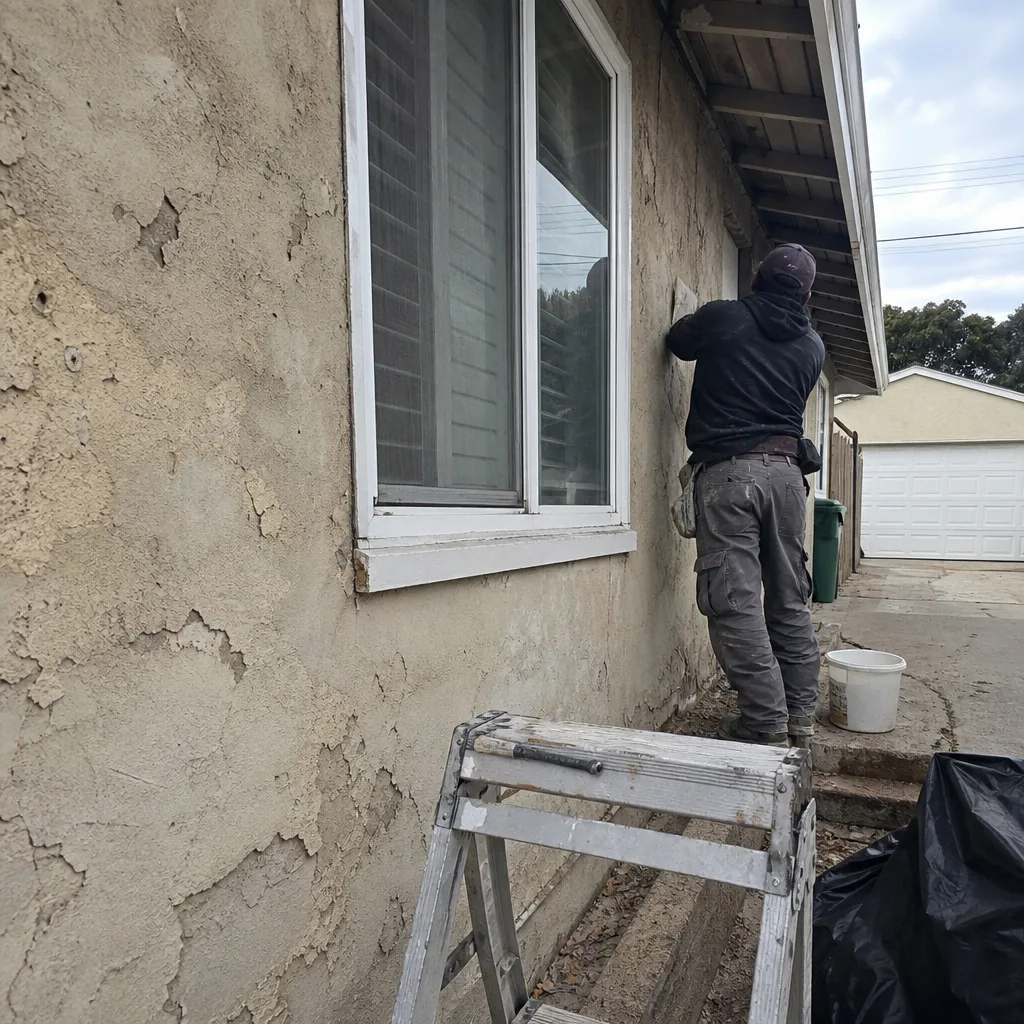 Before
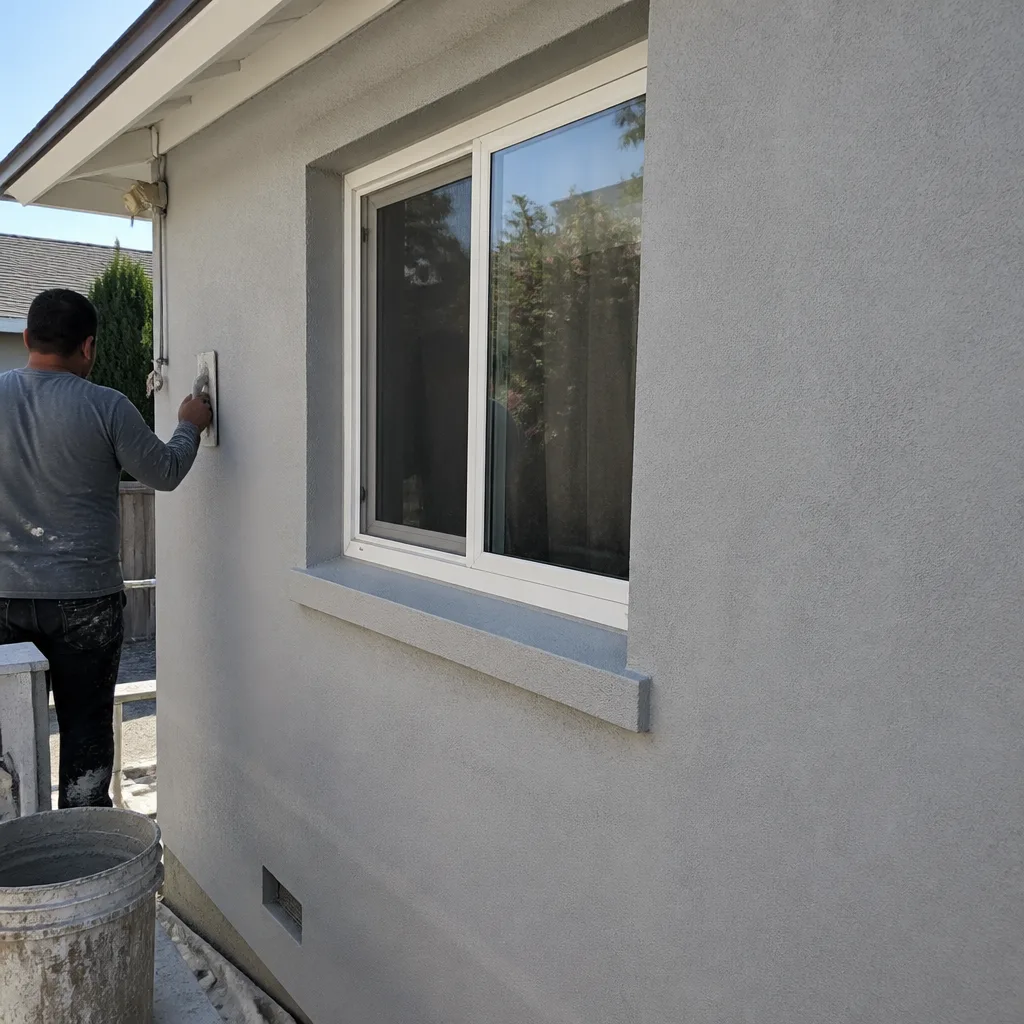 After
AfterReading Your Utility Bill: The Earliest Warning System
Utility bills are time-series data. Most Union City homeowners glance at the total and file the statement; the ones who catch insulation problems early look at therms per heating degree-day or kWh per cooling degree-day - normalized consumption that strips out weather variation. PG&E’s online portal makes this visible if you switch from “total bill” to “usage comparison” view.
Here’s the threshold: a 10-15% increase in normalized consumption over the same month in the prior year, with no rate change or occupancy change, warrants investigation. We’ve seen this pattern in hundreds of Union City homes since 2016. The cause is almost always envelope degradation - air leakage paths that opened as caulk aged, insulation that settled or was disturbed, or (in post-2020 work) insulation blown over an unsealed attic floor that allowed conditioned air to bypass the new material entirely.
The pattern matters too. A spike that starts in November and persists through March suggests attic or wall insulation failure in the heated envelope. A summer-only spike points to missing or degraded insulation in a cooling-dominant zone, often the attic under a dark shingle roof in the Decoto or Alvarado neighborhoods where older housing stock predates current code. A year-round increase with seasonal amplification usually means air leakage - the house is breathing unconditioned air continuously, working harder in both directions. For a deeper look at managing these patterns, see our Seasonal Insulation Care for Union City: Year-Round Homeowner’s Guide.
What to document before calling anyone:
- Export 24 months of usage data from your PG&E account.
- Note any occupancy changes, thermostat setting changes, or appliance additions.
- Check the California Climate Credit schedule - those months will show artificially low totals.
- Flag months where normalized usage jumped more than 10% year-over-year.
When we arrive for a home energy audit in Union City, that bill history is the first document we review. It tells us where to point the thermal camera and whether to expect air leakage, insulation displacement, or both.
Room Comfort Asymmetry and What It Tracks
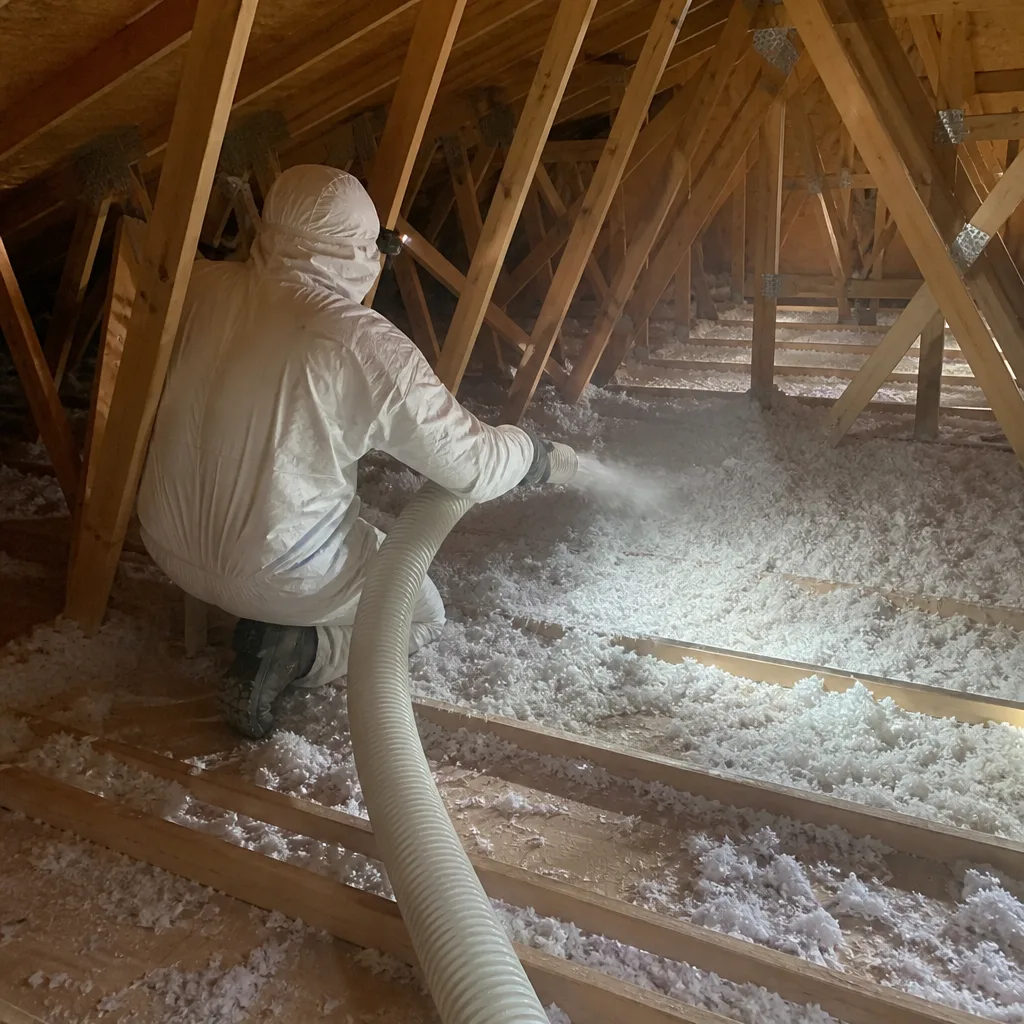
Room-to-room temperature variation is not normal in a well-insulated, well-sealed house. The threshold that matters: any room that runs more than 3 degrees Fahrenheit off the thermostat setting during peak load conditions (hottest summer afternoon, coldest winter morning) indicates a localized envelope failure.
In Union City, we see three common asymmetry patterns:
- Upstairs-downstairs split: Second floors that overheat in summer and underheat in winter. This usually traces to inadequate attic insulation or - more commonly - attic air leakage that lets conditioned air escape through top plates and can light penetrations. The insulation looks fine from below; the air is bypassing it.
- End-room cold spots: Bedrooms on exterior walls, especially northwest-facing corners in the newer developments near Union Landing, that never reach setpoint. This is often missing or compressed wall insulation, sometimes compounded by thermal bridging through framing.
- Addition/renovation differential: A room added in the 1980s or 1990s that behaves differently from the original structure. Code and practice changed; the addition may have been built with different insulation levels, or the junction between old and new envelope may never have been properly air-sealed.
The diagnostic question is whether the asymmetry is constant or conditional. Constant asymmetry - the room is always 5 degrees off - suggests missing or degraded insulation. Conditional asymmetry - the room tracks fine in mild weather but diverges in extremes - suggests air leakage that becomes significant under pressure differential. We distinguish these with a blower-door test - a pressurization reading that shows, in one number, how much air your building envelope is losing - and targeted thermal imaging.
One pattern specific to Union City’s housing stock: slab-adjacent homes from the 1960s and 1970s often show floor-to-ceiling temperature stratification in winter. Warm air rises, escapes through attic leaks, and is replaced by cold air drawn in at the slab perimeter. The floor feels cold, the ceiling feels drafty, and the thermostat in the middle reads “satisfied.” This is an air-sealing problem masquerading as an insulation problem. Blowing more attic insulation in Union City homes with this pattern, without sealing first, wastes material and money.
Visual and Tactile Inspection: What Homeowners Can Verify
Some warning signs are accessible without tools. Others look like one thing and mean another. Here’s what a homeowner can safely assess, and what requires interpretation.
Attic inspection from the hatch (safe, no entry required):
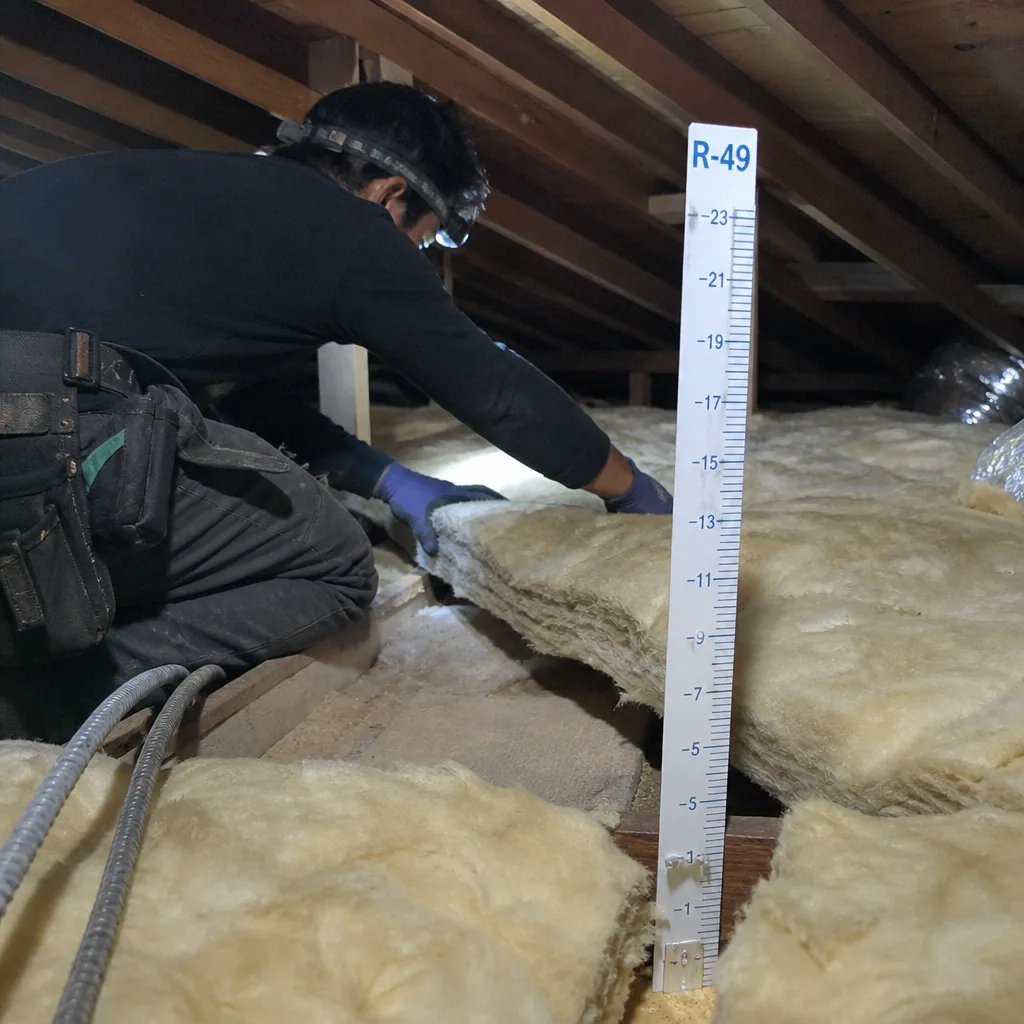
Look across the attic floor with a flashlight held at a low angle. You should see a uniform plane of insulation material. For a structured walkthrough of what to check, see our Attic Insulation Maintenance Checklist for Union City Homeowners. What you’re checking for:
- Low spots or valleys where insulation has settled below the joist tops - common in older blown-in fiberglass or cellulose
- Discoloration or dark streaking on the insulation surface, which indicates filtered dust from air moving through the material (air leakage, not dirt)
- Areas where insulation has been pushed aside for wiring or plumbing work and never restored
- Compression from foot traffic or stored items - insulation works by trapping air; compressed insulation performs at its compressed thickness, not its original depth
Wall and ceiling surfaces:
On a cold morning, run your hand along exterior walls and ceilings. You’re feeling for cold strips that align with framing members - thermal bridging - or cold patches that don’t align with anything, which suggest missing insulation in a cavity. In Union City, where nighttime winter temperatures drop into the 40s, these differences are detectable by hand.
What not to trust:
Insulation that “looks fine” from the hatch tells you almost nothing about air sealing below or above it. We’ve opened attics in the Seven Hills area where the fiberglass batts looked pristine but a blower-door test revealed 3,800 CFM50 of leakage - enough to replace the home’s entire air volume every 12 minutes under test pressure. The insulation was doing its thermal resistance job; the air was going around it.
Condensation on Walls: Union City’s Climate-Specific Signal
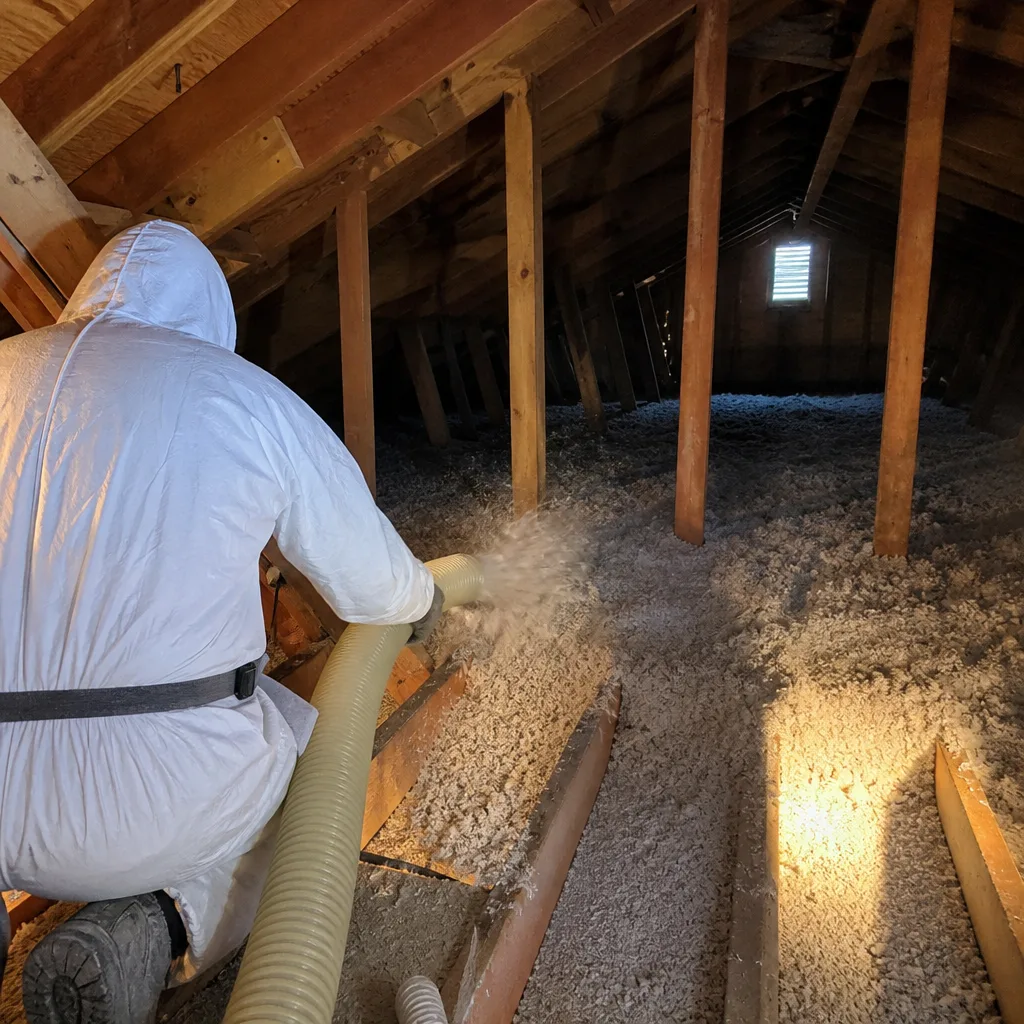
Condensation on interior walls is the warning sign most frequently misread by Union City homeowners, because it indicates two completely different problems depending on where and when it appears. Getting the diagnosis wrong means paying for the wrong fix.
Vapor drive condensation: Appears on the interior surface of exterior walls during winter, especially on north-facing walls or behind furniture where air circulation is restricted. The mechanism is warm, moist indoor air hitting a cold surface. The wall is cold because insulation is missing, compressed, or wet - or because the wall assembly lacks a vapor retarder where one is needed. The fix is insulation restoration or enhancement, sometimes with vapor management.
Air infiltration condensation: Appears at wall penetrations - outlets, switches, baseboard gaps - and tracks with windy conditions, not just cold. The mechanism is cold outdoor air leaking through the envelope, chilling the interior surface locally. The fix is air sealing, not more insulation. We’ve seen homeowners in the Alvarado Niles corridor add spray foam insulation in Union City walls that were already adequately insulated but poorly sealed, solving nothing.
Union City’s climate makes this distinction particularly important. We’re in IECC Climate Zone 3C - marine, heating-dominated but with dry summers and humid shoulder seasons. The marine layer brings 60-70% relative humidity on summer mornings; when that air contacts a surface cooled by air conditioning, you get summer condensation on the wrong side of the envelope. This is not a vapor drive problem; it’s an air leakage problem at the cooling surface.
The threshold for concern: condensation that persists more than 2-3 hours after conditions change, or that appears on surfaces below 60°F when indoor conditions are 72°F/50% RH. Document with photos, note the time of day and weather conditions, and have a professional distinguish vapor drive from infiltration before specifying work.
Pest Activity vs. Moisture Damage: Different Compression, Different Fixes
Both pests and moisture compress insulation, destroying its R-value. The physical evidence differs, and the remediation required differs more.
Pest-compressed insulation:
Rodents in Union City attics - roof rats, mice, and occasionally squirrels - create tunnel networks through blown insulation, packing it into runways and nesting cavities. What you’ll see from the hatch: trails 3-4 inches wide with smooth, hard-packed surfaces; nesting material (shredded paper, insulation itself) concentrated in corners or near warmth sources; and droppings, which are the definitive identifier. The insulation around the trails is not just displaced; it’s contaminated. We do not restore pest-compressed insulation. It comes out, the attic is cleaned and rodent-proofed, and new material goes in.
Materials matter in replacement. For homeowners concerned with environmental impact, we often specify crawl space encapsulation in Union City and attic work using GreenFiber cellulose - a borate-treated recycled paper product that resists pests and fire - or Owens Corning fiberglass with similar treatment. Demilec and Icynene spray foams, properly applied, eliminate the void spaces where rodents travel.
Moisture-damaged insulation:
Wet insulation compresses under its own weight as fibers collapse or cell structure degrades. The visual signature is staining - yellow to brown discoloration in fiberglass, darkening in cellulose - and a clumped, matted texture unlike the fluffy original. The smell is musty, not ammoniac (which indicates urine). Moisture damage in Union City attics usually traces to: roof leaks (obvious, localized); bathroom exhaust fans vented into attic space (common in 1970s construction); or air leakage that deposits moisture on cold sheathing in winter, which then drips onto insulation below.
The critical difference: moisture-damaged insulation requires finding and fixing the moisture source before replacement, or the new insulation fails the same way. Pest-compressed insulation requires exclusion work - sealing entry points with metal mesh, not foam, because rodents chew through foam. We’ve been called to too many Union City homes where a previous contractor replaced insulation without addressing the source, and the problem recurred within 18 months.
Cold Floors Above Crawl Spaces: The 1960s Construction Pattern
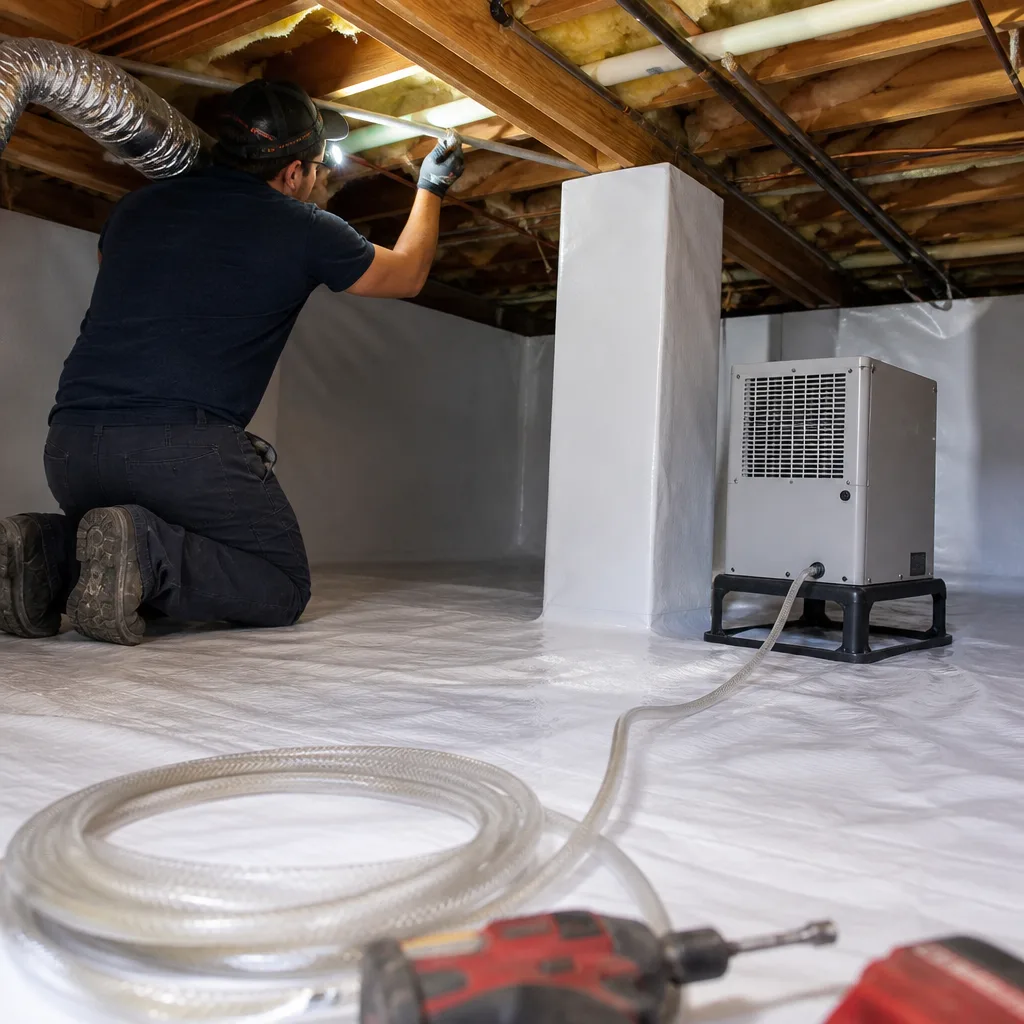
The “cold floor above crawl space” signal is disproportionately common in Union City because of when and how the city built. The 1960s and early 1970s saw rapid development of single-story slab-adjacent homes with raised-floor additions, or full crawl-space construction with minimal - sometimes zero - subfloor insulation. Code at the time did not require it; energy was cheap and the understanding of thermal bridging was limited.
What these homeowners experience: floors that are unpleasantly cold from November through April, especially in morning hours, even when the heating system runs normally. The thermostat reads 70°F; the floor surface is 58°F. This is not a heating system problem. It’s a thermal boundary problem: the crawl space is vented to outside air (per code of the era), the subfloor lacks insulation, and the floor assembly is losing heat faster than the furnace can replace it.
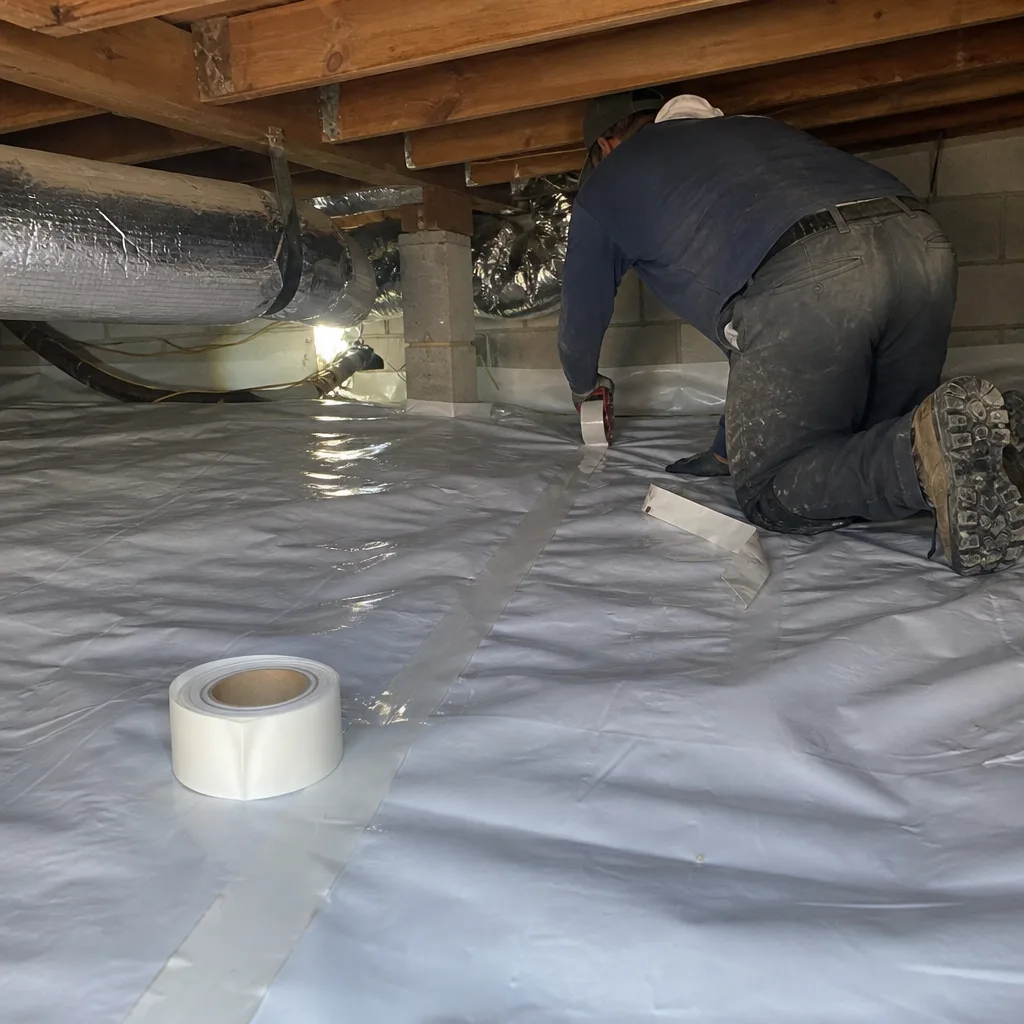
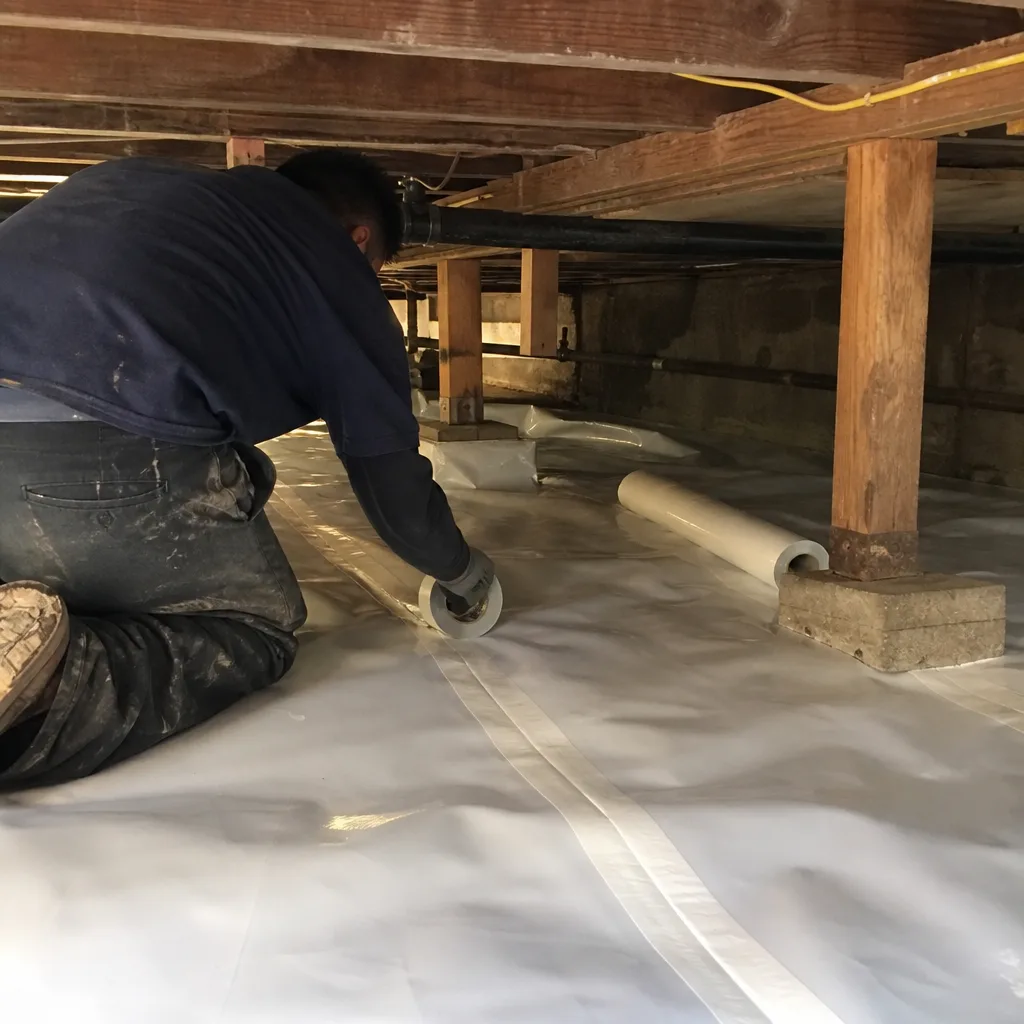
The fix depends on crawl space type. In vented crawl spaces with adequate height and access, we install batt or loose-fill insulation between joists, supported properly so it doesn’t sag onto the damp ground. In tighter spaces, or where moisture is a concern, we often recommend converting to a sealed, conditioned crawl space - crawl space encapsulation in Union City - with vapor barrier on the ground, rigid foam on walls, and the space brought into the conditioned envelope. This eliminates the vented-crawl moisture problems that destroy subfloor insulation, and it typically delivers better comfort than insulation alone.
We’ve documented this pattern in the older neighborhoods between Decoto Road and Alvarado Boulevard, where original construction predates modern energy code by decades. The blower-door test is particularly revealing in these homes: the crawl space vents act as large, uncontrolled leakage paths, and sealing them without proper moisture management creates new problems. The Haven Standard requires that we measure, specify, and document the moisture condition before any encapsulation work.
Self-Assessment vs. Professional Diagnostic: A Decision Tree
Homeowners can accurately identify some insulation problems. Others require tools and training to distinguish root cause from symptom. Here’s the decision framework we use when Union City homeowners call with concerns.
Self-assess with confidence:
- Utility bill spike with no other explanation - document the pattern, then call for interpretation.
- Visible insulation displacement, compression, or contamination from the attic hatch - photograph and measure.
- Cold floors with known uninsulated crawl space - the cause is established; the fix requires specification.
- Condensation with clear location pattern (always north wall, always behind dresser) - suggests localized failure.
Requires professional diagnostic:
- Room-to-room temperature variation without visible cause - needs blower-door test and thermal imaging to locate leakage paths.
- Condensation with unclear pattern - needs distinction between vapor drive and air infiltration, which may require moisture meters, psychrometric analysis, and pressure testing.
- Musty odor without visible moisture - needs moisture mapping and possibly cavity inspection; the source may be a small leak with large propagation.
- Post-renovation performance decline - needs verification that new work integrated properly with existing envelope; common failure at addition junctions.
- Any concern in a home with spray foam insulation - improper application (off-ratio, too thin, missed cavities) is not visible and requires thermal imaging or core sampling to verify.
The blower-door test is the key professional tool. It pressurizes or depressurizes the house to a standard 50 Pascals, measuring airflow in CFM50 - cubic feet per minute at that pressure. A typical 1970s Union City home might test at 3,500-4,500 CFM50; after proper air sealing, 2,000-2,500 is achievable. We publish before-and-after numbers on every applicable job so homeowners can verify the result they paid for. Without this measurement, you’re guessing at improvement.
Common Mistakes to Avoid
- Adding insulation over unsealed air leaks: This is the most common error we correct in Union City. Blown fiberglass or cellulose over a leaky attic floor creates a filter, not a seal. Conditioned air still escapes; it just picks up dust on the way. The insulation looks thicker but performs minimally better.
- Trusting depth labels without verifying coverage: A contractor says “R-38 installed” but the material is uneven, with valleys over wiring chases and gaps around chimney chases. The average depth meets spec; the thermal performance doesn’t. We document with photos; homeowners should too.
- Ignoring the crawl space: In slab-adjacent 1960s Union City homes, the crawl space is often the largest uncontrolled surface in the thermal envelope. Insulating the attic while leaving the crawl space vented and bare is like wearing a winter hat with no coat.
- DIY spray foam: Two-component kits available at hardware stores are tempting for small jobs, but off-ratio application, inadequate thickness, and missed cavities are common. Improperly applied spray foam can trap moisture against sheathing or emit odor for years. This is one area where professional application pays for itself.
- Replacing insulation without finding the moisture source: Wet insulation is a symptom. The roof leak, exhaust fan misrouting, or air leakage condensation that caused it will destroy the replacement just as fast. We require moisture-source identification in our written scope before insulation replacement.
- Assuming new construction is correct: Code-minimum insulation in Union City new construction meets Title 24, but “meets code” and “performs well” are different thresholds. We’ve audited homes built in 2022 with thermal bypasses at framing junctions that the insulation contractor missed. A post-occupancy energy audit with blower-door test catches these while they’re still the builder’s responsibility.
When to Call a Professional
Call when you’ve documented a pattern - bill spike, room asymmetry, or visible concern - and need root-cause identification. Call before the problem becomes structural: moisture-damaged insulation leads to mold, pest habitat leads to wiring damage, and air leakage leads to ice damming in climates just cold enough for it. Union City’s position at the edge of the Bay’s thermal moderation means we see freeze-thaw cycles that inland Bay Area cities don’t, and ice dams on poorly sealed, under-insulated roofs are more common here than homeowners expect.
Topside Attic Insulation Union City offers free estimates in Union City - call (650) 381-1512. Every estimate includes a written price before any work starts, a documented photo record of conditions found, and on applicable jobs, before-and-after blower-door numbers so you can verify the air-sealing result. The 365-Day Done Right Promise applies to all completed work.
Frequently Asked Questions
Most attic insulation removal and replacement jobs in Union City homes run between $2,800 and $5,400, depending on attic square footage, contamination level, and whether air sealing is included. Crawl space encapsulation typically ranges from $4,200 to $8,500 for a standard single-story home. We provide a written price before any work starts - no exceptions. Call (650) 381-1512 for an exact quote; estimates are free.
Yes, through utility bill pattern analysis and room comfort asymmetry. A sustained 10-15% increase in normalized energy consumption, or any room that won’t hold within 3 degrees of setpoint, indicates envelope failure even if the attic looks fine from the hatch. These are the earliest reliable signals.
In Union City’s marine climate, spring and fall bring the highest absolute humidity combined with surface temperatures still low from overnight cooling. When warm, moist air contacts a surface below the dew point - often because that surface is chilled by air leakage or inadequate insulation - condensation forms. Summer condensation on air-conditioned surfaces is the same mechanism reversed. The fix requires distinguishing vapor drive from air infiltration, which a blower-door test and thermal imaging can do.
Repair - spot-filling settled areas or restoring displaced batts - is cheaper only when the existing material is uncontaminated, dry, and accessible. Once insulation is pest-compromised, moisture-stained, or distributed in a way that creates thermal bypasses, replacement with proper air sealing delivers lower lifecycle cost. We’ve revisited too many Union City homes where partial repair failed within two years because the underlying air leakage was never addressed.
Fiberglass and mineral wool insulation lasts 80-100 years if protected from moisture and disturbance. Cellulose settles 20% in the first two years then stabilizes, with 30-40 year effective life. The actual failure mode in Union City is almost never material degradation; it’s air leakage bypassing the insulation, moisture compromising it, or pests displacing it. The insulation “fails” because the envelope around it fails.
We answer calls 24/7 and prioritize situations with active moisture intrusion, pest entry, or safety concerns. For standard assessments, we typically schedule within 48 hours. Same-day service is available for urgent conditions. Call (650) 381-1512 - a live person answers, not a voicemail loop.
The Bottom Line
Insulation problems in Union City homes announce themselves through data - utility bills, temperature readings, and moisture patterns - before they become visible damage. For comprehensive coverage of materials, methods, and local considerations, see The Complete Guide to Insulation in Union City. The homeowners who catch them early read these signals as diagnostic information, not background noise. The critical distinction is between thermal resistance problems (insulation quantity or quality) and air leakage problems (insulation bypass), which require different fixes and different verification. A blower-door test resolves that distinction with a single number. Document what you observe, know the thresholds that matter, and demand measured verification of any improvement.
Written by Wes Okafor, Owner at Topside Attic Insulation Union City, serving Union City since 2016.